 Safekipedia
A leaf (pl.: leaves) is a main part that grows from the stem of a vascular plant. It is usually above ground and helps the plant make food using a process called photosynthesis.
Leaves are mostly green because of a special substance called chlorophyll. This green color helps plants turn sunlight, water, and air into food.
Leaves come in many shapes, sizes, and colors, depending on the plant. Most leaves are flat and have a top and a bottom side. They have tiny holes called stomata that let air in and out, which helps the plant breathe and make food. In autumn, many leaves change color to red, orange, or yellow before falling off.
Leaves are important for nature. They help clean the air and give food and shelter to animals. They also help control the Earth's climate by taking in carbon dioxide and putting out oxygen. This is why forests and green spaces are so important for our planet.
General characteristics
Leaves are important parts of most plants with tubes inside them, called vascular plants. These plants make their own food through a process called photosynthesis. They use energy from sunlight to create sugars from carbon dioxide (CO2) and water. These sugars help the plant grow and store energy.
Leaves are usually flat and wide so they can catch lots of sunlight. This shape helps the plant make food and stay cool. Some plants, like those in windy areas, have leaves that hang down to protect them. Leaves also help the plant take in water from the ground and let out extra water into the air.
Morphology
A leaf is the main part of a plant that grows from its stem and helps it make food. This process is called photosynthesis. Most leaves are flat and green so they can catch sunlight. They are usually attached to the stem above the ground.
Leaves can look different depending on the plant. Some have small parts called stipules at the base. The flat part of the leaf where photosynthesis happens is called the blade. Some plants have leaves with long stems called petioles. Others have leaves that attach directly to the stem. Leaves come in many shapes and arrangements, which helps scientists identify different plants.
Anatomy
Leaves are important parts of plants that help them make food. They usually have tiny tubes called vascular bundles that carry water and sugars. Many leaves also have tiny hairs called trichomes that help protect them.
Inside a leaf, there are three main layers. The top and bottom layers are called the epidermis. They protect the leaf and help control water loss. The middle layer is the mesophyll tissue, where the plant makes most of its food. This tissue has many cells with structures called chloroplasts that capture energy from sunlight. The veins of the leaf, made of vascular tissue, run through this middle layer and help move water and sugars.
Leaf development
Leaves grow from special parts called primordia at the top of the plant’s main stem. Early on, they flatten out into two sides, like a very thin, flat object. Some leaves, called compound leaves, act more like tiny branches and can grow in many directions. They show traits of both leaves and branches. Scientists have studied these leaves and found that they follow their own daily growth patterns.
Ecology
Plants change and adapt to things like light and wind. Leaves need to balance getting enough sunlight with staying strong enough to not break. They can move slightly to catch the sun better.
Leaves are food for many animals, even though they aren’t as tasty as fruits. Plants have ways to protect their leaves, like making them taste bad. Some animals have special tricks to hide or eat leaves. In places with cold winters, trees often lose their leaves to save energy. The leaves may turn beautiful colors before falling off.
Evolutionary adaptation
Leaves have changed over time to help plants survive in different places. They can have special coatings to stay dry, shapes that reduce wind, and hairs that keep in moisture. Some leaves are thick to store water, while others have chemicals to keep animals away. Large leaves catch more sunlight for energy, and some even help plants trap insects for food. Others might have spines or special structures to help the plant climb or protect itself.
Terminology
See also: Glossary of leaf morphology, Glossary of plant morphology, and Glossary of botanical terms
Shape
Main article: Glossary of leaf morphology § Leaf and leaflet shapes
Edge (margin)
The edge of a leaf is called the margin. This is the outside part of the leaf.
Apex (tip)
Base
Surface
The surface of a leaf can have many tiny living things. These are called the phyllosphere.
Hairiness
"Hairs" on plants are called trichomes. Leaves can have more or less of these hairs.
Timing
Venation
Classification
Leaves have different patterns of lines called veins. These patterns are called venation. One way to group them is the Hickey system. It includes types like:
- Pinnate (feather-veined)
- Parallel (parallel-veined)
- Campylodromous (curved veins)
- Acrodromous (veins toward the tip)
- Actinodromous (radiating veins)
- Palinactodromous (branching veins)
Other systems
There are other ways to describe vein patterns, such as:
- Uninervous (single central vein)
- Dichotomous (branching veins)
- Parallel (veins running parallel)
- Netted (veins forming a network)
Other descriptive terms
There are many words to describe vein patterns, such as obscure (not visible) or prominent (easily seen).
| Image | Term | Latin | Description |
|---|---|---|---|
 | Acuminate | _ | Long-pointed, prolonged into a narrow, tapering point in a concave manner |
 | Acute | _ | Ending in a sharp, but not prolonged point |
 | Cuspidate | _ | With a sharp, elongated, rigid tip; tipped with a cusp |
 | Emarginate | _ | Indented, with a shallow notch at the tip |
 | Mucronate | _ | Abruptly tipped with a small short point |
| Mucronulate | _ | Mucronate, but with a noticeably diminutive spine |
 | Obcordate | _ | Inversely heart-shaped |
 | Obtuse | _ | Rounded or blunt |
 | Truncate | _ | Ending abruptly with a flat end |
| Image | Term | Description |
|---|---|---|
 | Arcuate | Secondary arching toward the apex |
 | Dichotomous | Veins splitting in two |
 | Longitudinal | All veins aligned mostly with the midvein |
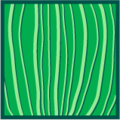 | Parallel | All veins parallel and not intersecting |
 | Pinnate | Secondary veins borne from midrib |
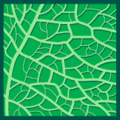 | Reticulate | All veins branching repeatedly, net veined |
 | Rotate | Veins coming from the center of the leaf and radiating toward the edges |
 | Transverse | Tertiary veins running perpendicular to axis of main vein, connecting secondary veins |
Images
This article is a child-friendly adaptation of the Wikipedia article on Leaf, available under CC BY-SA 4.0.
Images from Wikimedia Commons. Tap any image to view credits and license.