 Safekipedia
Computer science is the study of computation, information, and automation. It includes many different areas, both theoretical and practical. Theoretical areas look at ideas like algorithms, theory of computation, and information theory. Practical areas involve creating hardware and software that we use every day.
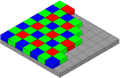
Important parts of computer science include algorithms and data structures, which help solve problems efficiently. Other areas such as cryptography and computer security focus on keeping information safe. Computer graphics helps create images and animations we see in movies and games. Artificial intelligence and machine learning aim to make computers think and learn like humans.
The main goal of computer science is to figure out what tasks can be automated by computers. It is a very broad field that touches many parts of our lives, from the way we communicate to how we entertain ourselves. The Turing Award is considered the highest honor in this field.
History
Main article: History of computer science
The story of computer science begins long before modern computers were invented. Simple tools like the abacus have been used for thousands of years to help with math. Early thinkers also created steps, called algorithms, to solve problems.
Over time, people built machines to do calculations faster. In 1623, Wilhelm Schickard made a mechanical calculator, and later, Gottfried Leibniz created a machine that used binary numbers. In the 1800s, Charles Babbage designed plans for machines that could be programmed, laying the groundwork for modern computers. During the 1940s, new machines like the ENIAC showed that computers could do more than just math, and computer science grew into its own field of study.
Etymology and scope
The term "computer science" was first used in a 1959 article in Communications of the ACM. It describes a field that studies computation and information, and it is related to many other subjects. While it often involves computers, it also covers theories and ideas that do not always need a computer. Some universities call this field "computing science" to highlight this difference. Other names, like "datalogy" and "data science," have also been suggested to describe the study of data and its handling.
Computer science connects with many other areas, such as mathematics, physics, and linguistics. It often works closely with these fields, sharing ideas and methods. Some people think computer science is very much like mathematics because of its logical and theoretical nature. The field also has links to engineering, especially in designing and building computer systems. These connections help computer science grow and solve many different kinds of problems.
Main article: Informatics § Etymology
Philosophy
Main article: Philosophy of computer science
Computer science is an interesting field, and people sometimes wonder whether it is more like science, mathematics, or engineering. Some experts say it is an empirical science because we can test and observe how computers and programs work in practice. Others think it is more like engineering because it involves building reliable systems, just like bridges or airplanes.
A few see computer science as a branch of mathematics because computer programs can be studied using logical reasoning and formal methods. The field includes many approaches, from creating and testing computer systems to developing theories and models about how computation works.
Fields
Further information: Outline of computer science
Computer science is a broad field that studies how we can use computers to solve problems. It includes both theoretical ideas and practical applications. Experts in this area are called computer scientists.
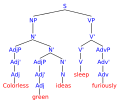
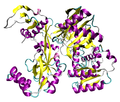
The field covers many topics, such as how computers think about problems, how to design computer parts, and how to make computers work together. Some important areas include understanding what computers can and cannot do, creating ways to store and find information quickly, and designing computer programs that are safe and easy to use. Computer science also explores artificial intelligence, which aims to make computers think and learn like humans.
 | M = { X : X ∉ X } {\displaystyle M=\{X:X\not \in X\}} | ||
| Automata theory | Formal languages | Computability theory | Computational complexity theory |
 | 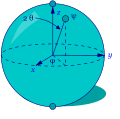 |  | |
| Models of computation | Quantum computing theory | Logic circuit theory | Cellular automata |


| Γ ⊢ x : Int {\displaystyle \Gamma \vdash x:{\text{Int}}} |  |  | |||
| Formal semantics | Type theory | Compiler design | Programming languages | Formal verification | Automated theorem proving |









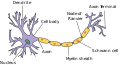
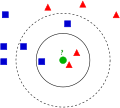


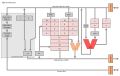

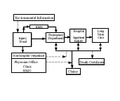
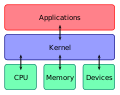

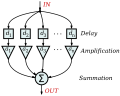

Discoveries
The philosopher of computing Bill Rapaport noted three important ideas in computer science. First, thinkers like Gottfried Wilhelm Leibniz, George Boole, Alan Turing, Claude Shannon, and Samuel Morse discovered that all information can be shown using just two symbols, like on and off, or 0 and 1.
Second, Alan Turing showed that computers need only five basic actions to perform any task: moving left or right, reading a symbol, and printing a 0 or 1. Finally, Corrado Böhm and Giuseppe Jacopini found that only three ways of combining these actions—doing steps in order, making choices, and repeating actions—are needed for any computer work.
Programming paradigms
Main article: Programming paradigm
Programming languages have different ways to get tasks done, called programming paradigms. One common way is functional programming, which acts like math functions and avoids changing data. Another is imperative programming, where you give the computer step-by-step commands to change things. Object-oriented programming focuses on "objects" that hold data and actions, working together like team members. There's also service-oriented programming, which builds programs from small, useful services that work together. Many languages can use several of these styles, so choosing one is often about personal preference.
Research
Conferences are key events in computer science research where researchers from both public and private sectors share their latest work and connect with others. In this field, conference papers are often considered more important than journal articles because conferences allow for quicker sharing of new findings, which is important in a fast-developing area like computer science.
Main article: List of computer science conferences
Main articles: Category:Computer science journals
Images
This article is a child-friendly adaptation of the Wikipedia article on Computer science, available under CC BY-SA 4.0.
Images from Wikimedia Commons. Tap any image to view credits and license.