
17th century in philosophy
The 17th century was a very important time for philosophy, the study of big questions about life, knowledge, and the world. Many smart thinkers lived during this time and shared new ideas that changed how people think.
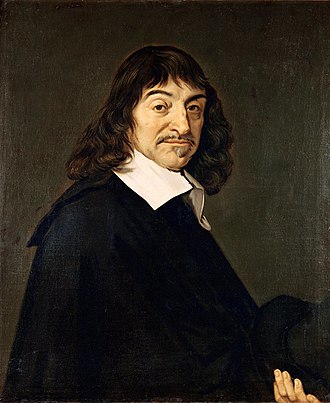
One of the most famous philosophers was René Descartes. He is known for saying, "I think, therefore I am." This means that because he could think, he knew he existed. His ideas helped start a new way of thinking called rationalism, where people use reason to understand the world.
Another important thinker was John Locke. He believed that our minds are like blank slates when we are born and that we learn everything from experience. His ideas about government and natural rights also influenced many countries.
During this time, philosophers also talked a lot about science and how we can know things for sure. They asked questions like, "How do we learn?" and "What can we really prove?" These discussions helped shape modern science and how we think about the universe today.
The ideas from the 17th century still affect us now, especially in how we understand ourselves, our rights, and how science works.
Events
- In (/wiki/1600), Giordano Bruno, an Italian thinker, was punished for his ideas in Rome.
- In (/wiki/1611), a group called the first Accademia dei Lincei was created, where members discussed new ways of thinking.
- In (/wiki/1620), Francis Bacon shared his ideas about how to study the world, which changed how people thought about evidence.
- In (/wiki/1633), Galileo faced questions from leaders for supporting the idea that Earth moves around the Sun.
- In (/wiki/1641), René Descartes wrote about how the mind and body work together.
- In (/wiki/1643), Princess Elisabeth of Bohemia and René Descartes exchanged letters about their ideas on the mind and soul.
- In (/wiki/1649), Christina, Queen of Sweden asked René Descartes to share his thoughts with her.
- In (/wiki/1653), Blaise Pascal felt a strong belief in God and spent his time thinking deeply about life and faith.
- In (/wiki/1656), Baruch Spinoza, a thinker from a Portuguese-Jewish background, was asked to leave his community in Amsterdam for his unusual ideas.
- In (/wiki/1660_in_literature), the Royal Society was formed in the United Kingdom to study nature and science.
- In (/wiki/1668), Gottfried Wilhelm Leibniz began working in Mainz, where he learned about many different philosophies.
- In (/wiki/1670), Pascal's wager was introduced, which made people think about why belief in God might be reasonable.
- In (/wiki/1687), Isaac Newton’s Principia showed how the universe follows clear rules, helping people trust in learning through experience and reason.
Publications
Many important books about thinking and learning were written in the 1600s. Some well-known books include La logique, ou l'art de penser by Antonie Arnauld and Pierre Nicole, and Ethics by Baruch Spinoza. Other famous books are Philosophiæ Naturalis Principia Mathematica by Issac Newton, Two Treatises of Government by John Locke, and Leviathan by Thomas Hobbes. These books helped people learn about big ideas.
Births
The 17th century was a time when many important thinkers were born. They came from many places and had different ideas about life and the world.
Here are some of the notable philosophers and thinkers born during this time:
- Elizabeth Foxcroft (1600)
- Baltasar Gracián (1601)
- William Chillingworth (1602)
- Bartholomew Mastrius (1602)
- Athanasius Kircher (1602)
- Kenelm Digby (1603)
- Issac Cardoso (1603/1604)
- Anandghan (1603/04)
- Thomas Browne (1605)
- Mulla Mahmud Jaunpuri (1606)
- Francesco Sforza Pallavicino (1607)
- Anna Maria van Schurman (1607)
- Samarth Ramdas (1608)
- Kâtip Çelebi (1609)
- Robert Desgabets (1610)
- Huang Zongxi (1610)
- Antoine Arnauld (1612)
- Henry More (1614)
- John Wilkins (1614)
- Franciscus Mercurius van Helmon (1614)
- Ralph Cudworth (1617)
- Isaac Orobio de Castro (1617)
- Tito Livio Burattini (1617)
- Jacques Rohault (1618)
- John Smith (1618)
- Walter Charleton (1619)
- Nathaniel Culverwell (1619)
- Claude Frassen (1620)
- François Bernier (1620)
- Johannes Clauberg (1622)
- Margaret Cavendish (1623)
- Blaise Pascal (1623)
- William Petty (1623)
- Arnold Geulincx (1623)
- Géraud de Cordemoy (1626)
- Christiaan Huygens (1626)
- Francesco D'Andrea (1625)
- Robert Boyle (1627)
- Hugh Binning (1627)
- Itō Jinsai (1627)
- Pierre Daniel Huet (1630)
- Kaibara Ekken (1630)
- Richard Cumberland (1631)
- Ann Conway (1631)
- John Locke (1632)
- Baruch Spinoza (1632)
- Louis de La Forge (1632)
- Pierre-Sylvain Régis (1632)
- Walda Heywat (1633)
- Balthasar Bekker (1634)
- Yan Yuan (1635)
- Joseph Glanvill (1636)
- Richard Burthogge (1637/1638)
- Nicolas Malebranche (1638)
- Isaac Newton (1642)
- Simon Foucher (1644)
- Elena Cornaro Piscopia (1646)
- Pierre Bayle (1647)
- Samuel Bold (1649)
- Samuel Johnson (1649)
- Michelangelo Fardella (1650)
- Christian Thomasius (1655)
- John Norris (1657)
- Bernard Le Bovier de Fontenelle (1657)
- Damaris Cudworth Masham (1659)
- William Wollaston (1659)
- René-Joseph de Tournemine (1661)
- Claude Buffier (1661)
- Francesco Bianchini (1662)
- Jean-Pierre de Crousaz (1663)
- Ingeborg i Mjärhult (1665)
- Richard Bentley (1665)
- Peter Browne (1665)
- Ogyū Sorai (1666)
- Guru Gobind Singh (1666)
- Giambattista Vico (1668)
- Tommaso Campailla (1668)
- Bernard Mandeville (1670)
- Anthony Ashley-Cooper, 3rd Earl of Shaftesbury (1671)
- Luigi Guido Grandi (1671)
- Gershom Carmichael (1672)
- Samuel Clarke (1675)
- Yves Marie André (1675)
- Anthony Collins (1676)
- Pietro Giannone (1676)
- Antonio Schinella Conti (1677)
- Robert Greene (1678)
- Christian Wolff (1679)
- Firmin Abauzit (1679)
- Catharine Trotter Cockburn (1679)
- Arthur Collier (1680)
- John Theophilus Desaguliers (1683)
- George Berkeley (1685)
- John Balguy (1686)
- Montesquieu (1689)
- Joseph Butler (1692)
- Francesco Maria Zanotti (1692)
- Francis Hutcheson (1694)
- Samuel von Pufendorf (1694)
- Voltaire (1696)
- Henry Home, Lord Kames (1696)
- Alberto Radicati (1698)
- Jacopo Stellini (1699)
Deaths
Many important thinkers lived and passed away during the 1600s. Some of these include Giordano Bruno, an Italian thinker who studied stars and ideas about the universe, and Galileo Galilei, another Italian thinker known for his work in many subjects. Others like Blaise Pascal, a French mathematician and philosopher, and Baruch Spinoza, a Dutch philosopher, also made their marks during this time. It was a time when many new ideas were explored and discussed by clever people from around the world.
Keep exploring


This article is a child-friendly adaptation of the Wikipedia article on 17th century in philosophy, available under CC BY-SA 4.0.