 Safekipedia
Alexander von Middendorff
Adapted from Wikipedia · Adventurer experience
Alexander Theodor von Middendorff (18 August 1815 – 24 January 1894) was a Russian zoologist and explorer. He came from a Baltic German and Estonian background.
His most famous work was an expedition from 1843 to 1845 to the far north and east of Siberia. During this journey, he studied how the cold, permanently frozen ground, called permafrost, affected where animals and plants could live. His discoveries helped scientists understand more about the natural world in these harsh places.
Early life
Alexander von Middendorff was born on August 18, 1815, in St. Petersburg. His parents, Sophia Johanson and Theodor Johann von Middendorff, could not marry because they came from different social ranks. Alexander and his sister were born before their parents were married. Later, when Alexander was ready for school, his parents finally married.
Alexander’s mother came from a farming family in Estonia, and his father was a pastor from Baltic Germany. Even though they were not married at first, they registered themselves as a married couple to help protect Alexander. The family moved back to Estonia where they lived quietly.
Education
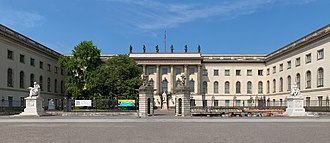
Alexander von Middendorff began his learning with tutors in Reval and later went to a gymnasium in Saint Petersburg. In 1832, he started studying medicine at the Imperial University of Dorpat. There, he learned from well-known teachers such as Georg Friedrich Parrot, Nikolay Ivanovich Pirogov, Hermann Martin Asmuss, and Alexander Friedrich von Hueck. He finished his studies in 1837 with a thesis in Latin about polyps in the bronchi. After this, he studied at other universities, including the Humboldt University of Berlin, University of Erlangen-Nuremberg, the University of Vienna, and the University of Breslau.
Explorer and scientist
In 1839, Alexander von Middendorff became an assistant professor of zoology at Kiev University. In 1840, he joined an expedition led by Karl Ernst von Baer to explore areas near Novaya Zemlya. They could not reach Novaya Zemlya because of bad weather, but they traveled through Russian and Norwegian Lapland and around the Barents and White Seas. Middendorff walked across the Kola Peninsula to Kandalaksha, collecting animals and plants.
Later, from 1843 to 1845, Middendorff led his own expedition to the Taymyr Peninsula and along the coast of the Sea of Okhotsk, reaching the Amur River valley. He wrote about his travels and discoveries in a book. He also studied how cold ground, called permafrost, affects where animals and plants can live. He wrote books about bird migration in Russia and about sea creatures called molluscs.
Personal life and death
Middendorf was married to Hedwig. His son Ernst von Middendorff also studied birds.
Middendorf died in 1894 in a place called Hellenorm, which is now part of Estonia.
Legacy
Several places and animals were named after Alexander von Middendorff for his work. These include Middendorff's grasshopper warbler, Cape Middendorff in Novaya Zemlya, the Kodiak bear, and Middendorff Bay on the Taymyr Peninsula. He also created the term aufeis to describe a special kind of ice.
When scientists talk about plants he discovered, they use the short name "Middend." to give credit to him as the person who first described them.
Related articles


This article is a child-friendly adaptation of the Wikipedia article on Alexander von Middendorff, available under CC BY-SA 4.0.
Images from Wikimedia Commons. Tap any image to view credits and license.