 Safekipedia
Athenian democracy
Adapted from Wikipedia · Adventurer experience
Ancient Beginnings
Athenian democracy started around the 6th century BC in the Greek city-state called Athens. This system aimed to support liberty, equality, and security for its citizens.
Athens was not the only democratic city-state in ancient Greece. Many other Greek cities had similar rules before Athens.
Who Could Join In?
In Athens, only adult, free men could help make laws and decisions. These men made up about 30 percent of all adults. Important leaders like Solon, Cleisthenes, and Ephialtes helped shape Athenian democracy. Cleisthenes changed things by grouping citizens based on where they lived.
The leader who stayed the longest was Pericles. After he died, Athenian democracy stopped for a short time during the Peloponnesian War. Later, the system started again under Eucleides.
The End of Athenian Democracy
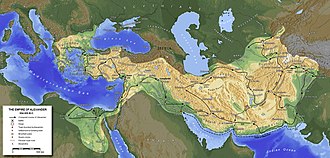
Athenian democracy ended when the Macedonians took control in 322 BC. Some of Athens' old ways were brought back later, but it is not clear how close they were to the original democracy.
Etymology
The word "democracy" (Greek: dēmokratia, δημοκρατία) is made from two parts: dêmos (δῆμος), meaning "people" or "towns", and krátos (κράτος), meaning "force" or "power". Together, it means "people power".
We don’t know if the word "democracy" existed when the first democratic systems began. The earliest known use of the word comes from around 470 BC in the play The Suppliants. This shows that the people had a say in important decisions.
Later, the historian Herodotus used the word in his book Histories. Before "democracy", people used the word isonomia to describe fair and equal laws.
History
Development
Main article: Athenian Revolution
Athens was one of several cities in Ancient Greece that had a democratic government. Most stories about how democracy began focus on Athens because we know the most about it.
Before democracy, Athens was ruled by leaders called archons and a group of past leaders called the Areopagus. In 621 BC, Draco made laws that could be written down for courts to use. In 594 BC, Solon changed things to let more people have a say in government. He let all free men help decide important matters.
Later, Cleisthenes made big changes in 508 and 507 BC. He created ten new groups so everyone felt connected to Athens. In 462/1 BC, Ephialtes reduced the power of the Areopagus.
After a big battle loss in 413 BC, some people tried to change the government, but it returned to democracy. This lasted until Athens was taken over by another country.
Related to modern democracy
Modern democracies are different from ancient Athens. Today, governments have checks and balances to make sure decisions are thought about carefully. They also try to include many different ideas so no small group has all the power.
Aftermath
After Athens lost power, it was ruled by others but kept some of its old ways. Later, Rome let Athens keep some control over its own affairs. Even under Roman rule, Athens kept some of its old leaders and traditions.
Participation and exclusion
Size and make-up of the Athenian population
Main article: Slavery in ancient Greece
The number of people in ancient Athens changed over time. Around the 4th century BC, there may have been between 250,000 and 300,000 people. Of these, about 100,000 were families of citizens, and around 30,000 were adult men who could vote. Earlier, in the mid-5th century, there were perhaps 60,000 voting men, but this number dropped during a big war.
Not everyone in Athens was a citizen. Many people were foreigners or slaves. Slaves may have been more numerous than citizens.
Citizenship in Athens
Only certain people could be citizens and vote in Athens. You had to be a grown-up male who finished special training. This meant only a small part of the population could vote — about 10% to 20%. Most people could not vote. This included slaves, freed slaves, children, women, and foreigners living in Athens.
Women had very few rights. They could not vote or take part in government. They were expected to stay mostly at home.
Being a citizen usually meant you were born to Athenian parents. After some changes in laws around 450 BC, you needed both parents to be Athenian to be a citizen. Citizens could sometimes be given special honors by the government, but this was rare.
Women in Athens
Women were never allowed to vote or hold public office in Athens. They were mostly kept away from public life and expected to work at home.
Men in Athens thought women should not be involved in government. These ideas kept women from having the same rights as men. However, women were allowed to practice their religion.
Main bodies of government
Athens had many ways of running its government. A book called the Constitution of the Athenians describes how Athens was organized.
Athens had three main groups where citizens met: the assembly, the council of 500, and the courts. The assembly and the courts were the most powerful. In the assembly, any adult male citizen over 20 could speak and vote. The assembly made important decisions.
The council of 500 helped prepare matters for the assembly to discuss. Members were chosen by lot and had to be at least 30 years old. The courts handled legal cases and had jurors chosen by lot, usually over 30 years old.
Criticism
Athenian democracy had many criticisms, both in ancient times and today. Ancient writers like Thucydides, Aristophanes, Plato, Aristotle, and the Old Oligarch thought democracy was too open. They believed ordinary people could make big mistakes.
One famous criticism is about the trial of six generals in 406 BC. After a naval battle, a storm stopped them from saving all sailors. The people tried and punished the generals together, which broke Athenian law. Later, they wished they had not done this.
Another major criticism is the trial of the philosopher Socrates in 399 BC. He was punished for ideas that some Athenians did not like.
Plato and Aristotle also said that democracy was unfair. They thought only wise leaders should decide, not everyone.
Some said that Athenian democracy worked with an empire, sometimes taking over other places by force.
Over time, Athens changed its democracy to fix some problems. Laws were made more carefully, and decisions were reviewed by smaller groups of people.
Today, people still talk about Athenian democracy. Some think it was a great idea but incomplete because not everyone could join. Others believe it was not true democracy because many people, like women and slaves, could not vote or hold office. Still, Athens remains an important example in discussions about how governments should work.
Legacy
After Athenian democracy ended, many people did not think it was a good way to govern. Famous thinkers like Plato and Aristotle described it in negative ways, and for a long time, democracy was seen as unfair rule.
Later, during the time of the American and French revolutions, leaders looked to ancient Rome for inspiration rather than Athens. It wasn't until the 19th century that some began to appreciate the strengths of Athenian democracy. Writers like George Grote argued that it was not unfair but a strong system when citizens were well-educated.
After World War II, the idea of democracy changed. It was no longer just one way to govern but became the main system for fair and equal societies.
References and sources
Images
Related articles


This article is a child-friendly adaptation of the Wikipedia article on Athenian democracy, available under CC BY-SA 4.0.
Images from Wikimedia Commons. Tap any image to view credits and license.