
Carbon sink
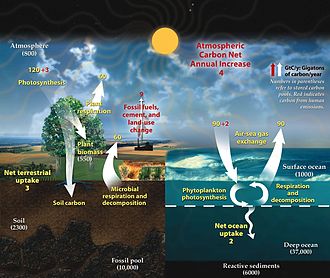
A carbon sink is a natural or artificial process that takes carbon from the air and stores it for a long time. This helps keep our planet healthy by reducing the amount of carbon in the atmosphere. Carbon sinks are important because they play a big role in the natural carbon cycle, which moves carbon between different places on Earth like the air, oceans, soil, plants, and more.
The two biggest carbon sinks in the world are plants and the ocean. Soil also helps store a lot of carbon, but farming practices have sometimes taken some of this carbon away. Special areas like mangroves, salt marshes, and seagrasses in the ocean are great at storing carbon too.
Keeping these natural carbon sinks healthy is very important for stopping climate change. In the past, cutting down forests and changing land for farming have made these sinks weaker. Protecting and helping these sinks grow again can make a big difference for our planet's future.
Definition
In the context of climate change and mitigation, a sink is something that takes gases that warm the planet out of the air. These gases can be changed into safer substances. For example, nitrous oxide can be turned into harmless N2.
Related ideas include "carbon pool," "reservoir," sequestration, source, and "uptake." A carbon pool is a place where carbon is stored, like the air, oceans, soil, plants, and fossil fuels. Carbon pools and carbon sinks help us learn how carbon moves around the Earth.
Types
Carbon sinks are places where carbon dioxide, a gas that changes our climate, is stored. Natural carbon sinks include soil and plants. Plants take in carbon dioxide as they grow. The oceans also take in carbon dioxide naturally.
Artificial carbon sinks store carbon in buildings or deep underground, but this is not common yet. People learned more about carbon sinks after the Kyoto Protocol in 1997. This agreement encouraged using carbon sinks to help balance carbon emissions.
Natural carbon sinks
Main article: Carbon sequestration
Soils are very good at storing carbon. They hold more carbon than all the plants on land and the air combined. When plants drop leaves or other parts, this becomes organic matter in the soil. Some of this matter stays for a long time, especially in cold places like the boreal forests of North America and the Taiga of Russia. In warmer places, like tropical areas, this matter breaks down faster because of heat and rain.
Grasslands also help store carbon in their deep roots. Fires in these areas can release some carbon but also help the land by adding special carbon-rich material called biochar to the soil. However, farming practices have often removed much of the carbon stored in soils. There are ways to help put carbon back, like not tilling the soil and planting cover crops.
Enhancing natural carbon sinks
Main article: Carbon sequestration
Purpose in the context of climate change
Carbon sequestration techniques in oceans
Main article: Carbon sequestration § Sequestration techniques in oceans
Scientists have suggested several ways to help oceans take in more carbon. These ideas are still new and not widely used. They include growing more seaweed, adding nutrients to help tiny plants grow, bringing deeper water to the surface, storing carbon in rocks, and placing carbon in deep ocean sediments. One idea, putting carbon directly into the deep sea, has been stopped because it might cause problems.
Artificial carbon sinks
Geologic carbon sequestration
Main article: Carbon sequestration § Geologic carbon sequestration
Wooden buildings
See also: Green building and wood
Using wood from trees in buildings helps store carbon. When we build with wood instead of steel or concrete, we keep the carbon that trees took from the air. This can store a lot of carbon each year if we care for our forests and reuse wood from old buildings.
We can also use fast-growing plants like bamboo, straw, or hempcrete to help store even more carbon.
Pictures
Keep exploring




This article is a child-friendly adaptation of the Wikipedia article on Carbon sink, available under CC BY-SA 4.0.
Images from Wikimedia Commons. Tap any image to view credits and license.