
Claude Lévi-Strauss
Claude Lévi-Strauss was a Belgian-born French anthropologist and ethnologist. He lived from 1908 to 2009. He helped develop ideas about structuralism and structural anthropology. Structuralism looks for basic patterns in how people think and act.
Lévi-Strauss thought that all people share the same basic ways of thinking, no matter where they live. He wrote a famous book called Tristes Tropiques in 1955. This book made him very well known.
He taught at the Collège de France for many years. Many universities honored him. His ideas influenced areas like sociology and philosophy. In 1986, he received a prize called the International Nonino Prize in Italy.
Biography
Gustave Claude Lévi-Strauss was born in 1908 in Brussels. He grew up in Paris and went to school there. He studied law and philosophy at the Sorbonne.
In 1935, he traveled to Brazil to teach and learn about different cultures. He learned about many native groups and their ways of life. After returning to France, he faced challenges during World War II but later continued his work in New York City. He became famous for his ideas about understanding cultures through structure and patterns. He received many honors and lived to be 100 years old.
Career and development of structural anthropology
Elementary Structures of Kinship was published in 1949. It became a very important book about family ties in different cultures. It was praised by Simone de Beauvoir. Lévi-Strauss studied how families connect, looking at the patterns behind these connections.
Lévi-Strauss kept writing and became more well-known. After returning to France, he helped manage research groups and taught at a famous school. In 1955, he published Tristes Tropiques, a book about his travels. People loved this book for its beautiful writing and thoughts about different cultures. In 1959, he became a professor at the Collège de France. He helped create new ways to teach and share ideas about anthropology.
The Savage Mind
In 1962, Lévi-Strauss wrote a very important book called The Savage Mind. The book talks about ways of thinking that all people share, even people from long ago.
The first part of the book explains his ideas about culture and how our minds work. The second part talks about how societies change over time.
This book started a big discussion between Lévi-Strauss and another thinker named Jean-Paul Sartre. They talked about whether people are really free to make their own choices. Their ideas helped many younger writers.
Main article: The Savage Mind
Shakespeare
Hamlet
theory of culture
Jean-Paul Sartre
existentialist
leftist
agency
Pierre Bourdieu
Mythologiques
Claude Lévi-Strauss became very famous around the world. In the late 1960s, he worked on a big project called Mythologiques. It had four books. In these books, he looked at one myth that started in South America. He followed its changes as it moved north through Central America all the way to the Arctic Circle. He studied the hidden connections between the parts of the story instead of just the story itself.
Lévi-Strauss finished the last book of Mythologiques in 1971. In 1973, France honored him by letting him join the Académie française. He was also part of important groups in other countries, like the American Academy of Arts and Letters, the Royal Netherlands Academy of Arts and Sciences, the American Philosophical Society, and the United States National Academy of Sciences. He received many awards, including the Erasmus Prize in 1973 and the Meister-Eckhart-Prize for philosophy in 2003. He also got honorary degrees from universities such as Oxford, Harvard, Yale, and Columbia. Even after he retired, he wrote about art, music, philosophy, and poetry.
Anthropological theories
Lévi-Strauss used ideas from language to study human cultures. He thought about how families connect with each other, not just the family itself. He believed relationships between families were very important.
He looked at how tribes used marriage to build their identities and found patterns. For example, he showed that the relationship between an uncle and nephew is like that between a brother and sister, just as a father and son relationship mirrors a husband and wife. His goal was to make complex cultural information simple and clear. He thought culture worked like a communication system, and his ideas started a new way to study human societies.
Structuralist approach to myth
Main article: Structuralist theory of mythology
Claude Lévi-Strauss studied myths and found that, even though they may seem strange, they share common patterns. He believed myths are like a special language that helps us understand deep thoughts and feelings.
Lévi-Strauss thought myths are made of small parts called mythemes. These parts often show pairs of opposite ideas, like good and bad or life and death. He believed our minds naturally think in these pairs and try to bring them together to make sense of things. For example, in many stories from Native American cultures, characters like the trickster—often a raven or coyote—help bring together opposite ideas. These characters have mixed traits because they are trying to balance differences. Lévi-Strauss used these ideas to show that even unusual stories follow certain rules common to all human thinking.
The Savage Mind: bricoleur and engineer
Lévi-Strauss talked about the Bricoleur and the Engineer in his book The Savage Mind.
The word Bricoleur comes from an old French word. Today, it means fixing or building things using what you already have. The Bricoleur can do many tasks and is good at using things in new ways.
The Engineer plans projects and gathers all the tools and materials needed. Lévi-Strauss said the Bricoleur is like "the savage mind" and the Engineer is like the scientific mind. The Bricoleur uses a small set of tools and materials, while the Engineer can make new ones. Both must work within limits.
Some anthropologists have questioned Lévi-Strauss's ideas about the Trickster. They think his views may not fully explain why some animals appear as Tricksters in different cultures. Others have found his writing hard to understand.
Personal life
Claude Lévi-Strauss married Dina Dreyfus in 1932, but they later divorced. He married Rose Marie Ullmo in 1946, and they had a son named Laurent. His third wife was Monique Roman, whom he married in 1954, and they had a son named Matthieu.
Honours and tributes
Claude Lévi-Strauss received many awards and recognition from universities and institutions around the world for his important work. He held the chair of Social Anthropology at the Collège de France from 1959 to 1982 and was elected to the Académie française in 1973. He was also a member of the School for Advanced Studies in the Social Sciences in Paris.
| Ribbon bar | Country | Honour |
|---|---|---|
 | France | Grand Cross of the National Order of the Legion of Honour |
 | France | Commandeur of the National Order of Merit |
 | France | Commander of the Ordre des Palmes Académiques |
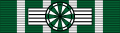 | France | Commander of the Ordre des Arts et des Lettres |
 | Belgium | Commander of the Order of the Crown |
 | Brazil | Commander of the Order of the Southern Cross |
 | Brazil | Grand cross of the National Order of Scientific Merit |
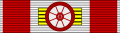 | Japan | Grand cross of the Order of the Rising Sun |
Works
Claude Lévi-Strauss wrote many important books about cultures and societies. Some of his well-known books include Tristes Tropiques (Sad Tropics), Anthropologie structurale (Structural Anthropology), and the series Mythologiques. His books look at how different groups of people live and see the world.
He also gave interviews about his work and ideas, such as "De près et de loin" with Didier Eribo.
Keep exploring


This article is a child-friendly adaptation of the Wikipedia article on Claude Lévi-Strauss, available under CC BY-SA 4.0.
Images from Wikimedia Commons. Tap any image to view credits and license.