
Crozet Islands
The Crozet Islands are a group of small islands located far away in the southern part of the Indian Ocean. They are also called Îles Crozet in French. These islands are very cold and windy because they are close to Antarctica.
The Crozet Islands belong to France and are part of a special area called the French Southern and Antarctic Lands. This area includes several distant islands and lands that France manages. The Crozet Islands are one of five main parts of this group.
Because they are so far from other places, the Crozet Islands are mostly home to birds and other wildlife that can live in harsh, cold weather. The islands are very important for scientists who study animals and the environment in extreme places.
History
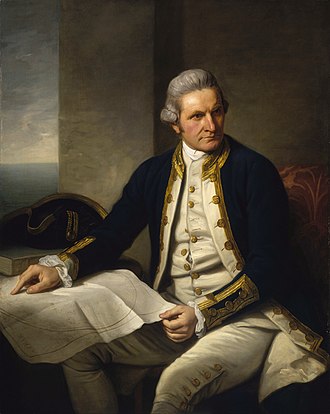
The Crozet Islands were found on January 24, 1772, by French explorer Marc-Joseph Marion du Fresne. His team claimed the islands for France. Later, explorer James Cook visited and named parts of the islands.
In the 1800s, people came to hunt seals, but most of the seals disappeared by 1835. Whaling also happened there for a short time. Many ships got stuck or sank nearby, and sometimes people had to stay for a long time.
In 1938, the Crozet Islands became a nature reserve. A research station was set up in 1963. Scientists there study the weather, plants, animals, and Earth movements. The station has between 18 and 30 people, depending on the season.
Geology
The Crozet Islands sit on the Antarctic Plate, between the Kerguelen hotspot and Madagascar near southern Africa. The oldest island, Île de l'Est, formed about 9 million years ago from a hotspot. This hotspot kept making new islands as it moved westward, but there has been no volcanic activity there recently.
Geography
The Crozet Islands are a group of six islands in the southern Indian Ocean. They are part of the French Southern and Antarctic Lands. The islands have a research station called Alfred Faure. People have worked there since 1963.
The islands have a cold, windy climate with lots of rain. Plants there are mostly grasses, mosses, and lichens. The islands are home to many birds, including penguins and seals. The islands became a nature reserve in 1938. Some animals, like mice and rats, have caused problems for the natural environment.
| No. | Island or Group (English) | Area | Highest Peak | Location |
|---|---|---|---|---|
| L'Occidental (Western Group) | ||||
| 1 | Île aux Cochons (Pig Island) | 67 km2 (26 sq mi) | Mont Richard-Foy, 853 m (2,799 ft) | |
| 2 | Île des Pingouins (Penguin Island, literally Auk Island) | 3 km2 (1.2 sq mi) | Mont des Manchots 340 m (1,115 ft) | |
| 3 | Îlots des Apôtres (Apostle Islets)(1) | 2 km2 (0.8 sq mi) | Mont Pierre, 289 m (948 ft) | |
| L'Oriental (Eastern Group) | ||||
| 4 | Île de la Possession (Possession Island) | 150 km2 (58 sq mi) | Pic du Mascarin, 934 m (3,064 ft) | |
| 5 | Île de l'Est (East Island) | 130 km2 (50 sq mi) | Mont Marion-Dufresne, 1,090 m (3,576 ft) | |
| Îles Crozet (Crozet Islands) | 352 km2 (136 sq mi) | Mont Marion-Dufresne, 1,090 m (3,576 ft) | 45°57' to 46°29'S 50°10' to 52°19'E | |
In popular culture
The Crozet Islands have been in many stories and films. In the 2012 French film Les Saveurs du Palais, some scenes happen there. The main character is a chef from France who works at a research station and used to cook for President François Mitterrand.
In the novel Desolation Island by Patrick O'Brian, part of the Aubrey–Maturin series, a ship called the HMS Leopard gets damaged by an iceberg. The sailors try to reach one of the Crozet Islands to fix their ship but miss it and drift away.
The famous book Moby-Dick by Herman Melville mentions the Crozet Islands as a place where whales can be found. Another story, Biggles Cuts it Fine by Captain W. E. Johns, is mostly set on the Crozet Islands, where a secret Russian base is hidden on an island called “Hog Island” in the book.
Pictures
Keep exploring



This article is a child-friendly adaptation of the Wikipedia article on Crozet Islands, available under CC BY-SA 4.0.
Images from Wikimedia Commons. Tap any image to view credits and license.