
Ephemeris
In astronomy and celestial navigation, an ephemeris is a book with tables. These tables show where stars, planets, and other objects in space are at different times. They tell us where these objects are and sometimes how fast they are moving in the sky.
The position of stars and planets from an ephemeris is usually given using special ways to describe places in the sky. These are called right ascension and declination. Ephemerides help us understand many events in the sky, like eclipses and the different phases of the Moon.
People who study the stars and navigate using the sky rely on ephemerides. Even tools like GPS signals use ephemeris data. Astrologers also use these tables for their work.
History
An ephemeris is a special book that shows where stars, planets, and other objects in space will be at certain times. People have used these books for thousands of years.
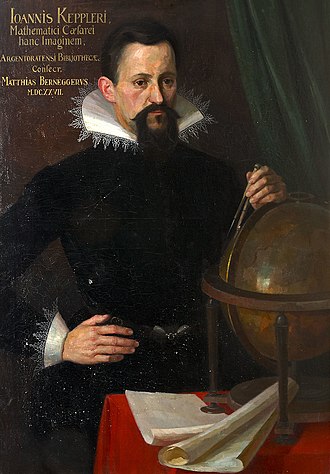
Long ago, in places like Babylon and Greece, people made lists showing where the Moon and planets would appear. Over time, many smart people from different countries made better lists. In the 1400s, a man named Regiomontanus made a book called "Ephemerides" in Germany. Even famous explorers like Christopher Columbus used these books to predict things like eclipses. Later, scientists like Johannes Kepler made even better lists using new ideas about how the planets move.
Modern ephemeris
For science, a modern planetary ephemeris is a special software program. It shows the positions of planets, their moons, asteroids, or comets at almost any time you choose.
Since the 1950s, scientists have used a method called numerical integration to calculate these positions. One famous example is the Jet Propulsion Laboratory Development Ephemeris. These programs can calculate positions for many years into the past and future. This works because scientists understand how objects in space move. However, some details, like the effects of many asteroids, are still hard to predict exactly. NASA's Jet Propulsion Laboratory updates its ephemerides almost every year with new information.
Ephemerides are important for guiding spacecraft and for studying the planets, their moons, stars, and galaxies. They usually show where objects appear in the sky using special coordinates called right ascension and declination. They may also include extra details like how bright an object looks, how far away it is, and when it rises or sets in the sky.
Celestial navigation can be used when satellite signals are not available. Some navigation programs include their own ephemeris. Others use data from modern books like the Nautical Almanac.
Pictures
Keep exploring


This article is a child-friendly adaptation of the Wikipedia article on Ephemeris, available under CC BY-SA 4.0.
Images from Wikimedia Commons. Tap any image to view credits and license.