
Garmisch-Partenkirchen
Garmisch-Partenkirchen is an Alpine ski town in Bavaria, southern Germany. It is the seat of government of the district of Garmisch-Partenkirchen, in the Oberbayern region, which borders Austria. The town is close to Germany's highest mountain, Zugspitze.
Garmisch-Partenkirchen hosted the 1936 Winter Olympic Games, the first Olympics to include alpine skiing. Today, it is a popular place for many winter sports competitions.
History
Garmisch and Partenkirchen were two separate towns for many years. Partenkirchen started as a place called Partanum a long time ago, near a busy trade route. Garmisch was first written about much later.
In the past, the area had difficult farming land and animals that could be dangerous. The towns stayed separate until they joined together in 1935 for an important sports event. Today, people often call the place just "Garmisch," even though both towns have their own unique feel.
During a big war, the town helped care for many soldiers, but it was not damaged in fights.
Climate
Garmisch-Partenkirchen has an oceanic climate. This means its weather is affected by the ocean. The winters here are colder than in other parts of Bavaria because the town is higher up. Elevation makes it colder. The area gets a lot of snow and rain. Some parts of Garmisch-Partenkirchen have many thunderstorm days.
Transport
The town is connected by roads such as the B 2. These roads connect to the A 95 motorway, which ends at Eschenlohe 16 km north.
There is a train station in Garmisch-Partenkirchen on the Munich–Garmisch-Partenkirchen line and the Mittenwald Railway. Trains go to Munich Central Station and other places like Mittenwald and Innsbruck. Some special trains also go to cities such as Berlin and Hamburg.
You can also take trains to nearby places like Reutte in Tirol and up to Zugspitze, Germany’s highest mountain.
There are many hiking trails with great views from the town. The closest airports are Innsbruck Airport and Munich Airport.
Sports
Garmisch-Partenkirchen is a popular place for skiing, snowboarding, and hiking. It has some of the best skiing areas in Germany, like the Garmisch Classic and Zugspitze.
The town hosted the 1936 Winter Olympics, which included alpine skiing for the first time. Many important ski races happen here, especially on the Kandahar Track. Every year on New Year's Day, there is a ski jumping contest as part of the Four Hills Tournament. The World Alpine Ski Championships were held in Garmisch in 1978 and 2011.
Garmisch-Partenkirchen worked with Munich to try to host the 2018 Winter Olympics, but the games went to Pyeongchang. The last Winter Olympics in the German-speaking Alps was in nearby Innsbruck, Austria, in 1976.
The town has a professional ice hockey team, SC Riessersee, and a local association football team called 1.FC Garmisch-Partenkirchen.
Event highlights
Garmisch-Partenkirchen has many fun events all year. In January, there is a ski jump and a special race called "Hornschlittenrennen." From January to February, the FIS Alpine Ski World Cup happens. In February, there is a historic bob-race on the Olympic track at Riessersee.
In April, Partenkirchen has the "Georgimarkt" festival. From May to October, there is music in the park. In June, there is a trail running event around Zugspitze called Zugspitz Ultratrail, and also the Richard-Strauss Festival. July has BMW Motorbike Days and a white night event. The "Festwoche" Festival takes place in July and August in both Garmisch and Partenkirchen. August also has the "Alpentestival." In August and September, there is a street art festival. Finally, in November, Garmisch holds the "Martinimarkt" market.
Public institutions
Garmisch-Partenkirchen is home to the George C. Marshall European Center for Security Studies. This center helps train leaders from many countries, especially those from past Soviet Union and Eastern European nations. It began in June 1993.
Nearby is the Edelweiss Lodge and Resort, which serves U.S. and NATO military families for recreation. Some U.S. troops and workers are based in the town to support these centers. The German Centre for Pediatric and Adolescent Rheumatology helps children and teens with certain health conditions. It has been in Garmisch-Partenkirchen since 1952.
Twin towns – sister cities
See also: List of twin towns and sister cities in Germany
Garmisch-Partenkirchen has friendly partnerships with:
- Aspen, United States
- Chamonix-Mont-Blanc, France
- Lahti, Finland
Notable people
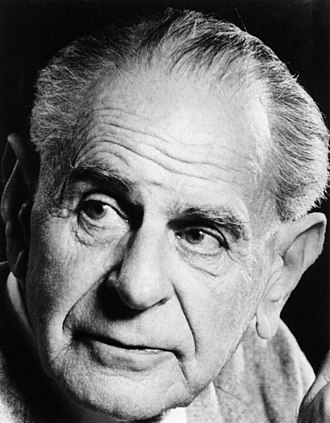
Garmisch-Partenkirchen has been home to many famous people from many areas. Some well-known people are Hermann Levi, a Jewish conductor, and Richard Strauss, a leading German composer. The town is also the birthplace of Michael Ende, a writer famous for The Neverending Story, and Karl Popper, a famous philosopher.
The area has produced many talented athletes. Notable sports figures include Rosi Mittermaier, an alpine ski racer and double Olympic gold medalist, and Magdalena Neuner, a biathlete who won many world championships and an Olympic title. Other famous athletes from the region include Maria Höfl-Riesch and Felix Neureuther, both skilled alpine skiers.
- Hermann Levi (1839–1900), Jewish orchestral conductor
- Richard Strauss (1864–1949), leading German composer
- Ludwig Thoma (1867–1921), author and editor
- Alfred Gerstenberg (1893–1959), Luftwaffe general
- Sir Karl Popper CH FBA FRS (1902–1994), Austrian-British philosopher
- Franz Klarwein (1914–1991), operatic tenor
- Michael Ende (1929–1995), writer, best known for The Neverending Story
- Hank Smith (1934–2002), Canadian country music singer
- Wolfgang Seiler (born 1940), biogeochemist and climatologist
- Ulla Mitzdorf (1944–2013), scientist
- Robert Rosner (born 1947), astrophysicist
- Hans Peter Blochwitz (born 1949), lyric tenor
- Michaela Steiger (born 1964), actress
- Marina Anna Eich (born 1976), film actress and producer
Notable people in sports
- Thaddäus Robl (1877–1910), cyclist
- Hanns Kilian (1905–1981), bobsledder
- Matthias Wörndle (1909–1942), cross-country skier
- Roman Wörndle (1913–1942), alpine skier
- Käthe Grasegger (1917–2001), alpine skier
- Michael Pössinger (1919–2003), bobsledder
- Pepi Bader (1941–2021), bobsledder
- Stefan Gaisreiter (born 1947), bobsledder
- Reinhard E. Ketterer (born 1948), figure skater
- Christian Neureuther (born 1949), alpine ski racer
- Rosi Mittermaier (1950–2023), alpine ski racer, double Olympic gold medalist
- Hans-Joachim Stuck (born 1951), racing driver
- Armin Bittner (born 1964), alpine skier
- Andrea Schöpp (born 1965), curler
- Monika Wagner (born 1965), curler
- Martina Beck (née Glagow) (born 1979), biathlete
- Maria Höfl-Riesch (born 1984), alpine skier
- Felix Neureuther (born 1984), alpine skier
- Susanne Riesch (born 1987), alpine skier
- Magdalena Neuner (born 1987), biathlete, Olympic champion
- Miriam Gössner (born 1990), biathlete
- Laura Dahlmeier (1993–2025), biathlete, double Olympic gold medalist
Points of interest
South of Partenkirchen is the Partnach Gorge, where a river flows between tall cliffs. The Zugspitze, Germany’s highest mountain, is south of Garmisch near Grainau, right on the border with Austria. Nearby is another tall mountain called the Leutasch Dreitorspitze, or “Three-Gate Peak,” with three tops.
The King's House on Schachen, a little castle built for Ludwig II of Bavaria, sits in the mountains south of Garmisch-Partenkirchen. Near it is the Alpengarten auf dem Schachen, an alpine botanical garden.
Pictures
Keep exploring



This article is a child-friendly adaptation of the Wikipedia article on Garmisch-Partenkirchen, available under CC BY-SA 4.0.
Images from Wikimedia Commons. Tap any image to view credits and license.