
Greek cuisine
Greek cuisine is the food of Greece and the Greek diaspora. Like many cuisines of the Mediterranean, it uses a few key ingredients: wheat, olive oil, and wine. These basics help make many tasty dishes.
Meals often have vegetables, fish, and different kinds of meat such as pork, poultry, veal, beef, lamb, rabbit, and goat. Other important parts of Greek cooking are pasta like hilopites, cheeses, herbs, lemon juice, olives, and yogurt. Bread made from wheat is found everywhere, and sometimes barley is used for snacks called paximathia.
Sweet treats in Greek cuisine use nuts, honey, fruits, sesame, and thin filo pastries. This style of cooking has roots in Ancient Greek and Byzantine times, but it also includes ideas from Turkish, Middle Eastern, Balkan, and Italian foods.
History
Further information: Ancient Greek cuisine and Byzantine cuisine
Greek cuisine is part of the culture of Greece and has been enjoyed for thousands of years. It began in ancient times and later influenced other places, including Rome and parts of Europe. The first book about Greek food was printed on the island of Syros in 1828.
Ancient Greek meals were simple. They included wheat, olive oil, and wine. Meat was not eaten often, but fish was popular. This way of eating continued in places like Cyprus until meat became easier to get. Wine and olive oil have always been important. The spread of grapes and olive trees followed the Greeks as they traveled.
The people of Sparta, a famous ancient Greek city, also had simple meals. One of their special foods was called melas zomos, or black soup.
Byzantine cuisine was similar but included new foods like caviar, nutmeg, and basil. Lemons were first used for health and later became part of everyday meals. Fish was still important for people who lived near the coast. The way people thought about health and food back then was shaped by ideas from the ancient Greek doctor Claudius Aelius Galenus. Byzantine cuisine grew because of Constantinople's role in trading spices from around the world.
Overview
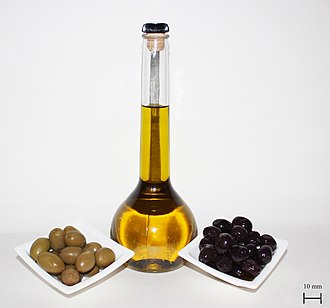
Greek food is special because it uses olive oil in almost every dish. Olive trees grow all over Greece, and people eat olives, too. The main grain is wheat, but barley is also grown. Important vegetables include tomatoes, aubergine (also called eggplant), potato, green beans, okra, green peppers (called capsicum), and onions. Honey in Greece comes from fruit trees and citrus trees, like lemon and orange trees, as well as thyme and pine.
Greek cooking uses flavors like oregano, mint, garlic, onion, dill, cumin, and bay laurel leaves. Other common herbs and spices are basil, thyme, and fennel seed. Parsley is often used to decorate dishes. In the north of Greece, sweet spices like cinnamon, allspice, and cloves are used with meat in some stews.
The weather and land in Greece make it easier to raise goats and sheep than cattle, so beef dishes are not common. Fish dishes are popular in areas near the coast and on islands. There are many types of cheese used in Greek food, including Feta, Kasseri, Kefalotyri, and others.
People in Greece often eat out. Places like the taverna and estiatorio serve home-style meals that are affordable for everyone. Common street foods include souvlaki, gyros, various pitas, and roasted corn.
Fast food became popular in the 1970s, with some restaurants like Goody's and McDonald's offering international foods like hamburgers, as well as Greek foods such as souvlaki, gyros, tiropita, and spanakopita.
Since 2013, Greece's Mediterranean diet has been added to the UNESCO Intangible Cultural Heritage Lists.
Origins
Many Greek dishes come from very old times. For example, lentil soup and fasolada have been eaten for many years, even though some ingredients like tomatoes came from far away places. Other old foods include tiganites, retsina wine with a pine flavor, and pasteli, a sweet snack made from sesame and honey.
Through time, Greek food has taken ideas from nearby cultures. Dishes like pastitsio and moussaka show the influence of Italian and French cuisine. Chefs such as Nikolaos Tselementes helped create modern Greek cooking by mixing old traditions with new thoughts.
Regions
Greece has many different foods from different places. Each area has its own special dishes. The Aegean islands, like Kyklades, Rhodes, and Lesbos, have their own styles. The Peloponnese and Ionian islands have unique foods, with some Italian influence. Other regions include Epirotic, Cretan, Cypriot, Macedonian, and Pontic Greek cuisines. Each area brings its own flavors and traditions to Greek cooking. There are also special foods from ethnic minorities, such as the Aromanian cuisine.
Typical dishes
Main article: List of Greek dishes
Greek meals often include vegetables cooked with olive oil, herbs, and tomato sauce. Common vegetables used are green beans, peas, okra, cauliflower, spinach, and leeks.
Many foods are wrapped in thin pastry called filo, made into small triangles or large sheets. Examples include kotopita (chicken pie), spanakopita (spinach and cheese pie), hortopita (greens pie), kimadopita (ground meat pie), and kolokythopita (zucchini pie). There are many different kinds of savory pies.
Greek cuisine also varies by region. Areas like Epirus, Thessaly, and Central Greece have many special filo-based dishes.
Breakfast in Greece might include Greek coffee, mountain tea, hot milk, fruit juice, bread with butter or honey, fresh fruits, and foods like bougatsa, tiropita, spanakopita, boiled or fried eggs, and more. Traditional dairy shops once offered many of these items, though they are less common today.
The list of Greek dishes includes foods from all over Greece, along with some special regional dishes.
Appetizers
Selected appetizers are:
- Antzougies
- Avgotaracho, Bottarga, flathead mullet caught in lagoons.
- Florina peppers; can be roasted, sliced and served by adding olive oil and garlic.
- Toursi (pickle), with the well known pickled peppers and mixed pickle.
- Feta topped with olive oil and oregano
- Flogeres, crispy filo wrapped around a filling of goat cheese, herbs, sun-dried tomato, or ground meat.
- Sardeles psites (roasted sardines),
- Htapodi sti schara (octopus on the grill),
- Patatokeftedes, potato fritters.
- Tirokroketes, cheese fritters (fried cheese balls) also known as tirokeftedes.
- Bourekakia, mini rolls filled with cheese or ground meat or vegetables.
- Kolokithokeftedes, pumpkin fritters.
- Saganaki, fried kefalograviera cheese.
- Melitzanes tiganites, fried eggplants.
- Bouyiourdi
- Kafteri piperia (hot pepper), grilled or roasted chili pepper served with olive oil and vinegar.
- Lakerda, pickled raw fish.
- Loutza
- Olives
- Kolokithakia tiganita, fried cucurbita.
- Koxloi, escargot
- Htapodi ksidato, octopus marinated in vinegar.
- Steamed mussels
- Omelette
- Strapatsada, also known as kagianas, scrambled eggs (omelette) with tomato.
- Sfougato, oven-baked omelette with eggs, grated zucchini, scallions (green onions), dill, feta cheese, kefalotyri or other type cheese.
- Kalamarakia tiganita, fried squid slices served with a lemon wedge.
- Dolmades, also known as dolmadakia or sarmadakia, stuffed grape leaves.
- Ofti potato, baked potato with coarse salt, dried oregano and olive oil, served with olives, chopped dried onion and lemon.
- Tomatokeftedes, tomato fritters well known throughout the island of Santorini.
- Staka me ayga (staka with eggs), a Cretan dish consisting of poached or fried eggs and local staka (a type of buttery cream mixed with flour).
- Gigantes plaki or gigandes plaki, baked Greek Gigantes beans with tomato sauce and herbs
- Marides tiganites, small-sized whitebait fish (spicara smaris) that are lightly dusted with flour, then fried.
- Skordopsomo, garlic bread made with a combination of sliced bread, olive oil, garlic, salt, pepper, oregano, and basil.
- Garides saganaki, sautéed shrimps that are deglazed with ouzo, then doused in tomato sauce, and topped with crumbled feta.
- Dakos, a traditional Cretan food which features a slice of soaked dried bread or barley rusk (paximadi) topped with chopped tomatoes and crumbled feta or mizithra cheese, dried oregano and a few splashes of olive oil.
- Sikotakia (livers), fried lamb or chicken, small liver slices with olive oil and oregano.
- Loukaniko (sausage), Greek traditional sausage made from pork or lamb, typically flavored with orange peel, fennel seed, and various other dried herbs and seeds, and sometimes smoked over aromatic woods. They are also often flavored with greens, especially leeks.
- Fava, yellow split peas that are cooked with onions and various spices until they transform into a creamy purée.
- Tsouknidopita (nettle pie),
- Spanakopita (spinach pie).
- Kimadopita (ground meat pie), also known as Kreatopita.
- Hortopita (greens pie), pie filled with a variety of wild or cultivated greens.
- Pitarakia, mini half-moon-shaped mizithra cheese pies from the island of Milos.
- Kolokithopita (pumpkin pie), savory pie with pumpkin and feta filling which is placed between two layers of phyllo pastry.
- Sfakiani pita or Sfakianopita (Sfakian pie), traditional Cretan pan-fried thin flat pie from Sfakia stuffed with mizithra cheese drizzled with honey and sometimes with sesame seeds.
- Tiropita (cheese pie), pie with Greek feta cheese. Tiropitakia which are mini cheese pies made with phyllo triangles stuffed with Greek feta cheese, are also well-known.
- Piroski or Pirozhki, fried pita with filling of feta cheese or Greek Protected Destination of Origin (PDO) certified kasseri cheese or ground meat or mashed potato or other mixed or plain filling. Served hot.
Salads
Greek cuisine has many tasty salads that are also used as appetizers. Some popular salads are:
- Horiatiki salad, made with tomatoes, cucumbers, onion, feta cheese, and olives, dressed with olive oil and oregano.
- Horta salad, with boiled greens like endives, amaranth greens, and chicory, dressed with olive oil and lemon juice.
- Other salads include Dakos, Pikantiki, Lahanosalata (cabbage salad), Kaparosalata (caper salad), Ampelofasoula (cowpea salad), Kounoupidi (cauliflower salad), Patatosalata, Patzarosalata, Brokolo (broccoli salad), Aggouro-ntomata, Fasolia mavromatika (black-eyed pea salad), Marouli (lettuce salad), and Tonosalata (tuna salad).
Spreads and dips
In Greek cuisine, appetizers often include spreads and dips, which are also types of sauces. Some popular spreads and dips are:
- Olive paste, tapenade.
- Rosiki, made with boiled potatoes, carrots, cucumbers, mayonnaise, and peas.
- Kipourou, which includes gardener's salad, cabbage, carrots, radishes, and mayonnaise.
- Kopanisti, made with feta cheese, grilled red sweet peppers, olive oil, and fresh garlic.
- Melitzanosalata (eggplant salad), an eggplant spread and dip (eggplant salads and appetizers).
- Skordalia, a garlic spread and dip made from mashed potatoes, olive oil, vinegar, and raw garlic.
- Tirokafteri, a spread and dip made from feta cheese, yogurt, hot peppers, olive oil, and vinegar.
- Paprika, made with sweet paprika, tomato paste, roasted red pepper (Florina pepper), feta cheese, and olive oil.
- Taramosalata, a spread and dip made from fish roe mixed with olive oil, lemon juice, and a starchy base of bread or potatoes.
- Feta cheese sauce, a creamy sauce made from feta cheese, garlic, olive oil, lemon juice, oregano, and thyme.
- Tzatziki, a spread and dip made from strained yogurt mixed with cucumbers, garlic, salt, olive oil, and sometimes vinegar or lemon juice, along with herbs like dill, mint, parsley, and thyme.
Soups
Greek cuisine has many tasty soups made from simple ingredients. Some popular soups are Fasolada, a soup with dry white beans, olive oil, and vegetables. There is also Fakes, a lentil soup. Hortosoupa is a greens soup that can be made in many ways.
Other soups you might try include Avgolemono, made with whisked eggs and lemon juice in a broth. Youvarlakia has balls of ground meat and rice with a creamy sauce. Kotosoupa is a chicken soup with vegetables and rice. Kakavia features fish, onions, potatoes, and olive oil. Magiritsa, a soup with lamb and dill, is often eaten on Greek Easter Sunday.
Dishes
Greek cuisine has many tasty dishes made with fresh ingredients. Some popular choices are:
- Fasolakia: Green beans cooked in olive oil with vegetables.
- Gemista: Stuffed bell peppers and tomatoes with rice or meat.
- Spanakorizo: A mix of spinach and rice.
- Stifado: A hearty stew with onions and meat.
- Pastitsio: A baked pasta dish with meat and a creamy sauce.
- Gyros: Meat cooked on a spit, served in pita bread with vegetables and sauces.
- Souvlaki: Small pieces of meat cooked on skewers, often eaten with pita bread.
These dishes show the variety and flavor of Greek food, using ingredients like olive oil, vegetables, and grains.
Desserts and pastries
Greek cuisine has many tasty desserts and pastries. Popular sweet treats include Amygdalopita, a cake made from almonds, and Baklava, which is thin pastry with nuts and honey. There are also savory choices like Amygdalota, almond sweets, and Loukoumades, fried dough balls with honey.
Other favorites are Galaktoboureko, a custard-filled pastry with syrup, and Melomakarona, honey cookies. Each area of Greece has its own special desserts, such as Karydopita from walnut-growing places and Loukoumi, a sweet similar to Turkish delight. These treats show the wonderful flavors in Greek cooking.
Drinks and beverages
Some popular drinks from Greece include:
- Greek mountain tea
- Greek coffee
- Frappé coffee, created in Thessaloniki in 1957.
- Freddo cappuccino
- Espresso freddo, a type of iced coffee
- Salepi
- Ouzo
- Retsina
- Tsipouro
- Tsikoudia
- Gin
- Liqueur
- Beer, including Beer in Greece
- Souma, from the island of Chios.
- Tentura, a special drink from Patras.
- Kumquat, a drink made mostly on the island of Corfu.
- Kitron, a drink from Naxos.
- Fatourada, an orange-flavored drink from Kythira.
- Mineral water, from various places in Greece.
- Sparkling mineral water
- Mastika, made from a special tree on Chios Mastiha.
- Soumada, a sweet, almond drink from Crete.
- Rakomelo, made from grape brandy, honey, and spices like cinnamon and cardamom, found in Crete and other Aegean Sea islands.
- Metaxa, a mix of brandy and special wines from Samos.
- Wine, with Greece having around 200 different kinds of grapes.
Pictures
Keep exploring


This article is a child-friendly adaptation of the Wikipedia article on Greek cuisine, available under CC BY-SA 4.0.
Images from Wikimedia Commons. Tap any image to view credits and license.