 Safekipedia
Le Mans
Adapted from Wikipedia · Adventurer experience
Le Mans is a city in northwestern France. It is located on the Sarthe River where it joins the Huisne. Historically, it was the capital of the province of Maine. Today, it is the capital of the Sarthe department and the center of the Roman Catholic diocese of Le Mans. The city is part of the larger Pays de la Loire region.
People who live in Le Mans are called Manceaux if they are male and Mancelles if they are female. Since 1923, the city has hosted the 24 Hours of Le Mans. This race is the oldest continuing endurance car race in the world and is one of the most popular and respected events in motor sports globally.
History
See also: Timeline of Le Mans
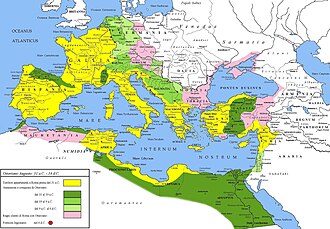
Le Mans has a long history going back to Roman times. The city, called Vindinium then, was the capital of a local tribe and became part of the Roman province of Gallia Lugdunensis. You can still see parts of old Roman walls and a large amphitheatre today.
Over time, Le Mans was an important city in the region of Maine. It saw many battles, especially in the 11th century, and later became part of France. In the 19th century, the city grew with new industries like railways and car manufacturing. In 1908, the Wright brothers showed their airplane near Le Mans, which was an important moment for aviation history.
Main sights
Le Mans has a beautiful old town called Cité Plantagenêt, also known as Vieux Mans, and the Cathédrale St-Julien. This cathedral is dedicated to St Julian of Le Mans, the city's first bishop. You can see parts of old Roman walls in the old town, and there are Roman baths near the river. Every summer in July and August, these walls are lit up at night.
The city has many lovely places to visit, such as the Arboretum de la Grand Prée, the medieval church Notre-Dame de la Couture, the neogothic church Notre Dame de Sainte Croix, and part of the old Cistercian abbey de l'Epau, which was founded by Queen Berengaria. Other spots include the Jardin des Plantes du Mans, the Musée de la reine Bérengère, and the Musée de Tessé, a fine arts museum. The city's Hôtel de Ville (City Hall) is also worth seeing.
Climate
Le Mans has a temperate oceanic climate. The weather is influenced by mild air from the Atlantic. Summers can be warm, and winters are usually mild and cloudy. Rain falls fairly evenly during the year.
Demographics
As of 2022, about 370,000 people lived in the area around Le Mans. About 145,000 of these people lived in the city itself. In 1855, Le Mans grew by adding four nearby areas. Before that, the city was smaller.
Transportation
The main railway station of Le Mans is called Gare du Mans. You can reach Paris in just 1 hour by riding the fast TGV train. There are also fast train connections to Lille, Marseille, Nantes, Rennes, and Brest. Gare du Mans is a center for local trains as well. Le Mans started a light rail system, called the Le Mans tramway, on November 17, 2007.
There is an airfield near Le Mans called the Le Mans Airfield, which serves as a regional airport. It is located in the community of Arnage to the south of the city.
Sport
Motorsport
The first French Grand Prix took place on a track near Le Mans in 1906.
Since 1923, Le Mans has been well-known for motorsports because of the 24 Hours of Le Mans, a long race for sports cars. The race uses the Circuit des 24 Heures du Mans, which started on public roads but now has permanent sections. The Bugatti Circuit, named after a car maker, is used for races all year, including the French motorcycle Grand Prix.
Basketball
Le Mans has a basketball team called Le Mans Sarthe Basket. They won the top French basketball league in 2006. They play at the Antarès, which also hosted games for the FIBA EuroBasket 1999.
Football
Cycling
Notable people
Le Mans has been the birthplace of many interesting people throughout history. Some well-known individuals born there include Elijah ben Menahem Ha-Zaken, Henry II of England, and Jean Françaix, a composer. The city has also seen famous racing drivers like Henri Fournier and Sébastien Bourdais grow up and begin their careers.
Many notable people have also lived or taught in Le Mans at different times, such as the philosopher Jacques Derrida and the English actor David Jason. Several important figures passed away in Le Mans, including Liborius of Le Mans, who was a bishop there.
International relations
See also: List of twin towns and sister cities in France
Le Mans has friendly connections with cities around the world. Some of these cities are:
- Bolton, England, United Kingdom
- Haouza, Morocco
- Paderborn, Germany
- Rostov-on-Don, Russia
- Suzuka, Japan
- Volos, Greece
- Xianyang, China
- Indianapolis, Indiana, United States
Gastronomy
The city of Le Mans is famous for a special food called rillettes. This is a tasty spread made from shredded pork pâté.
Landmarks
Near Le Mans at Mayet, there is a tall radio tower. It stands 342 meters high and is one of the tallest in France.
Representation in popular culture
Le Mans has been used in many movies about its famous race. It is also in parts of the 2020 novel, The Invisible Life of Addie LaRue, by V.E. Schwab.
Images
Related articles



This article is a child-friendly adaptation of the Wikipedia article on Le Mans, available under CC BY-SA 4.0.
Images from Wikimedia Commons. Tap any image to view credits and license.