 Safekipedia
Marine biology
Adapted from Wikipedia · Adventurer experience
Marine biology is the study of life in the sea. It looks at the plants and animals that live in marine habitats, from coastal areas to the deep open ocean. Scientists who work in marine biology study everything from tiny phytoplankton and zooplankton to large animals like cetaceans (whales).
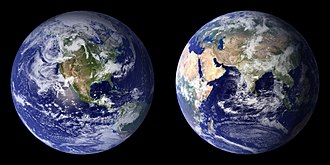
The ocean covers most of our planet, about 71% of the Earth's surface. It is home to many different kinds of life. Scientists are still discovering new sea creatures all the time. Marine life helps shape our planet. It plays a role in the oxygen cycle and helps control the climate.
Sea creatures also give us food, medicine, and materials we use every day. They help support fun activities like recreation and tourism around the world. As we learn more, we see how connected all life on Earth is, including life in the ocean. There is still much to discover, especially in the deep parts of the ocean.
Biological oceanography
Main article: Biological oceanography
Marine biology and biological oceanography both study sea life, but they look at it in different ways. Biological oceanography focuses on tiny sea creatures, like plankton. It looks at how these tiny creatures interact with the water's chemistry, physics, and geology.
This field also studies how plankton grow, move, and eat. It looks at how they help control carbon in the world and how tiny microbes fit into the ocean's food chains. It also studies how people affect ocean ecosystems.
Marine habitats
Main article: Marine habitats
Marine habitats are split into two main types: coastal and open ocean. Coastal habitats are near the shore, from the shoreline to the edge of the continental shelf. Most sea creatures live here, even though this area is small. Open ocean habitats are far from shore, in deep water beyond the continental shelf.
Marine habitats can also be pelagic and demersal. Pelagic habitats are in the water away from the ocean floor, often moved by currents. Demersal habitats are close to or on the ocean floor. Some sea creatures, like corals and seaweed, change their habitats to help other animals live there.
Marine life
Main article: Marine life
Many animals and plants live in the ocean. Marine biology studies these sea creatures. It groups them by where they live, not what type they are. This includes all creatures tied to the sea, whether they live there all the time or just part of it.
Microscopic life
Main article: Marine microorganism
Tiny sea creatures are very important. They help make food for many ocean animals and keep our planet healthy by recycling air and water. Some of these tiny plants, called phytoplankton, are very numerous and give off much of the oxygen we breathe. Scientists are still learning more about these small sea dwellers.
Plants and algae
Main article: Marine algae and plants
Algae and plants in the ocean are very common and important. They give shelter and food to many sea animals. Large seaweed forests grow underwater, and plants like seagrasses live in shallow waters close to shore.
Invertebrates
Main article: Marine invertebrates
Many sea creatures do not have backbones. These include jellyfish, sea worms, shellfish like squid and octopus, and animals like starfish and sea squirts. Invertebrates are very diverse and numerous in ocean environments.
Fungi
Main article: Marine fungi
There are thousands of types of fungi that live in the sea. They can be found on algae, animals, wood, and even sea foam. These fungi help break down materials and create many useful chemicals.
Vertebrates
Main article: Marine vertebrates
Fish
Main article: Fish
There are over 33,000 kinds of fish, and most of them live in salty water. Fish include both bony fish and cartilaginous fish like sharks.
Reptiles
Main article: Marine reptile
Sea creatures with backbones that are reptiles include sea turtles, sea snakes, and the marine iguana. Most of these reptiles need to come onto land to lay eggs.
Birds
Main article: Seabird
Birds that live near the ocean, such as albatrosses and penguins, are called seabirds. Though they spend most of their time at sea, some like gulls can also be found far inland.
Mammals
Main article: Marine mammal
Marine mammals include whales, manatees, seals, sea otters, and polar bears. All of these animals breathe air and must come to the surface to do so, even if they can stay underwater for long periods.
Subfields
The marine ecosystem is very large, so there are many areas of study in marine biology. Most of these areas focus on learning about specific groups of sea animals, like phycology, invertebrate zoology, and ichthyology. Other areas look at how living in seawater affects sea creatures and how changes in the ocean impact marine life. One area studies how oceans and ocean life connect with big environmental issues, like carbon dioxide levels. Recent work in marine biotechnology looks at useful materials from sea life, such as biomolecules and proteins, that might help in medicine or create new materials like biomimetic materials.
By watching the ocean, scientists have found sea creatures that could help create treatments for diseases.
Related fields
Marine biology is a part of biology. It works closely with oceanography, especially biological oceanography, and can be seen as a part of marine science. It also shares ideas with ecology. Fields like fisheries science and marine conservation grow from marine biology, as do environmental studies. Marine chemistry, physical oceanography, and atmospheric sciences are also closely related to marine biology.
Distribution factors
Marine biologists study where sea creatures live and move. They use tools like pop-up satellite archival tags, acoustic tags, and data loggers to track animals. These tools help scientists learn how ocean currents, tides, and other ocean conditions affect sea life.
Many sea animals are born, grow up, and live in different places. For example, scientists do not fully know where young sea turtles and some sharks go during their first year of life. New technology is helping researchers learn more about deep-sea creatures. This information helps protect fish and supports healthy oceans.
History
Main article: History of marine biology
The study of marine biology began a long time ago. Aristotle looked at sea life around Lesbos, which started many discoveries. Later, in 1768, Samuel Gottlieb Gmelin wrote the first book about sea plants. He used a new way to name living things made by Linnaeus.
The British scientist Edward Forbes is often called the founder of marine biology. In the 1800s, many scientists started exploring the oceans more. Important trips, like the one made by HMS Beagle where Charles Darwin developed his ideas, helped scientists learn about ocean life. Another big trip was made by HMS Challenger, which showed there were many kinds of animals in the deep sea.
Creating special labs where scientists could study sea creatures was very important. The oldest lab is Station biologique de Roscoff in France, started in 1859. In the United States, Scripps Institution of Oceanography began in 1903, and Woods Hole Oceanographic Institute started in 1930. New tools like diving gear and underwater vehicles let scientists explore deeper parts of the ocean.
Images
Related articles




This article is a child-friendly adaptation of the Wikipedia article on Marine biology, available under CC BY-SA 4.0.
Images from Wikimedia Commons. Tap any image to view credits and license.