 Safekipedia
Moonwalk One
Adapted from Wikipedia · Adventurer experience
Moonwalk One
Moonwalk One is a 1971 documentary film about the Apollo 11 mission. This mission was the first time humans landed on the Moon.
The film shows the big achievement of science and technology that made this happen.
The movie also shows what life was like on Earth when people watched this important event. It tries to share the excitement everyone felt when humans first walked on another world. This was a very important moment in history and showed what people can do when they work together.
Original 1970 release
After finishing the film in 1969, not many people were interested because many trips to the Moon had happened after Apollo 11. NASA showed the film in New York City, but it was thought to be too long and wasn’t shown in movie theaters. About 15 minutes were cut from the film, but it still didn’t get much interest. However, the film was shown at the Cannes Film Festival in 1971, where it won a special award. The Whitney Museum of American Art in New York showed it in their “New American Directors” series, which led to good reviews and more showings in theaters across the country.
2009 re-release
In 2009, a special version of the film called the "Director's Cut" came out. This version was watched over by Theo Kamecke and first shown on Monday, July 20, 2009. The DVD had comments from the director, the story of how the film was made, and other special features.
History of the making of Moonwalk One
About a year and a half before the Apollo 11 mission, NASA asked a company called Francis Thompson Inc. to make a film about the Apollo program. The film would end with the first Moon landing. Francis Thompson and his partner Alexander Hammid were famous filmmakers. They were known for creating To Be Alive! for the 1964-65 New York World's Fair. It even won an Academy Award for Documentary Short Subject.
But the big film project lost support from MGM in early 1969. Even though Francis Thompson and NASA looked for new funding, they couldn’t find any. So the big project ended. But six weeks before Apollo 11 launched, NASA called again. They wanted to make sure this important event wasn’t forgotten. They asked if Thompson could make a film with a smaller budget of $350,000. Since Francis Thompson was busy, he asked Theo Kamecke to take on the task. Bill Johnnes also joined as a producer. He knew many of the right people from the earlier project.
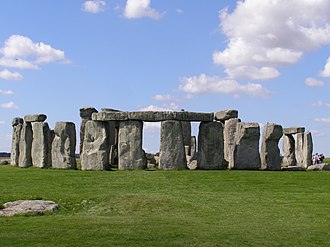
Stonehenge and Moonwalk One
Director Kamecke had a busy schedule to get ready for filming the Apollo 11 mission. On a trip to Cape Canaveral, he chose to start the film with scenes from Stonehenge, which he had filmed before in England. He believed Apollo and Stonehenge were linked.
When Apollo 11 launched, Kamecke asked his camera teams to show the people watching instead of the launch. He was allowed into Launch Control, which was unusual for a civilian. Later, he was in Mission Control MOCR in Houston, Texas during the moonwalk. The rest of the film was planned after the launch in July.
NASA and Moonwalk One
Before the launch, Theo Kamecke visited Washington D.C. to talk with people at NASA. He wanted the film to be more than just a list of facts. Julian Shear, who handled public relations for NASA, had worked in television before. He told Kamecke to focus on making a special keepsake, like a time capsule, instead of worrying about how much money the film might make.
Elements of the film
Besides clips from NASA, the film used many types of footage. Researchers looked for old news clips and special scenes from around the world. They showed what people were thinking and feeling during this big event. They also filmed how the spacecraft and suits were made, and tests to see how well astronauts could handle tough situations.
One part of the film shows the rocket launch. The filmmakers found extra clips that were not usually shown. These clips were hidden in boxes in Huntsville, Alabama. After checking them, the team chose the best parts for the movie. They made sure these clips looked just right before adding them to the film.
Opticals
The film Moonwalk One used special visual effects called "opticals." These included scenes like the Earth rising over the Moon and moving from Earth in space to the Moon’s surface. The astronauts didn’t film these scenes, so the filmmakers used still photos from earlier missions and turned them into smooth, slow movements.
An animated part showed how the Apollo-Saturn rocket was built and worked, with pieces falling away until only the Command Module Columbia returned to Earth. The animation looked simple, like old cartoons such as Mickey Mouse, because real computer animation was too expensive at the time. The 2019 documentary Apollo 11 honored Moonwalk One by using similar designs in its own computer animations.
Music and sound effects
The music for Moonwalk One was made by Charles Morrow. He was known for his special music. In a part called the "Earth Poem," he used sounds like a heartbeat, breathing, and a cello melody.
The film used real sounds from spacecraft to make music. These sounds came from Mariner 4, a spacecraft that flew by Mars before, because the sounds from Apollo were too fast to hear. The launch scene mixed sounds from a V2 rocket and an atom bomb, with slowed-down metal strikes that sounded like church bells.
Narrator
The director of the film, Theo Kamecke, chose the narrator, Laurence Luckinbill, because he had the right voice for the movie. He talked about this choice with filmmaker Christopher Riley.
Production of the finished film
The film used footage from many sources, like different film sizes and video. They decided to use one format so everything would look smooth. Originally, they planned to use a big film size called 70mm, but after the moonwalk, they realized it was too expensive and hard to work with. So, they switched to a more common size called 35mm, which could fit all the footage from the astronauts and other clips.
The finished film was made by a company in California called Technicolor. They used a special printing method that gave the film very clear and bright colors. Even though newer, cheaper ways existed by then, Moonwalk One was one of the last films made using this older, high-quality method.
Reception
Critics liked the film Moonwalk One. They thought it was a great documentary about landing humans on the Moon. One news report said it was the first documentary to really show how important the Moon landing was. A magazine in 1972 called it an amazing film that told history in a special way. A writer for the New York Post in 1972 even said it should be shown with a famous movie from 1968 called 2001: A Space Odyssey.
Related articles


This article is a child-friendly adaptation of the Wikipedia article on Moonwalk One, available under CC BY-SA 4.0.