 Safekipedia
Ninety-five Theses
Adapted from Wikipedia · Adventurer experience
The Ninety-five Theses is a list of ideas written in 1517 by Martin Luther, a teacher at the University of Wittenberg in Germany. Luther wrote these ideas for a special discussion called a disputation. These ideas later helped start the Protestant Reformation. This was a time when many people began to question some rules of the Catholic Church, leading to the creation of Protestantism.
Luther wrote the Ninety-five Theses because he and others were worried about how some church leaders were handling something called indulgences. Indulgences were special papers that some church leaders sold. This made many people upset, and Luther wanted to talk about these concerns openly.
Background
Martin Luther, a teacher at the University of Wittenberg, wrote the Ninety-five Theses about problems with a church practice called indulgences. In the Roman Catholic Church, indulgences were a way for people to reduce punishment they might face after death. Sometimes, church leaders sold these indulgences for money, which caused concerns.
Luther worried that people were buying indulgences instead of truly changing their lives. In 1517, a church leader named Johann Tetzel was selling indulgences near Wittenberg. Luther spoke out against this, teaching that true change of heart was more important than buying forgiveness. He wrote the Ninety-five Theses to share his thoughts and asked church leaders to discuss the issue.
Content
The first idea in Martin Luther's list says that when Jesus told people to change their hearts, he meant that believers should always be trying to do better. Luther talked about how sorry people should feel for doing wrong, instead of just telling a priest and getting a special forgiveness ceremony. He said the pope could only forgive certain punishments, not take away the feeling of being sorry.
Luther questioned ideas about a place called purgatory where people were thought to wait before going to heaven. He said no one really knew what happened there and that the pope could not help them. He believed that true sorry feelings were more important than any special forgiveness from the church. He taught that helping others was better than paying for special forgiveness and that the church’s true treasure was the teachings of Jesus, not money.
Luther criticized some church leaders for telling people they could avoid feeling sorry by paying for special forgiveness. He said this made it harder for people to truly change their hearts. He taught that doing good deeds, like helping the poor, was more important than paying for special forgiveness. Luther shared questions people were asking, such as why the pope didn’t free everyone from purgatory if he could. He ended by encouraging people to follow Jesus’ example, even if it was hard.
Luther's intent
The Theses were ideas for a special talk called a disputation. Luther asked scholars from other cities to join this talk. It was normal for teachers like Luther to organize these talks. Luther had made many sets of ideas for talks at Wittenberg between 1516 and 1521.
Luther’s ideas were to start a talk among teachers, not to change everything for everyone. But he did think his action was important. He started using the name “Luther,” which means “free” in Greek, showing he wanted to be free from old ideas. Luther later said he did not want the Theses to be shared by many people, though some think he wanted a big talk. Because these ideas were for a talk, Luther could say he did not really support the hardest ideas in them.
Distribution and publication
On 31 October 1517, Martin Luther sent a letter to the Archbishop of Mainz, Albert of Brandenburg. In the letter, Luther wanted to tell the archbishop about problems with how people were learning about special church permissions called indulgences. He thought the archbishop did not know what was being said and was worried people were being led away from the main teachings of the church.
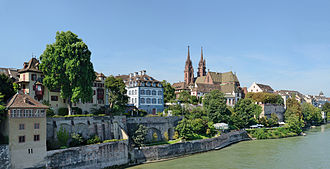
The Ninety-five Theses were meant to start a discussion among scholars. Usually, these ideas were printed and put up in public places. Even though we do not have copies of the first printing from Wittenberg, the ideas spread quickly. The Theses were printed in Latin in Basel and as posters in Leipzig and Nuremberg. Hundreds of copies were made in Germany in 1517. Later that year, a man named Kaspar Nützel translated them into German, and copies of this translation were sent to people interested in the ideas across Germany.
Reaction
When Martin Luther shared his list of ideas called the Ninety-five Theses, some people disagreed with him. A leader named Albert asked teachers at the University of Mainz for advice on how to stop Luther. In Rome, leaders thought Luther might cause trouble. The Pope asked a group Luther was part of, the Augustinian Hermits, to tell him to stop sharing his ideas. A writer named Sylvester Mazzolini was asked to make arguments against Luther.
Luther was asked to come to Rome to explain himself, and he wrote more about his beliefs. As he shared more, he saw that his ideas were different from the church. Another person, Johann Tetzel, argued against Luther and said he should be punished. Luther tried to explain his views simply for ordinary people, and many read his work. Another theologian, Johann Eck, also wrote against Luther in a harsh way. Luther had to meet with church leaders to defend his ideas, but they did not accept them. Finally, Luther was told he could no longer be part of the church because of his different beliefs.
Legacy
The ideas in the Theses started big changes in Europe. They began what we call the Reformation, a split in the Roman Catholic Church that led to many important changes in society and politics. Luther became a key leader in this movement.
October 31, 1517, the day Luther shared the Theses, became known as the start of the Reformation. People began celebrating this day as early as 1527. In 1668, it was officially made Reformation Day, a holiday in parts of Germany that later spread to other areas. In 2017, Germany celebrated the 500th anniversary of this important day with a national holiday.
Images
Related articles




This article is a child-friendly adaptation of the Wikipedia article on Ninety-five Theses, available under CC BY-SA 4.0.
Images from Wikimedia Commons. Tap any image to view credits and license.