 Safekipedia
Oʻahu
Adapted from Wikipedia · Adventurer experience
Oʻahu, sometimes written Oahu, is the third-largest and most populated island of the Hawaiian Islands and of the U.S. state of Hawaii. The state capital, Honolulu, is on Oʻahu's southeast coast. The island of Oʻahu and the uninhabited Northwestern Hawaiian Islands make up the City and County of Honolulu.
Oʻahu is 44 miles (71 km) long from east to west and about 30 mi (48 km) across its longest north-south distance. Its shoreline is 227 mi (365 km) long. Including small nearby islands such as Ford Island, plus those in Kāneʻohe Bay and off the eastern (windward) coast, its area is 596.7 square miles (1,545.4 km2), making it the 20th-largest island in the United States.
Well-known features of Oʻahu include Waikīkī, Pearl Harbor, Diamond Head, Hanauma Bay, Kāneʻohe Bay, Kailua Bay, and the North Shore.
Name
Oʻahu is often called "The Gathering Place". This name was suggested in 1922 by Thomas Thrum, who wrote for the Hawaiian Almanac. He thought the Hawaiian phrase ʻo ahu meant "gathering of objects". The name Oʻahu does not have any other known meaning in the Hawaiian language.
History
See also: History of Hawaii and Hawaii § History
We do not know exactly when people first arrived on Oʻahu. Early studies thought Polynesian travelers from the Marquesas might have come as early as the 3rd century A.D., maybe followed by others from Tahiti around 1100 A.D. But newer research suggests the first settlers probably arrived between 900 and 1200 A.D.
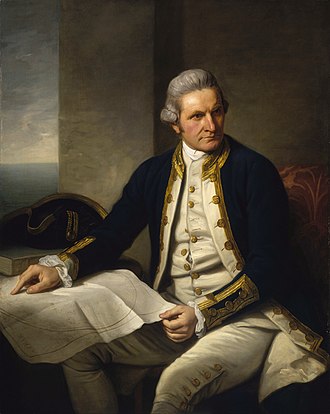
The first well-known ruler of Oʻahu was Maʻilikūkahi, who started a long line of kings. Later, in 1773, Kahahana took the throne. On January 19, 1778, Oʻahu was the first Hawaiian Island seen by Captain James Cook during his third voyage. Cook did not stop there but later, in 1779, his officer Captain Charles Clerke became the first non-Polynesian to land on Oʻahu at Waimea Bay.
In 1783, King Kahekili II from Maui took control of Oʻahu and made his son Kalanikūpule its ruler. But in 1795, Kamehameha I defeated Kalanikūpule and began ruling the Hawaiian Islands, finally uniting them all by 1810.
By the late 1700s, Waikīkī was an important place, but Honolulu grew larger because of its better harbor. In 1845, the capital moved to Honolulu. Later, a beautiful palace called ʻIolani Palace was built there.
On December 7, 1941, the Imperial Japanese Navy surprised Pearl Harbor on Oʻahu, which brought the United States into World War II. Many ships and airplanes were damaged in the attack.
After the war, Oʻahu became a popular place for tourists, with millions of visitors each year.
Geography and climate
Oʻahu, like the other Hawaiian Islands, was formed by a special spot deep in the Earth called the Hawaii hotspot. It began growing from the ocean floor about 4 million years ago. Today, the island is made up of the old remains of two big volcanoes called the Waiʻanae and Koʻolau Ranges. The highest point on the island is Kaʻala in the Waiʻanae Range, which stands 4,003 feet tall.
Oʻahu once had a very long rain shower that lasted 247 days! The average temperature there is usually between 70–85 °F (21–29 °C). It is warmest from June to October, and even in winter, it stays warm with temperatures around 68–78 °F (20–26 °C).
Tourism
Oʻahu and all of Hawaii rely on visitors. Many tourists enjoy beaches such as Ala Moana Beach, Hanauma Bay, Kāneʻohe Bay, Ko Olina Beach Park, and Waikīkī Beach. Other popular places include the Ala Moana Center, Bishop Museum, the Honolulu Museum of Art, ʻIolani Palace, Diamond Head, and Kualoa Ranch.
Notable people
See also: Category:People from Oahu
Oʻahu is home to many famous people. Some well-known names include Benny Agbayani, a baseball player, and Tia Carrere, an actress. There are also athletes like Marcus Mariota, a football player, and Max Holloway, a champion fighter. The island has talented musicians such as Jack Johnson and Israel Kamakawiwoʻole. Notable actors like Jason Momoa and Tom Selleck also live on Oʻahu. Barack Obama, the 44th President of the United States, was born and raised on Oʻahu.
Images
Related articles




This article is a child-friendly adaptation of the Wikipedia article on Oʻahu, available under CC BY-SA 4.0.
Images from Wikimedia Commons. Tap any image to view credits and license.