
Paraguayan cuisine
Paraguayan cuisine is the way people in Paraguay cook and eat. It combines ideas from the Guaraní people, Spanish cuisine, and foods from nearby countries like those who cooked Italian cuisine and German cuisine. The city of Asunción is where this special food style began and spread throughout the country.
In Paraguayan society, different groups such as mestizos, creoles, and cario-guaraní people shared their cooking knowledge even before the Jesuit missions arrived. This mix of traditions makes Paraguayan food unique and interesting, showing the history and culture of the people who live there.
History
Pre-Columbian period
Paraguayan food has a long history. In the 1500s, people like Ulrich Schmidl wrote about what the native Guaraní and Carios people ate. They mainly ate wild animals and cornbread. They did not use milk, beef, cheese, or eggs. When the Spanish arrived in 1537 and started the city of Asunción, they brought cattle with them. This mixing of Spanish and native ways of eating helped create what we now call Paraguayan food. A big part of this is the love for asado, or meat cooked over fire, which started because seven cows and a bull arrived in Asunción in 1556.
Vicereine period
Paraguayan food is a mix of Spanish food and the food of the Carios and Guaraní. This mixing happened mostly in and around Asunción. Towns like Tobatí, Altos, Areguá, Ypané, Guarambaré, Itá and Yaguarón show how Paraguayan culture grew far from big cities. The Guaraní and Carios cooked with wild animals, fish, and grains, and used tools they made themselves. When the Spanish came, they brought new animals like cows and new foods like milk and cheese. This mixing created new dishes that people still eat today, like foods made from corn, cassava, and cheese.
Republican period
Later, Paraguayan food became even more mixed. It grew from the Guaraní way of life and the new ideas brought by the Spanish. Leaders like Carlos Antonio López, Francisco Solano López, and Madame Lynch helped this growth. After big events like the Paraguayan War, many new people came to Paraguay from Europe, especially from Italy and Germany. They brought their own food ways, like pasta and desserts, which are now part of everyday eating in Paraguay. Today, Paraguayan food uses local things like corn and cassava, mixed with European ideas, making it special and unique. In 2017, Paraguay said that some of its most loved foods, like Vori-Vori, Locro, Sopa Paraguaya, and Yopará, are important parts of its culture.
Ingredients
Paraguay has many interesting foods made from local plants and animals. Some common fruits include pineapple, banana, guava, and mango, along with many other special kinds. Vegetables like lettuce, spinach, and carrots are also popular, and people grow beans and other legumes too.
Paraguay has lots of cows, and beef is a big part of the diet. People also drink a lot of milk and eat dairy products like cheese and yogurt. Corn and cassava are important crops used in many dishes, like making special breads and adding flavor to stews.
Fruits, vegetables and legumes
The most consumed and cultivated fruits are pineapple, banana, guava, guavira pytã, guavirami, apepú, yakarati'a, pakuri, ñandypa, ñangapiry, aguaí, aratiku, mburukuja, mamón, mango, melon, watermelon, orange, strawberry, ingá, yvapurû, yvapovõ and tarumá. Fruits such as guava are harvested from January to March; citrus fruits, from March to October; grapes, pineapples, and plums, from December to January; avocado, from April to May; watermelon and melon, from September to April; while bananas are harvested all year round except for very cold times.
Among the vegetables, leaves such as chard, lettuce, green onion, spinach, bok choy, cabbage, chicory and parsley stand out. Among the flowers are broccoli, cauliflower, and artichoke. In the subgroup of fruits there are pumpkin, melon, tomato, locote, and eggplant. The most consumed and grown roots are carrots, turnips, radishes, ginger, beets, and sweet potatoes; while bulbs such as garlic and onion are part of the base ingredient in many Paraguayan dishes. The use of soy and moringa is also present in Paraguayan cuisine. In Paraguay, certain species of legumes are grown such as peas, lentils, chickpeas and beans.
Paraguay is the third largest producer of yerba mate in the world, after Argentina and Brazil. Every August 1, the "National Poha Ñana Day" is celebrated.
Meats and dairy
Paraguay has the second cattle herd per capita in the world, after Uruguay. The introduction of beef in Paraguay dates back to the times of the Spanish conquest in 1537. Spaniards discovered that the native wildlife that lived in these lands was the guasú, yaguareté, and capybara. These black Avilenas were characterized by their great rusticity and high fertility and constituted a tiny herd that began the domestication of animals in the country.
The "Livestock Society of Paraguay" was founded in 1885, an entity that would support and collaborate with the development of the meat industry in the country.
According to the 2022 Livestock Census, Paraguay has 13.24 million heads of cow cattle, equivalent to 2.16 animals per inhabitant. Paraguay is the third largest consumer of beef in the world, with 28 kilos per capita per year, being surpassed only by Uruguay (41 kilos) and Argentina (44 kilos).
Milk production in Paraguay generates around 1,850,000 liters per day and its consumption reaches 180 liters per capita per year. Among the dairy products sold are yogurts, dairy drinks, cheeses, butters, milk cream, dulce de leche, milk powder, etc. Milk constitutes the main diet of Paraguayans at breakfast. About 50% of dairy production is located in Juan Eulogio Estigarribia, while the remaining productive areas are distributed in central Chaco, Colonias Unidas and San Pedro.
Paraguay cheese
The traditional Queso Paraguay is a white cheese, obtained from whole, unpasteurized cow's milk. Among the main characteristics is its respectable firmness, white in color, which releases a liquid when cut, due to the whey contained in it, especially when it is fresh. When it is set or hard it has a yellowish color, dry, swollen, with many eyes or holes.
Queso Paraguay stands out the most among the fresh cheeses marketed in Paraguay, due to its high biological value in terms of protein content and easily assimilated calcium, in addition to phosphorus, magnesium, group B vitamins (especially riboflavin, B12 and niacin) and fat-soluble vitamins A and D.
Corn and sweet corn
It is well known that Mesoamerica is the center-origin of grains such as corn and sweet corn. With the arrival of Europeans to America, cultures were syncretized, and corn became the cultural and spiritual manifestation of current civilization, giving way to the origin of gastronomic diversity in American countries, including Paraguay. Due to the genetic development that corn has had, thanks in part to the climatic adaptation in this area of South America, the most widespread throughout Paraguay is the Avatí Morotĩ or Avatí Chipá, which despite having a yellow hue, acquires a whitish when grinding the grains.
Cassava and starch
Present in many countries, cassava spread throughout Central America and the Mayans had already cultivated it since the 800s AD and today, many African peoples have it in their essential diet. It became so cosmopolitan that Thailand became one of the largest producers. In the Paraguayan cuisine, cassava starch is mixed with cheese and milk to make baked buns called chipa, the most common snack. Starch is also used to give consistency to meat and vegetable stews such as vorí vorí, mbeju, or caburé; and it is the main ingredient in the preparation of lampreado or payaguá mascada. The truth is that boiled cassava manioc replaces bread on the daily table of Paraguayan dishes.
Culinary dishes
Meat, vegetables, manioc, maize, and fruits are common in Paraguayan cuisine. Barbecuing, called asado, is a popular way to cook food and a fun social event. Many dishes use corn, milk, cheese, and meat, and fish from rivers are also eaten. There are about 70 types of chipa (cake) in Paraguay. Most chipas are made from manioc flour, which comes from cassava, and cornmeal.
- Chipa is a bread made with manioc, egg, and cheese.
In Argentina, it is known as chipá and in Bolivia as cuñapé.
- Chipa guasu is a cake made with corn grains and is a common food in Paraguay. It is often served at an asado.
- Chipa so'o is another type of cake.
- A traditional kiveve is made using pumpkin or "andai", water, salt, oil, onion, milk, sugar, corn flour, and fresh cheese.
- Lampreado, also called payaguá mascada, is a fried cake made from manioc flour.
- Mazamorra is a cooked corn mush dish.
- Mbaipy-so-ó is a corn pudding with meat.
- Mbejú is a starch cake and a staple food in Paraguay.
- Milanesa is a breaded meat cutlet, fried, baked, or sautéed.
- Authentic Paraguay cheese
- Parrillada is a dish of meat cooked over hot banana leaves and coals.
- Pira caldo is a fish soup that is part of traditional cuisine.
- Sopa paraguaya is a traditional Paraguayan dish. Meaning "Paraguayan soup," sopa paraguaya is similar to corn bread. Corn flour, pig fat or butter, cheese, and milk or whey are common ingredients. It is a spongy cake rich in calories and protein and is the national dish of Paraguay. Though native to Paraguay, this dish can be found in other Spanish-speaking countries.
- Soyo is a thick soup of meat crushed in a mortar, seasoned with spices and vegetables.
- Vori vori is a thick, yellow soup with little balls made of cornmeal, corn flour, and cheese.
Pastas, sausages and hors d'oeuvres
In Paraguay, noodles, ravioli, gnocchi, pizzas, croquettes, and sausages are widely eaten. Among the sausages, the "besitos" stand out, which are small, spicy grilled chorizos; there are also other varieties like stuffed-cheese chorizo, caazapeño chorizo, missionary chorizo, vienna sausage, and botifarra. It is common to eat stews and noodles with tomato sauce along with green leafy salads and fresh tomatoes. Empanadas and hot dogs are eaten in bread. Milanesa is also eaten, a legacy of Italian immigration, and is a filet of beef or chicken in breadcrumbs, also common in the gastronomy of Argentina and Uruguay. Common snacks include flour lampreado, payaguá mascada, cassava empanada, sandwich de lomo, milanesa sandwich, chicharrón, and more. In addition to the traditional Sunday asado, other dishes commonly eaten are steak roast, pot roast, grilled surubí, cabeza guateada, and grilled dorado.
Cassava empanadas
Homemade empanadas
Croquetas
Chipa so'o
Milanesa de surubí
Puretón
Desserts
-
Cake of many different varieties.
-
Kosereva is a common "barreled" candy native to Paraguay, made from the hardened skin of the sour orange, cooked in black molasses.
-
Mbaipy-he-é is a dessert dish made with milk, molasses, and corn.
-
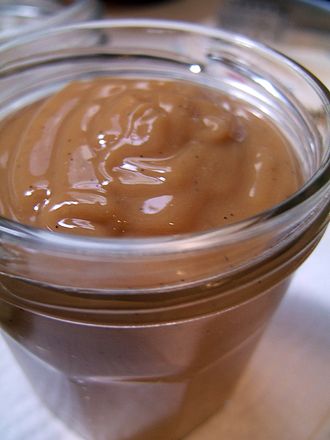
Dulce de leche is used to fill cakes, spread over toasted bread for breakfast, or any other type of bakery goods.
Alfajores
Koserevá with Paraguay cheese
[Pastafrola](/wiki/Pastafrola) with guava candy
Sweet potato candy
Beverages
Paraguay has many traditional drinks from the Guaraní people. One popular drink is tereré, a special way to enjoy yerba mate. In 2011, tereré became the national drink of Paraguay. The last Saturday of February each year is Tereré Day.
People in Paraguay also enjoy fruit juices, soft drinks, and beer. Pilsen is a well-known beer brand. There is an alcoholic drink called caña, made from sugarcane juice, and a non-alcoholic drink called mosto. Cocido is a hot tea made from yerba mate and sugar.
Wine production
Paraguay has soil good for growing grapes, especially in the west. In 2019, high-quality wine production started again. One famous winery is “Bodega Giacometti.” They grow different kinds of grapes and make several types of wine, including red, rosé, white, Merlot, Malbec, Sauvignon, Cabernet, and sparkling wines.
Pictures
Keep exploring


This article is a child-friendly adaptation of the Wikipedia article on Paraguayan cuisine, available under CC BY-SA 4.0.
Images from Wikimedia Commons. Tap any image to view credits and license.