
Penance in the Catholic Church
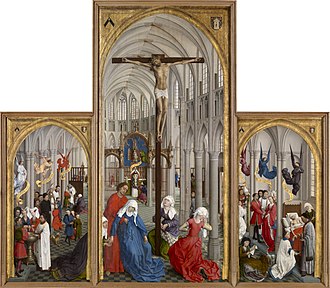
The sacrament of penance (also commonly called the reconciliation or confession) is one of the seven sacraments of the Catholic Church. In this special part of their faith, people talk about mistakes they have made after their baptism and ask for forgiveness. This helps them feel better and become friends again with others in their community.
During this time, people tell a priest about mistakes and can ask for help if they want. According to the teachings of the church, only priests who have been given special duties can give this forgiveness.
This sacrament is very important in the Catholic Church and has been a long-standing tradition, showing how believers can ask for help and start fresh in their lives.
Nature
The church teaches that confession is not like a court where someone is punished. It is more like a happy celebration. It is inspired by the Parable of the Prodigal Son. In this special time, people can tell a priest about their mistakes, feel truly sorry, and receive forgiveness. This forgiveness helps them feel clean and ready to join in the church's happy celebrations again.
History
In the New Testament, Christians are reminded to talk about their mistakes with each other and to support one another. In the Gospel of John, Jesus tells the Apostles that they have the power to forgive sins. The early leaders of the Church believed this power was given to the bishops and priests to help bring people back into the community after making mistakes after baptism.
At first, people would show they were sorry by doing special acts of penance, and bishops would decide when someone had truly changed. Over time, private talking with a priest became more common, especially for personal mistakes. Even today, the Church teaches that true change of heart is important, and the priest’s forgiveness helps bring a person back to full membership in the community.
The way these ideas developed changed over many centuries, influenced by different cultures and leaders. In the Middle Ages, new ideas about forgiveness and punishment grew, and the Church made rules about how often people should talk to a priest about their mistakes. After important Church meetings like the Council of Trent, the Church made clear that private confession to a priest was important.
During difficult times, like the COVID-19 pandemic, the Church also provided guidance on how people could still find forgiveness even if they could not meet with a priest in person.
Contemporary confessional practice
Canon law requires confession along with a promise to change and forgiveness from a priest for serious sins to be reconciled with God and the Catholic Church, except when in danger of death.
In many places, people may choose to confess in a special confessional. People can kneel behind a screen or sit facing the priest. A screen is used if someone wants to stay anonymous.
The priest needs permission from the local church leader. But in urgent cases, any priest can give forgiveness.
The current way of doing this was made in 1973 with two choices for group services to show the church's role. The sign of the cross starts the meeting, and the priest may read a Bible passage about God's kindness. All serious sins must be told, but smaller sins can also be mentioned. The priest may talk about feeling sorry and suggest a small task, which the person agrees to do, and then says special words to give forgiveness. The person then thanks the Lord and leaves in peace.
Everyone must tell their serious sins at least once a year, especially before receiving special church food during the Easter time if they have done something very wrong. The Church teaches that telling these sins is very important.
The secret of what is told in confession must never be shared. Priests and others who hear these secrets are bound to keep them private forever. Breaking this rule is a very serious mistake.
Manuals of confession
Main article: Penitential canons
During the Middle Ages, special books called manuals of confession were made. These books helped people prepare for a religious meeting called confession. There were books for people to use before the meeting, and books for priests to use during the meeting. Priests would ask questions but would not suggest new ideas about sins. These books were written in Latin and also in everyday language.
When printing became common, these manuals became very popular. By 2011, they had even moved to electronic devices. The first app for an iPhone that got approval from a church leader was thought to be for the meeting itself, but it was really just an electronic version of these old guidebooks to help people get ready.
Eastern Christianity and perspectives on renewal
Eastern Christianity, also known as Eastern Christianity, has a strong idea of renewal when people ask for forgiveness. Unlike Western Christianity, whose practices changed during the Migration Period in the Early Middle Ages, Eastern Christianity still sees confession as a way to heal and grow closer to God.
In the Eastern Orthodox Church, confession is viewed as a way to heal and feel free, just like in the early days of Christianity. When people are truly sorry for what they have done and open their hearts, they are forgiven. The focus is on changing one’s heart and growing as a Christian, rather than just listing mistakes. This way of forgiveness helps people become stronger in their faith.
Pictures
Keep exploring


This article is a child-friendly adaptation of the Wikipedia article on Penance in the Catholic Church, available under CC BY-SA 4.0.
Images from Wikimedia Commons. Tap any image to view credits and license.