 Safekipedia
Piccolo
Adapted from Wikipedia · Adventurer experience
The piccolo is a smaller version of the western concert flute and belongs to the woodwind family of musical instruments. It is often called a "baby flute." The modern piccolo plays sounds that are an octave higher than the regular flute. This special high sound comes from its smaller size, and it is also known as ottavino in Italian.
Piccolos are commonly used in orchestras, marching bands, and wind ensembles. They add a bright and sparkling quality to the music when they play with violins or flutes. Because of their high, clear notes, piccolos help make music sound exciting and lively.
History
Since the Middle Ages, small flutes were used in armies because their loud sound could be heard over battles. Later, in the 1700s, famous composers like Jean Philippe Rameau began using these small flutes in their music. By the early 1800s, the piccolo became a regular part of orchestras.
For a long time, the piccolo looked much the same. It started with just one key and later got more keys. By the late 1800s, it began using a new system that became common in the 1900s. Even today, the piccolo is different from a fife, which is made in one piece and makes a much louder, sharper sound.
Traditional use
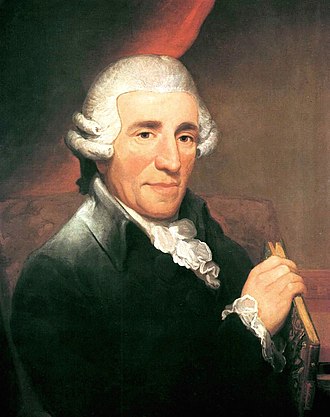
It is a myth that one of the earliest pieces to use the piccolo was Ludwig van Beethoven's Symphony No. 5 in C Minor, which premiered in December 1808. Neither Joseph Haydn nor Wolfgang Amadeus Mozart used it in their symphonies, but some of their contemporaries did, including Franz Anton Hoffmeister, Franz Xaver Süssmayr, and Michael Haydn. Mozart used the piccolo in his opera Idomeneo. Later, Gioachino Rossini featured the instrument in the overture to his opera Semiramide. Opera orchestras in Paris sometimes included small transverse flutes at the octave as early as 1735, as shown in scores by Jean-Philippe Rameau.
Piccolos are now mainly made in the key of C or D. In the early 20th century, piccolos were made in D♭. For this D♭ piccolo, John Philip Sousa wrote a solo in his march "The Stars and Stripes Forever."
Piccolos were once made of wood, glass, or ivory, but today they are made from plastic, resin, brass, nickel silver, silver, and various hardwoods, most commonly grenadilla. Most piccolos have a conical body with a cylindrical head, similar to the Baroque flute and later flutes before the Boehm bore became popular in modern flutes.
The piccolo is used with marching drums in traditional formations at the Carnival of Basel, Switzerland.
In 2014, a festival dedicated entirely to the piccolo was started, called the International Piccolo Festival. It takes place every July in Grado, Italy.
Repertoire
Many composers have written music just for the piccolo. Some of these composers are Samuel Adler, Miguel del Aguila, Robert Dick, and Michael Isaacson.
There are also special pieces for piccolo and piano, often called sonatas. Composers like Miguel del Águila and Amanda Harberg have written these.
Some concertos just for piccolo have been written by Lowell Liebermann and Amanda Harberg. The piccolo is also used in chamber music, like in Stockhausen's Zungenspitzentanz and Crumb's Madrigals.
Related articles



This article is a child-friendly adaptation of the Wikipedia article on Piccolo, available under CC BY-SA 4.0.
Images from Wikimedia Commons. Tap any image to view credits and license.