
Radioactive waste
Radioactive waste is a type of hazardous waste that contains radioactive material. It comes from many places, such as nuclear medicine, nuclear research, nuclear power generation, nuclear decommissioning, rare-earth mining, and nuclear weapons reprocessing. Governments have rules for how this waste is stored and disposed of to protect people and the environment.
Radioactive waste is sorted into three main groups: low-level waste, like paper and clothing with small amounts of short-lived radioactivity; intermediate-level waste, which has more radioactivity and needs shielding; and high-level waste, which is very hot and highly radioactive, needing cooling and special protection.
Spent nuclear fuel can sometimes be processed in special plants called nuclear reprocessing plants. This can recycle most of the fuel, but some parts stay as waste and are turned into a glass-like material for safe storage deep underground in a deep geological repository. How long radioactive waste needs to be stored depends on the types of radioactive elements it contains, with some needing to be kept for thousands of years.
Nature and significance
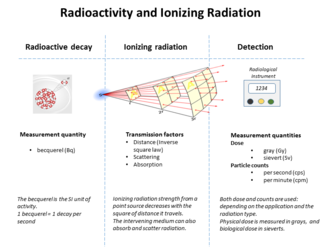
Radioactive waste has elements that break down and give off harmful energy. These elements can be dangerous for many years, but they become less dangerous over time. Different types of radioactive waste can cause different health problems, depending on how they affect the body.
The main article: Fission product yield
See also: Radioactive decay
Pictures
Keep exploring

This article is a child-friendly adaptation of the Wikipedia article on Radioactive waste, available under CC BY-SA 4.0.
Images from Wikimedia Commons. Tap any image to view credits and license.