 Safekipedia
Squaring the circle
Adapted from Wikipedia · Adventurer experience
Squaring the circle is a fun and tricky problem in geometry that people have tried to solve for a very long time. It was first suggested by ancient Greek mathematicians. The challenge is to create a square that has the exact same area as a given circle, but you can only use a compass and a straightedge, and you have to finish in a limited number of steps.
For many years, people wondered if this was even possible. Finally, in 1882, mathematicians proved that it is impossible to do this perfectly. They found that the number pi, which is the ratio of a circle’s circumference to its diameter, is a special kind of number called a transcendental number. This means pi cannot be used to solve certain math problems needed to complete the square perfectly.
Even though we now know it’s impossible, many people still tried to solve this puzzle throughout history. Today, “squaring the circle” is sometimes used to describe trying to do something that can never be achieved. There are also ways to get very close to the perfect square, although they are not completely exact.
History
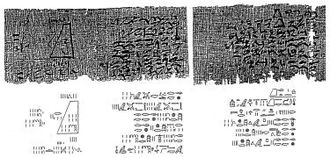
People have tried to find the area of a circle for a very long time. Ancient cultures like the Babylonian mathematicians and ancient Egyptian mathematicians used simple ways to guess the value of π. This helps find a circle’s area. Later, Archimedes found a smart way to calculate the area of a circle.
The Greeks were the first to try to solve a special puzzle: making a square with the same area as a circle using only a compass and straightedge. Anaxagoras thought about this while in prison, and Hippocrates of Chios found a special shape that could be squared. Many people tried different methods, but it was very hard. In 1882, Ferdinand von Lindemann proved that it’s impossible to solve this puzzle with just a compass and straightedge.
Impossibility
Creating a square with the same area as a circle using only a compass and straightedge is very hard. To do this, we would need to make a special number linked to the circle's size.
In 1837, a mathematician named Pierre Wantzel found that numbers we can make with a compass and straightedge must follow certain rules. In 1882, Ferdinand von Lindemann proved that the number related to circles is too special to follow these rules. This means it is impossible to do with just these tools. But with different methods or types of geometry, it can sometimes be done.
Approximate constructions
Even though we can't perfectly square a circle using just a compass and straightedge, we can make very close guesses. These guesses use easy steps to create lengths that are almost equal to π, the number that shows the ratio of a circle's distance around to its width.
One early example is from the Polish mathematician Adam Adamandy Kochański in 1685. His way to do this gives a value for π that is right to five decimal places, and it is easy to follow. Later, other mathematicians found even easier ways to get close to π, using smart tricks and patterns in numbers.
Incorrect constructions
Some people thought they could make a square with the same area as a circle using only a compass and straightedge. For example, an English philosopher named Thomas Hobbes thought he had solved it, but others showed he was wrong.
Later, in the 1800s, many people thought solving this problem was connected to measuring longitude at sea. A man named John Parker wrote a book in 1851 saying he had solved it, but his method was only an estimate.
Even after experts proved it was impossible, some people still tried. In 1894, a man named Edwin J. Goodwin said he found a way. His method was not correct, but he tried to get a law passed in Indiana to use his idea in schools. People laughed at the idea, and the law was never approved.
In literature
The idea of making a square with the same area as a circle has appeared in many stories and poems. It was mentioned in a play by Aristophanes called The Birds.
Dante used this idea in his poem Paradise. In recent times, writers have used this idea to talk about goals that seem impossible. Alexander Pope wrote about this problem. Today, this idea is still used in stories.
Images
Related articles



This article is a child-friendly adaptation of the Wikipedia article on Squaring the circle, available under CC BY-SA 4.0.
Images from Wikimedia Commons. Tap any image to view credits and license.