 Safekipedia
Swedish Academy
Adapted from Wikipedia · Adventurer experience
The Swedish Academy (Swedish: Svenska Akademien) was founded in 1786 by King Gustav III. It is one of the Royal Academies of Sweden and has 18 members who serve for life. These members are top experts on the Swedish language.
Many people know the Swedish Academy because it chooses the winner of the yearly Nobel Prize in Literature. This special prize is given in honor of Alfred Nobel, who started the Nobel Prizes. The Swedish Academy’s work helps protect and promote the Swedish language and literature, making it important not just in Sweden but worldwide.
History
The Swedish Academy was started in 1786 by King Gustav III. It has 18 members who are chosen carefully. The Academy works to keep the Swedish language strong and beautiful. It also gives out the Nobel Prize in Literature each year.
The Academy meets in a special building in Stockholm. Only the Academy members and the King of Sweden can attend these meetings. Over time, the Academy has changed, with more women joining its members.
The Academy's dictionaries
The Swedish Academy helps keep the Swedish language strong by publishing three dictionaries.
The first is a spelling dictionary called Svenska Akademiens ordlista (SAOL), which is in its 15th edition as of 2026.
The second is a very large dictionary with 39 volumes, similar to the Oxford English Dictionary, called Svenska Akademiens Ordbok (SAOB). The first volume came out in 1893, and the last one finished in 2023.
The third dictionary has two volumes and is made at Gothenburg University. It includes pronunciations, where words come from, and examples.
Besides these dictionaries, the Academy also publishes a four-volume grammar book for researchers and students, and a smaller one for others. All these books can be read for free online at svenska.se.
Awards and prizes
The Swedish Academy gives out almost 50 prizes and scholarships each year, mostly for writers from Sweden. These awards are special because people do not need to apply or compete to win them.
The Nobel Prize in Literature
Main article: Nobel Prize in Literature
Since 1901, the Swedish Academy has chosen each year’s winner of the Nobel Prize in Literature, given in honor of Alfred Nobel. The winner gets a medal, a diploma, and, since 2024, 11 million Swedish crowns during a ceremony on December 10.
The Great Prize
In Swedish, this is called Stora Priset. It was started by King Gustav III and is the most important award the Swedish Academy can give. It is a gold medal and has been given to famous writers like Selma Lagerlöf, Astrid Lindgren, and Tove Jansson.
Dobloug Prize
The Dobloug Prize is a big award for fiction from Sweden and Norway, worth $40,000. It began in 1951 and, since 1985, two authors from each country win each year.
The Nordic Prize
The Swedish Academy Nordic Prize started in 1986 to mark the Academy’s 200th year. It is worth 400,000 Swedish crowns and is the Academy’s biggest award after the Nobel Prize in Literature. Winners include Tomas Tranströmer, Jon Fosse, and Karl Ove Knausgård.
Bellman Prize
Bellmanpriset began in 1920 to honor Carl Michael Bellman. It is given to an outstanding Swedish poet. Past winners include Pär Lagerkvist and Harry Martinson.
Other prizes
The Kungliga priset (The Royal Prize) started in 1835 by King Karl XIV Johan for important work in the Academy’s areas. The Academy also gives many other prizes and scholarships to authors, scholars, teachers, and librarians.
Current members
See also: List of all members, past and present, of the Swedish Academy
The current members of the Swedish Academy are listed by seat number:
Permanent secretaries
Controversies
1794–1795 Armfelt Conspiracy and suspension of the Academy
Main article: Armfelt Conspiracy
After the death of King Gustav III in 1792, the Swedish Academy had some problems. In 1794, one of its members, Gustav Mauritz Armfelt, was removed because of his part in a plot against the government. This caused the Academy to pause for two years. Armfelt was allowed to return in 1805 but had to leave Sweden again.
1881 Henning Hamilton affair
In 1881, another member, Henning Hamilton, was removed for being involved in dishonest financial activities.
1989 Rushdie affair
In 1989, two members left the Academy because it would not clearly support a writer who faced serious threats for his book. A third member also left around the same time without explaining why. This led some members to step down, reducing the total number.
2018 controversies
In 2018, some members left the Academy after disagreements over how to handle serious accusations made against someone connected to the Academy. This caused many members to step down, delaying the choice of a major award winner that year. Changes were later made to help restore trust in the Academy.
| Seat | Picture | Member | Born | Age | Elected |
|---|---|---|---|---|---|
| 1. |  | Eric M. Runesson | 1960 | 65 | 2018 |
| 2. | 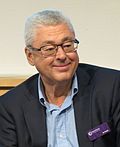 | Bo Ralph | 1945 | 80 | 1999 |
| 3. |  | David Håkansson | 1978 | 47 | 2023 |
| 4. |  | Anders Olsson | 1949 | 76 | 2008 |
| 5. | Ingrid Carlberg | 1961 | 64 | 2020 | |
| 6. | Tomas Riad | 1959 | 66 | 2011 | |
| 7. |  | Åsa Wikforss | 1961 | 64 | 2019 |
| 8. | Jesper Svenbro | 1944 | 82 | 2006 | |
| 9. | Ellen Mattson | 1962 | 63 | 2019 | |
| 10. | Peter Englund | 1957 | 69 | 2002 | |
| 11. | Mats Malm | 1964 | 62 | 2018 | |
| 12. |  | Per Wästberg | 1933 | 92 | 1997 |
| 13. |  | Anne Swärd | 1969 | 57 | 2019 |
| 14. | 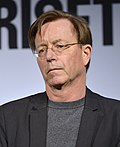 | Steve Sem-Sandberg | 1958 | 67 | 2020 |
| 15. |  | Jila Mossaed | 1948 | 78 | 2018 |
| 16. |  | Anna-Karin Palm | 1961 | 65 | 2023 |
| 17. | Horace Engdahl | 1948 | 77 | 1997 | |
| 18. |  | Anna Hallberg | 1975 | 51 | 2026 |
| Order | Seat | Picture | Permanent Secretary of the Swedish Academy | Born | Years |
|---|---|---|---|---|---|
| 1. | 11. | Nils von Rosenstein | 1752 | 1786–1824 | |
| 2. | 13. | Frans Michael Franzén | 1772 | 1824–1834 | |
| 3. | 12. | Bernhard von Beskow | 1796 | 1834–1868 | |
| 4. | 5. | 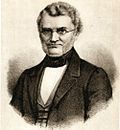 | Johan Erik Rydqvist | 1800 | 1868–1869 |
| 5. | 15. |  | Ludvig Manderström | 1806 | 1869–1872 |
| 6. | 12. | Carl Gustaf Strandberg | 1825 | 1872–1874 | |
| 7. | 9. | Henning Hamilton | 1814 | 1874–1881 | |
| 8. | 11. |  | Bror Emil Hildebrand | 1806 | 1881–1883 |
| 9. | 8. | Carl David af Wirsén | 1842 | 1883–1912 | |
| 10. | 6. |  | Hans Hildebrand | 1842 | 1912–1913 |
| 11. | 11. | Erik Axel Karlfeldt | 1864 | 1913–1931 | |
| 12. | 14. | Per Hallström | 1866 | 1931–1941 | |
| 13. | 13. | Anders Österling | 1884 | 1941–1964 | |
| 14. | 7. | 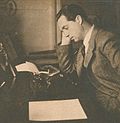 | Karl Ragnar Gierow | 1904 | 1964–1977 |
| 15. | 14. |  | Lars Gyllensten | 1921 | 1977–1986 |
| 16. | 3. |  | Sture Allén | 1928 | 1986–1999 |
| 17. | 17. | Horace Engdahl | 1948 | 1999–2009 | |
| 18. | 10. | Peter Englund | 1957 | 2009–2015 | |
| 19. | 7. |  | Sara Danius | 1962 | 2015–2018 |
| 20. | 4. | | Anders Olsson | 1949 | 2018–2019 |
| 21. | 11. | Mats Malm | 1964 | 2019–2026 | |
| 22. | 5. | Ingrid Carlberg | 1961 | 2026– |
Images
Related articles


This article is a child-friendly adaptation of the Wikipedia article on Swedish Academy, available under CC BY-SA 4.0.
Images from Wikimedia Commons. Tap any image to view credits and license.