
The Kite Runner
Plot Summary
The Kite Runner is the debut novel of Afghan-American author Khaled Hosseini. Published in 2003, it tells the story of Amir, a young Afghan boy from Wazir Akbar Khan, Kabul. The story takes place during important events in Afghanistan’s history, including the collapse of Afghanistan's monarchy, the Afghan conflict, the Soviet–Afghan War, and the time when many Afghan refugees left their country.
The book is mainly about the relationship between a father and his son. It focuses on feelings of guilt and trying to make things right. A big part of the book is about Amir trying to help his friend’s son many years later.
Themes and Significance
The story explores themes such as friendship, family, and doing what is right. It shows how hard it can be to face mistakes and make amends. The book gives readers a glimpse into life in Afghanistan during a time of big changes.
Impact and Adaptations
After it was published, The Kite Runner became very popular. It stayed on the New York Times best-seller list for over two years, and millions of copies were sold. The book was turned into a 2007 film of the same name, as well as stage shows and a graphic novel. It is also available as a multi-CD audiobook narrated by the author.
Plot
Amir and Hassan are boys who love kite fighting in Kabul. Hassan is very good at finding kites. Both boys do not have mothers. Amir’s father, Baba, loves both boys and helps Hassan with his health. But Baba often criticizes Amir.
Amir wins a kite tournament and gets praise from Baba. But Hassan is hurt by an older boy named Assef. Amir sees this but is too scared to help. Amir feels bad and stays away from Hassan.
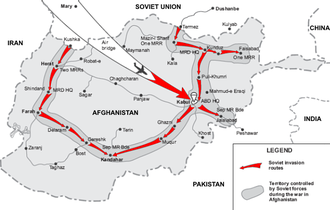
In 1979, the Soviet Union goes into Afghanistan. Baba and Amir move to Pakistan and then to California. Amir goes to university, works with his father, and later marries a woman named Soraya. After Baba dies, Amir becomes a writer.
Amir gets a call from Rahim Khan. He tells Amir that Hassan has died and that Amir must find Hassan’s son, Sohrab, in Kabul. Amir goes there and finds that Sohrab is with a Taliban leader named Assef. With help, Amir rescues Sohrab, and they go back to the United States. Over time, Sohrab starts to trust Amir, and they bond over kite fighting.
Themes
The Kite Runner talks about friendship, betrayal, guilt, and forgiveness. It also shows the complicated bond between fathers and sons.
Amir feels very bad for not helping his friend Hassan when Hassan needed him. This guilt stays with him even after he moves to America and does well in life. Later, Amir tries to make up for his mistake by helping Hassan's son, Sohrab.
The book also shows how Amir's relationship with his father shapes what he does. Amir wants his father's love, but his father favors Hassan. These ideas help readers from all kinds of backgrounds connect with the story.
Development and publication
Khaled Hosseini was a doctor in Mountain View, California before he wrote The Kite Runner. He heard that the Taliban stopped people from flying kites in Afghanistan. This made him remember his own childhood and inspired him to write about two boys who loved flying kites in Kabul. Even though two magazines said no, he kept working on his story and turned it into a full novel with help from his editor.
The Kite Runner was first published in English by Riverhead Books on May 29, 2003. Hosseini stopped his medical work for a while to share the book with readers and help people in Afghanistan. The book was translated into many languages and sold all around the world. In 2013, a special version was made to celebrate the book's 10th anniversary.
Critical reception
After The Kite Runner was published, it became very popular. By 2013, over seven million copies had been sold in the United States. The book won the South African Boeke Prize in 2004 and was chosen as the Reading Group Book of the Year for 2006 and 2007.
Many people liked the book. Erika Milvy from Salon called it "beautifully written." Tony Sims from Wired Magazine said it shows "the beauty and agony of a tormented nation." Amelia Hill of The Observer described it as "shattering." First Lady Laura Bush said the story was "really great." However, some critics thought the book tried to do too much.
Controversy in the United States
The Kite Runner was one of the most challenged books in the United States in 2008. Some people wanted it removed from libraries because they found parts of the story upsetting. Some Afghan American readers felt the book did not portray their country fairly. The book was banned from schools in several states.
Film controversy in Afghanistan
When the movie version was made, a scene caused trouble. Some people in Afghanistan were upset, and the film was not shown in cinemas there.
Translations
The book was translated into different languages by many people. Rema Menon translated it into Malayalam, and called it Pattam Parathunnavar. Tzila Elazar translated it into Hebrew in 2004, and named it Rodef Ha'Afifonim.
Adaptations
Film
See also: The Kite Runner (film)
Four years after the book came out, The Kite Runner became a movie. It starred Khalid Abdalla as Amir, Homayoun Ershadi as Baba, and Ahmad Khan Mahmoodzada as Hassan. The movie was directed by Marc Forster and written by David Benioff. It was planned to be shown in November 2007 but was delayed so the young Afghan actors could be safely taken out of the country. The film received many awards and was nominated for an Academy Award, a BAFTA Film Award, and a Critics Choice Award in 2008.
Other
See also: Kite Runner (play)
The story was turned into a play in March 2007 by a writer named Matthew Spangler. It was first performed at San Jose State University. Later, it was shown at many theatres in the United States and Canada, including San Jose Repertory Theatre, Arizona Theatre Company, Actor's Theatre of Louisville, and Cleveland Play House. In 2013, the play was performed in Canada and Europe.
In 2011, the author was asked to turn the book into a graphic novel. He agreed because he loves comic books. An artist named Fabio Celoni drew the images, and the graphic novel was released in September of that year. The author liked how it turned out.
Pictures
Keep exploring


This article is a child-friendly adaptation of the Wikipedia article on The Kite Runner, available under CC BY-SA 4.0.
Images from Wikimedia Commons. Tap any image to view credits and license.