
United States Marshals Service
The United States Marshals Service (USMS) is a federal law enforcement agency under the United States Department of Justice. It works under the United States attorney general to enforce laws and protect the United States federal judiciary.
United States Marshals are the first federal law enforcement officers in the United States. They were created by the Judiciary Act of 1789 when George Washington was president. The USMS was started in 1969 to help U.S. Marshals work better in all federal judicial districts.
The Marshals Service has many important jobs. They help find and arrest people who break federal laws. They look for people who are hiding, manage money and property from crimes, and protect witnesses through the United States Federal Witness Protection Program. They also protect federal buildings, courts, and important government leaders, and help move prisoners safely using the Justice Prisoner and Alien Transportation System. They have provided special security during important events, like protecting African American students during the civil rights movement and helping keep United States Air Force missile convoys safe.
History
Origins
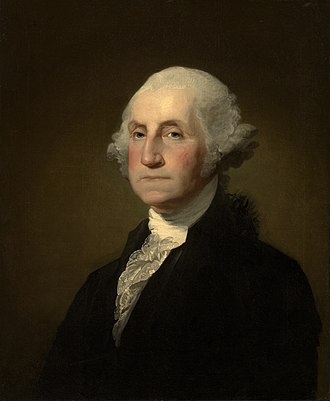
The United States Marshal started when the First Congress created the job. President George Washington signed the Judiciary Act on September 24, 1789. This law gave marshals the job of carrying out lawful orders and helping federal courts.
Six days later, Washington appointed the first thirteen U.S. Marshals, one for each federal district. Marshals helped federal courts work by carrying out orders. Over time, they also helped with tasks like taking the national census and delivering messages from the president.
19th century
During the War of 1812, marshals helped protect important places like New Orleans. As the United States grew westward, marshals helped keep order in areas without local governments. They helped catch outlaws and support the law in places like the Old West.
In 1881, a famous event happened when a deputy marshal was involved in a shootout in Tombstone, Arizona. Marshals also helped during big events like the Pullman Strike in 1894.
20th century
In the 1920s, marshals enforced laws that banned alcohol. During the 1960s, they protected people during the civil rights movement. In 1962, they helped protect James Meredith, who wanted to attend school at the University of Mississippi. They also protected children like Ruby Bridges as they went to school during a time of change.
The United States Marshals Service was officially created in 1969. Since then, they have helped protect important places and people, like during big events and natural disasters.
21st century
In recent years, marshals have protected athletes at the Olympic Games and helped keep order during big events. They also help protect important documents and support law enforcement across the country.
Duties and responsibilities
The United States Marshals Service is a federal law enforcement agency that helps protect the federal court system. They catch people who are wanted for crimes, guard important court workers, move prisoners safely, and manage things taken from criminals. They also help find missing children when asked by other law enforcement groups.
The Marshals Service carries out orders from federal courts and can get help from others to do their job. They have special teams for tough missions, like catching very dangerous people or protecting important people during big events. One of these teams, the Special Operations Group, gets extra training to handle high-risk situations, like protecting courts during protests or moving important prisoners.
The Marshals Service also runs a program to help protect people who tell the government about crimes, keeping them safe from anyone who might want to hurt them. They have a special unit just for protecting very important government leaders and court workers when they travel.
Training and equipment
Training
The United States Marshals Service has a tough hiring process, like other important law enforcement jobs. Only a few people who apply are hired. To become a Deputy U.S. Marshal, you usually need a four-year bachelor's degree or some police work experience. Applicants go through tests, interviews, background checks, medical exams, and physical fitness tests. After being chosen, they complete an 18-week training program at the Federal Law Enforcement Training Center in Glynco, Georgia.
Firearms and protective gear
Deputy U.S. Marshals carry special guns for protection, such as the Glock 17 in 9mm. They also have backup guns, body armor, and tools like batons for everyday work. For dangerous missions, they use extra safety gear like shields and helmets. Members of special teams have advanced guns for hidden operations. They also have rifles, shotguns, and tools to calm down situations. Recently, they started using body-worn cameras to record their work.
Surveillance airplanes
The U.S. Marshals Service uses airplanes for watching and tracking. These planes are registered under a different name and fly in special patterns. They are equipped with cameras, recorders, and other technology to help track people. These planes have been seen in places like Mexico, Guatemala, and Orlando, Florida.
Organization
The United States Marshals Service is based in Arlington County, Virginia. It works under the authority of the attorney general and is led by a director, who has a deputy director to help. The director reports to the deputy attorney general. The headquarters helps manage all its different parts.
The U.S. court system is split into 94 federal judicial districts, each with its own district court, except for Guam and the Northern Mariana Islands, which share one U.S. Marshal. Each district has a presidentially-appointed and Senate-confirmed United States Marshal. The Marshal is helped by chief deputy marshals, supervisory deputy marshals, and many deputy marshals. The director and each United States Marshal are chosen by the president of the United States and must be approved by the U.S. Senate.
Personnel
Titles
Agency executives
- The director, originally titled the chief United States Marshal, overall head of the USMS and overseer of the Marshals.
- The deputy director, principal deputy and first in line of succession to the director.
Marshals
- United States Marshal: the top executive of the Marshals Service in each of the 94 federal judicial districts, appointed by the president subject to confirmation by the senate
- Chief Deputy United States Marshal: the senior career manager for the federal judicial district who is responsible for management of the Marshals office and staff
- Supervisory Deputy United States Marshal, responsible for the supervision of three or more deputy U.S. Marshals and clerks
- Deputy United States Marshal: for all nonsupervisory positions
Deputy Marshals
Deputy U.S. Marshals start their careers at the GS-5 to GS-7 pay grade. Once deputies graduate from the Academy they are reclassified as 1811 Criminal Investigators. This allows them to work additional hours and receive an additional 25% Law Enforcement Availability Pay on top of their base pay. After the first year in grade, they are promoted to GS-9, then to GS-11 after a second year, and then to GS-12 after a third year.
Duties performed include criminal investigations, execution of warrants, and other investigative operations. They also protect government officials, process seized assets of crime rings for investigative agencies, and relocate and arrange new identities for federal witnesses in the United States Federal Witness Protection Program. After Congress passed the Adam Walsh Act, the U.S. Marshals Service was chosen to head the new federal tracking and prosecution team.
Special Deputy Marshals
The director of the United States Marshals Service is authorized to deputize the following persons to perform the functions of a deputy U.S. Marshal in any district designated by the director:
- Selected officers or employees of the Department of Justice;
- Selected federal, state, or local law enforcement officers whenever the law enforcement needs of the U.S. Marshals Service so require;
- Selected employees of private security companies in providing courtroom security for the Federal judiciary;
- Other persons designated by the Associate Attorney General pursuant to 28 CFR 0.19(a)(3).
Coast Guard as Deputy Marshals
Commissioned officers in the United States Coast Guard may be appointed as United States Deputy Marshals in Alaska.
Court Security Officers
Court security officers (CSOs) are contracted former law enforcement officers who receive limited deputations as armed special deputy marshals and play a role in courthouse security. Using security screening systems, court security officers attempt to detect and intercept weapons and other prohibited items that individuals attempt to bring into federal courthouses.
Inspectors
The Marshal Service has the positions of inspector, senior inspector and chief inspector, depending on the duties and position to which a deputy marshal has been assigned to.
Line-of-duty deaths
More than 200 U.S. Marshals, deputy marshals, and special deputy marshals have been killed in the line of duty since Marshal Robert Forsyth was shot dead by an intended recipient of court papers in Augusta, Georgia, on January 11, 1794. He was the first U.S. federal law enforcement officer to be killed in the line of duty.
Notable marshals and deputy marshals
-
.png)
[Wild Bill Hickok](/wiki/Wild_Bill_Hickok)
[Bass Reeves](/wiki/Bass_Reeves)
[Wyatt Earp](/wiki/Wyatt_Earp)
-
(cropped).jpg
-
Robert Forsyth (1754-1794), first U.S. Marshal for the District of Georgia; first U.S. Marshal and federal law enforcement officer to be killed in the line-of-duty
-
Nathaniel P. Banks (1816–1894), U.S. Marshal for Massachusetts 1879–1888
-
Jesse D. Bright (1812–1875), U.S. Marshal for Indiana; later served as U.S. senator for that state
-
Seth Bullock (1849–1919), businessman, rancher, sheriff for Montana, sheriff of Deadwood, South Dakota, U.S. Marshal of South Dakota
-
John F. Clark, U.S. Marshals Service Director and U.S. Marshal for the Eastern District of Virginia
-
Charles Francis Colcord (1859–1934), rancher, businessman and U.S. Marshal for Oklahoma
-
Phoebe Couzins (1839–1913), lawyer, first woman appointed to the U.S. Marshals
-
Henry Dearborn (1751–1829), U.S. Marshal for the District of Maine
-
Frederick Douglass (1818–1895), former slave and noted abolitionist leader, appointed U.S. Marshal for the District of Columbia in 1877
-
Virgil Earp (1843–1905), Deputy U.S. Marshal, Tombstone, Arizona.
-
Wyatt Earp (1848–1929), Deputy U.S. Marshal (twice, first deputized in Arizona for the purpose of leading a federal posse, then in Nevada for a brief period, later in life).
- James Earp (1841-1926), Special Deputy U.S. Marshal, as a member of Wyatt's federal posse.
- Warren Earp (1855-1900), Special Deputy U.S. Marshal, as a member of Wyatt's federal posse.
-
Frank Eaton (1860–1958), While a legitimate cowboy and role model for Pistol Pete, the mascot for Oklahoma State University, claims of his service as the Deputy U.S. Marshal for Judge Isaac C. Parker and related stories of revenge killings by him are provably false.
-
Richard Griffith (1814–1862), Brigadier General for the Confederacy during the Civil War
-
Wild Bill Hickok (1837–1876), noted Western lawman; served as a Deputy U.S. Marshal at Fort Riley, Kansas 1867–1869
-
Ward Hill Lamon (1826–1893), friend, and frequent bodyguard of President Abraham Lincoln, who appointed him U.S. Marshal for the District of Columbia
-
James Longstreet (1832–1904), a former high-ranking Confederate general in the American Civil War who became a Republican and supporter of Reconstruction after the war. Appointed as U.S. Marshall for the Northern District of Georgia by James Garfield in June 1881 and served until July 1884.
-
J. J. McAlester (1842–1920), U.S. Marshal for Indian Territory (1893–1897), Confederate Army captain, merchant in and founder of McAlester, Oklahoma as well as the developer of the coal mining industry in eastern Oklahoma, one of three members of the first Oklahoma Corporation Commission (1907–1911) and the second Lieutenant Governor of Oklahoma (1911–1915)
-
Benjamin McCulloch (1811–1862), U.S. Marshal for Eastern District of Texas; became a brigadier general in the army of the Confederate States during the American Civil War
-
Henry Eustace McCulloch (1816–1895), U.S. Marshal for Eastern District of Texas. Brother of Benjamin McCulloch; also a Confederate General
-
James J. P. McShane (1909–1968), appointed U.S. Marshal for the District of Columbia by President John F. Kennedy then named chief marshal in 1962
-
John W. Marshall, U.S. Marshal for the Eastern District of Virginia (1994–1999), first African-American to serve as Director of the U.S. Marshals Service (1999–2001)
-
Bat Masterson (1853–1921), noted Western lawman; deputy to U.S. Marshal for Southern District of New York, appointed by Theodore Roosevelt
-
Joseph Meek (1810–1875), territorial marshal for Oregon
-
Thomas Morris (1771–1849), U.S. Marshal for New York District
-
David Neagle (1847–1925), shot former Chief Justice of California David S. Terry to protect US Supreme Court Justice Stephen Johnson Field, resulting in U.S. Supreme Court decision In re Neagle
-
Israel C. O'Neal (1818-1899), Deputy U.S. Marshal for the Eastern District of Virginia and a member of the Virginia House of Delegates.
-
John L. Pascucci (1948–present), former Chief of International Operations for the U.S. Marshals Service and author of The Manhunter: The Astounding True Story of the U.S. Marshal Who Tracked Down the World's Most Evil Criminals.
-
Bob Pavlak (1924–1994), U.S. Marshal for the District of Minnesota and Minnesota legislator
-
Henry Massey Rector (1816–1899), U.S. Marshal for Arkansas, later governor of that state
-
Bass Reeves (July 1838 – January 1910), is thought by most to be one of the first Black men to receive a commission as a Deputy U.S. Marshal west of the Mississippi River.
-
Porter Rockwell (c.1813–1878), Deputy U.S. Marshal for Utah
-
William Stephens Smith (1755–1816), 1789 U.S. Marshal for New York district and son-in-law of President John Adams
-
Dallas Stoudenmire (1845–1882), successful city marshal who tamed and controlled the remote, wild and violent town of El Paso, Texas; became U.S. Marshal serving West Texas and New Mexico Territory just before his death
-
Heck Thomas (1850–1912), Bill Tilghman (1854–1924), and Chris Madsen (1851–1944), the "Three Guardsmen" of the Oklahoma Territory
-
William F. Wheeler (1824–1894), U.S. Marshal for the Montana Territory
-
Cal Whitson (1845–1926), one-eyed Deputy U.S. Marshal for the Oklahoma Territory; served as the basis for the character Rooster Cogburn in the novel and films True Grit
-
James E. Williams (1930–1999), U.S. Marshal for South Carolina, Medal of Honor recipient
Criticism and controversy
The United States Marshals Service has faced some challenges over the years. In 2010, an audit found problems with security at federal courts, like not checking backgrounds of security workers properly.
There have also been cases where employees did wrong things. In 2007, a Deputy Marshal was charged with stealing government property and sharing secret information. He was later found guilty and sent to prison.
There have been claims of unfair treatment based on race. In 1998, a former Deputy Marshal won a lawsuit saying he faced discrimination, and in 2023, the Marshals Service settled a lawsuit about similar issues.
The service was also involved in a serious event in 1992 at Ruby Ridge, where a young boy was shot and killed during a confrontation. The Department of Justice later admitted mistakes were made.
In popular culture
The United States Marshals Service has appeared in many TV shows, movies, and books. For example, Deputy Marshal Raylan Givens is the main character in the TV series Justified and its spin-off Justified: City Primeval, both based on stories by Elmore Leonard. Another character, Deputy Marshal Karen Sisco, appears in the film Out of Sight and the TV series Karen Sisco.
Many other TV shows and movies have included U.S. Marshals, such as Gunsmoke with Marshal Matt Dillon, True Grit featuring Deputy Marshal "Rooster" Cogburn, and The Fugitive starring Supervisory Deputy Marshal Samuel Gerard. These stories show the important work of U.S. Marshals in keeping people safe and bringing those who break the law to justice.
Pictures
Keep exploring



This article is a child-friendly adaptation of the Wikipedia article on United States Marshals Service, available under CC BY-SA 4.0.
Images from Wikimedia Commons. Tap any image to view credits and license.