 Safekipedia
Agricultural economics
Adapted from Wikipedia · Discoverer experience
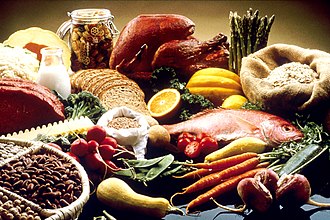
Agricultural economics is a special part of economics that helps us understand how to grow and share food and fiber in the best way. It started as a way to study how people use land for farming. The main goal was to get the most crop yield from the land while keeping the soil ecosystem healthy.
During the 1900s, this field grew to include many more topics. Today, agricultural economics covers many areas that overlap with regular economics. People who study agricultural economics have done important work in many parts of economics, like econometrics, development economics, and environmental economics.
This field also helps shape rules about food policy, agricultural policy, and environmental policy. It plays a big role in making sure we have enough healthy food for everyone.
Origins
Agricultural economics is a part of economics that helps farmers and others make the best decisions about growing and selling food. It became important around the start of the 1900s. One key person was Henry Charles Taylor, who helped start the Department of Agricultural Economics at the University of Wisconsin in 1909.
Later, other experts studied how agriculture connects to development in poorer countries and used special math tools to understand farming better. Agricultural economists have helped create many useful models and ideas that explain how farming works in the economy. Today, this field looks at many aspects, including how farms are managed, how food is priced, and how policies affect farming and food around the world.
Major topics in agricultural economics
Agricultural economists help us take care of the land and natural resources. They create ways to manage land, stop soil from washing away, control pests, protect plants and animals, and keep animals healthy. They also study how people choose what food to buy and cook, looking at how prices and income affect these choices.
They research how farms can produce more food while using resources wisely. This includes understanding how farmers make decisions, especially when facing risks like bad weather. This knowledge helps improve food production for a growing world, especially in places facing challenges like limited water or climate change. Agricultural economists also work to improve living conditions in countries where many people are poor, focusing on how farming can help economies grow and support better nutrition.
Professional associations
The International Association of Agricultural Economists (IAAE) is a global group that meets every three years for a big conference. They publish a journal called Agricultural Economics. There are also groups for Europe, Africa, and Australia. Much of the work in this field around the world is done by the International Food Policy Research Institute.
In the United States, the main group is the Agricultural & Applied Economics Association (AAEA). They hold their own yearly meeting and also help organize meetings for the Allied Social Sciences Association (ASSA). The AAEA publishes the American Journal of Agricultural Economics and Applied Economic Perspectives and Policy.
Careers in agricultural economics
People who study agricultural economics can work in many different jobs. They might work in agricultural management, agribusiness, agricultural marketing, education, the financial sector, government, natural resource and environmental management, real estate, and public relations. To start these jobs, you need at least a bachelor's degree. If you want to do research, you’ll need more advanced training, like a Masters in Agricultural Economics. A study from 2011 showed that jobs in agricultural economics are quite easy to get—they were rated 8th out of 171 different fields.
Literature
This section mentions a book called Handbook of Agricultural Economics. It was edited by Robert E. Evenson and Prabhu Pingali and published in 2007 by a company named Elsevier in Amsterdam, Netherlands.
Related articles



This article is a child-friendly adaptation of the Wikipedia article on Agricultural economics, available under CC BY-SA 4.0.
Images from Wikimedia Commons. Tap any image to view credits and license.