 Safekipedia
Anti-fascism
Adapted from Wikipedia · Discoverer experience
Anti-fascism is a political movement that stands against fascist ideas, groups, and people. It started in European countries in the 1920s and became very important just before and during World War II. During this time, many countries and resistance movements around the world fought against the Axis powers, which included fascist nations.
Fascism is a far-right, ultra-nationalistic ideology that was famous for its use by the Italian Fascists and the German National Socialists, known as the Nazis. It became the main belief system in Italy in 1922 and in Germany in 1933, leading to more actions against it. Fighting fascism was a big part of the Spanish Civil War, which happened before World War II.
Before World War II, many in the West did not see fascism as a big threat, and anti-fascism was sometimes linked with communism. But when the war started, people changed their views. Both the Soviet Union and countries like the United States and the United Kingdom saw fascism as a serious danger. Resistance against fascism happened in every country that was occupied during the war, and people from all different political views joined in. The defeat of the Axis powers ended fascism as a state ideology.
After World War II, the anti-fascist movement kept going where fascism still existed or came back. In the 1980s, a new wave of anti-fascist activity grew in Germany as a reaction to neo-Nazis in the punk scene. This idea spread to the United States in the late 1980s and 1990s. In the 21st century, anti-fascist actions grew even more because of the rise of the radical right, especially after the 2016 and 2024 elections of Donald Trump.
Origins
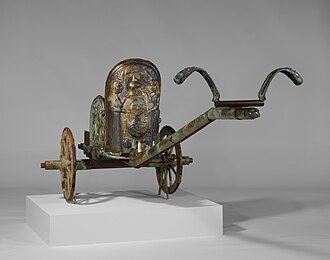
The fasces was an ancient Italian symbol made from a bundle of wooden rods, often with an axe. It started in the Etruscan civilization and was used in ancient Rome to show the power of leaders and magistrates.
As Italian Fascism grew, it faced strong opposition from Italian communists and socialists. Groups like the Arditi del Popolo and the Italian Anarchist Union formed to fight against fascism after World War I.
As fascism spread, many nations developed movements to oppose it. In places threatened by fascist expansion, such as the Balkans and Albania, resistance groups played key roles in fighting fascist ideas and actions. During World War II, the Albanian and Yugoslav resistance movements were very important in underground efforts against fascism.
Anti-fascism included people from many political views. Some believed in working through existing governments to protect democratic values, while others saw fascism as part of a larger struggle against unfair economic systems. Both groups saw the spread of fascist ideas as a major threat and worked to stop it, even though they had different methods and goals.
Main article: Fascism and ideology
History
Anti-fascist movements started in Italy when Benito Mussolini rose to power. These movements then spread across Europe and the world. In the early days, people from many political backgrounds, including communists, socialists, anarchists, and Christian democrats, worked together against fascism.
As fascism grew stronger, especially during World War II, anti-fascism often took the form of resistance movements. In Italy, people fought against Mussolini’s fascist regime and its secret police. After World War II, anti-fascist movements continued to work against fascist ideas and groups in many countries. These movements have taken many forms, from political parties to community groups, all working to promote freedom and democracy.
Use of the term
See also: Fascist (insult), Nazi analogies, Red fascism, Reductio ad Hitlerum, and Social fascism
Some politicians and researchers talk about how the word "fascism" can be very debated and used in many ways. For example, in some countries long ago, leaders used the idea of fighting against unfair groups to support their own power. This shows how words can mean different things to different people.
Images
Related articles


This article is a child-friendly adaptation of the Wikipedia article on Anti-fascism, available under CC BY-SA 4.0.
Images from Wikimedia Commons. Tap any image to view credits and license.