
Constitutional Convention (United States)
The Constitutional Convention took place in Philadelphia from May 25 to September 17, 1787. It was meant to revise the Articles of Confederation, but instead led to the creation of a new system of government. Delegates chose George Washington to lead the meeting. This event is very important in American history because it resulted in the Constitution of the United States.
Many delegates did not plan to write a new constitution at first. However, as they met, they agreed that a new government was needed. They debated many ideas, such as how the government should be organized and the role of the president. Some difficult topics, like how to count people for representation and the issue of slavery, caused long discussions.
After months of talking and finding compromises, the delegates finished a draft of the Constitution. They voted on it, and 39 of 55 delegates signed it on September 17, 1787. The document was then shared with the public to begin the process of becoming the nation's founding law.
History
Further information: History of the United States (1776–1789)
During the American Revolution, the Thirteen Colonies changed their colonial governments by creating new rules for how leaders would be chosen. They split power among different groups, like lawmakers, leaders, and judges, so no single group had too much control. But these new rules gave most power to the group of lawmakers, who were seen as closest to the people. This meant state leaders had little power, and judges were controlled by lawmakers.
After the war, the states worked together under the Articles of Confederation. This was more like a treaty between independent countries than a strong national government. Each state had one vote, and the group of leaders could only agree on big decisions if nine out of thirteen states agreed. They couldn’t collect taxes or enforce laws, which caused many problems. States often ignored requests for money, making it hard to pay soldiers or protect trade rights.
These problems led many leaders to believe a new plan was needed. In 1786, a meeting in Annapolis suggested a bigger convention to fix these issues. In February 1787, Congress agreed to hold a meeting in Philadelphia to revise the Articles. But when delegates from several states met in May, they decided to create an entirely new system instead. Rhode Island did not send anyone to this meeting.
Operations and procedures
The Constitutional Convention was supposed to start on May 14, but it had to be delayed because very few delegates were there. Only people from Virginia and Pennsylvania showed up that day. Finally, on May 25, enough delegates from seven states arrived, and the convention began at the Pennsylvania State House, later called Independence Hall, in Philadelphia. Delegates from New Hampshire joined later, on July 23.
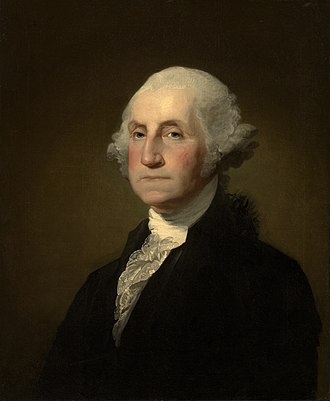
The delegates chose George Washington to lead the convention. They made rules for how to vote, with each state having one vote based on what most of its delegates thought. This helped smaller states have more say. Sometimes, if a state's delegates were split, the state couldn't vote at all. Delegates could come and go, and only about 30 to 40 were present most days. Different states had different rules about how many delegates needed to be there to vote.
The convention kept its discussions and votes secret until it ended, even nailing shut the windows to keep things private. James Madison kept detailed notes, which were not shared until after he passed away in 1836.
Madison's blueprint
James Madison of Virginia arrived in Philadelphia early to help plan the meeting. He studied how governments worked and wrote down his ideas before the convention started. His ideas became a key guide for the discussions.
Madison thought a stronger central government was needed. He believed the government should have the power to collect taxes and control trade. He also thought there should be a way to make sure the national government could enforce its rules. Madison was worried that one group, like rich people or poor people, might control everything, so he wanted a government that could balance different groups. He thought this could help protect everyone's rights.
Early debates
While waiting for the convention to start, James Madison sketched out his initial proposal, known as the Virginia Plan. This plan called for a strong national government and was a big change from the Articles of Confederation. On May 29, Edmund Randolph, the governor of Virginia, presented this plan to the convention.
The same day, Charles Pinckney of South Carolina introduced his own plan, which also wanted more power for the national government. However, the Virginia Plan received more attention. Pinckney’s plan suggested a Congress with two parts and a president with veto power.
On May 30, the Convention decided that a national government should have a strong Legislature, Executive, and Judiciary. This was the first step toward creating a new government instead of just changing the old one.
Congress
The Virginia Plan suggested replacing the one-part Congress with a two-part, or bicameral, Congress. This new Congress would make laws and have the power to override state laws. People would elect the lower house directly, while state legislatures would choose members for the upper house.
Proportional representation
The delegates debated how to decide how many representatives each state would have. Larger states like Virginia, Pennsylvania, and Massachusetts wanted representation based on population, but smaller states worried this would reduce their power.
Bicameralism
The delegates agreed that Congress should have two parts, like the British Parliament, with an elected lower house and an upper house. They debated who should elect the members of each house and how to balance power between them.
Three-Fifths ratio
To solve the problem of representation, a compromise was made. The number of representatives would be based on a state’s free population plus three-fifths of its enslaved population. This compromise helped gain support from southern states.
Executive branch
The delegates discussed what kind of leader the country should have. Some wanted a single president, while others suggested a group. Eventually, they agreed on a single executive, but there was debate about how to choose this leader and how long their term should be.
Unitary executive
James Wilson argued for a single president, saying this would make the government stronger and more responsible. Most delegates agreed with him, especially since George Washington was likely to be the first president.
Election and removal
There was debate about how to choose the president. Some wanted the people to vote directly, while others suggested letting Congress or state legislatures decide. They eventually agreed on a system where voters would choose electors who would then select the president.
Judiciary
The delegates agreed to create a national judiciary with a supreme court and lower courts. They debated who should choose the judges and how long they should serve.
Alternative plans
Smaller states were worried about the new plan, so they suggested changes to keep the Articles of Confederation. The New Jersey Plan kept Congress as one part with each state having one vote. Another plan by Alexander Hamilton suggested a system modeled after the British government, but it was very different from what most delegates wanted and wasn’t discussed much.
Apportionment
Connecticut Compromise
Main article: Connecticut Compromise
The Connecticut Compromise suggested that the House would have representatives based on population, while the Senate would give each state equal voting power. This idea was first proposed by Roger Sherman. He believed the Senate should protect the rights of each state, ensuring smaller states could defend themselves against larger ones.
The compromise was debated for many weeks. A special committee, called the Grand Committee, helped find a solution. They suggested that the House would represent the people, while the Senate would represent the states equally. This balance was hard to reach because large and small states did not trust each other.
Grand Committee
As discussions continued, a group of delegates from each state formed the Grand Committee to decide how to divide representatives. The committee, which included leaders from both large and small states, worked during a break for the Fourth of July holiday. They agreed that the House would be based on population, with each representative coming from a group of forty thousand people. Each state would have equal voting power in the Senate.
To get support from larger states, the committee suggested that the House would have special powers to start bills about money and salaries. This idea became part of the new government rules.
Revisiting the three-fifths ratio
The Grand Committee’s plan faced challenges. Delegates argued over how to count people for representation. Some wanted to count enslaved people fully, while others disagreed. After many debates, they decided that representation would be based on free inhabitants plus three-fifths of enslaved people. This rule would apply to current and future states. The first count would happen six years after the government started, and then every ten years.
Great Compromise adopted
On July 16, the convention voted to accept the Connecticut Compromise. They decided each state would have two senators, not three. They also allowed each senator to vote individually, rather than states deciding together. This way, the new government mixed ideas about national and state powers.
Other issues
On July 17, the delegates decided what powers Congress would have. They agreed that the national government should have more power than the states. This meant that laws passed by Congress would be more important than state laws.
The delegates also talked about how to choose and remove the president. They decided the president could serve more than one term but could be removed by Congress if they thought the president was not doing a good job. They also discussed how to choose judges and decided that the Senate would choose them.
The delegates knew that changing the rules in the past was very hard because every single state had to agree. They thought they needed a new way to change the rules, but they did not decide exactly how yet. They also talked about how the new rules would become official. They decided that special meetings in each state would decide if the new rules should be used.
First draft
The Convention took a break from July 26 to August 6 while waiting for the Committee of Detail to create the first draft of the Constitution. John Rutledge led this committee, which included Edmund Randolph, Oliver Ellsworth, James Wilson, and Nathaniel Gorham.
We know about their work from a few documents they left behind. The committee used ideas from earlier plans, like the Virginia Plan and the Articles of Confederation, to make their draft. They focused on including only the most important rules in clear language.
The committee added many details that the Convention had not discussed but thought would be okay. However, John Rutledge wanted to make sure the national government did not have too much power over the states. He and others changed some of the Convention's earlier decisions to give more power to the states.
One big change was limiting the powers of Congress to a list of 18 specific tasks. Another change added a rule allowing Congress to make any laws needed to carry out its powers. The committee also added rules to balance the powers between the national government and the states.
When they presented their draft, some parts caused big debates, especially about rules that would affect Southern states and their interests. The committee kept meeting until early September to finish their work.
Further modifications and concluding debate
After more talks, small changes were made to the first draft of the Constitution. One big change was that northern and southern states agreed that Congress could stop the trade of people starting in 1808. They also agreed to make it easier for certain laws to pass.
A new group of delegates worked on finishing the details. They decided that the president would be chosen by a group of electors instead of Congress. They also decided the president would serve four years and could be re-elected. They created the job of vice president, who would take over if the president could no longer serve and would help lead the Senate.
Some delegates, like Gerry, Randolph, and Mason, did not like some of the changes. They worried about certain rules, but most delegates wanted to finish and go home. They added a few small changes based on these concerns, but overall, they were ready to complete the Constitution. One important point they changed was how laws about money could be changed by the Senate.
Drafting and signing
Further information: Signing of the United States Constitution
The final version of the United States Constitution was prepared by a special group called the Committee of Style and Arrangement. This group included important leaders like Alexander Hamilton, James Madison, and Gouverneur Morris. They worked to make the document clear and organized.
On September 17, 1787, the Constitution was ready to be signed. Many of the leaders who had helped create it put their names on the paper. Some were not happy with all the choices made, but they believed it was the best they could create at that time. George Washington signed the document first, followed by the others from each state. The Constitution was then sent to the states to be approved.
Slavery
Slavery was a very hard issue for the people meeting at the convention. Many of the leaders from certain states owned slaves, and slavery was common in many places. Most slaves lived in the southern parts of the country, where many families depended on slave labor for their work and money.
The group had big disagreements about slavery. Some wanted to ban the trade of slaves from other countries, but others wanted to keep it. They finally agreed that the government could ban this trade, but not until the year 1808. They also made other rules to balance powers between different parts of the country.
Three-Fifths Compromise
Main article: Three-Fifths Compromise
Another big question was whether slaves should be counted when deciding how many leaders each state would have. They agreed that only three-fifths of slaves would be counted. This helped states with more slaves get more leaders, but it was a tricky and unfair decision.
Framers of the Constitution
Fifty-five delegates attended the Constitutional Convention in Philadelphia, and they are known as the Framers of the Constitution. Though 70 representatives had been appointed, not all could attend, so 55 delegates worked together to create the document. Only 39 of them signed the final version.
Many of these delegates had important roles during the American Revolution. Almost all of them had served in government before, and many had been leaders in the Continental Congress. Some were governors of their states. Two special delegates, Roger Sherman and Robert Morris, signed all three major early documents of the United States: the Declaration of Independence, the Articles of Confederation, and the U.S. Constitution.
The delegates came from many backgrounds. Over half were lawyers, but others were merchants, farmers, doctors, and landowners. Some were among the wealthiest people in the country, like George Washington and Robert Morris.
Here are the delegates from each state:
- Connecticut
- Delaware
- Georgia
- Maryland
- Massachusetts
- New Hampshire
- New Jersey
- New York
- North Carolina
- Pennsylvania
- South Carolina
- Virginia
- Rhode Island
- Rhode Island did not send delegates to the Convention.
Some important leaders did not join the Convention. Thomas Jefferson was in France, and John Adams was in Britain. Others, like Patrick Henry, chose not to participate.
In popular culture
The 1989 film A More Perfect Union shows the events and talks from the Constitutional Convention and was mostly filmed in Independence Hall.
In the 2015 Broadway musical Hamilton, Alexander Hamilton’s idea for a plan during the Constitutional Convention is part of the song "Non-Stop" near the end of the first act.
Pictures
Keep exploring


This article is a child-friendly adaptation of the Wikipedia article on Constitutional Convention (United States), available under CC BY-SA 4.0.
Images from Wikimedia Commons. Tap any image to view credits and license.