
List of parishes in Louisiana
Louisiana is a special state in the United States because it uses the word "parish" instead of "county" to describe its local areas. There are 64 parishes in Louisiana, and this unique name comes from the time when France ruled the area long ago. The word "parish" originally referred to church communities, but now it means a local government area.
In Louisiana, most parishes are led by groups called police juries. But not all parishes are the same—26 of them have different ways of being governed, like having a leader and a council together or combining city and parish leadership in one group. This variety makes each parish in Louisiana its own special place.
History
Louisiana started as a place ruled by France and Spain, both of which had strong ties to the Roman Catholic religion. The local government was organized into areas called parishes, which were linked to church groups.
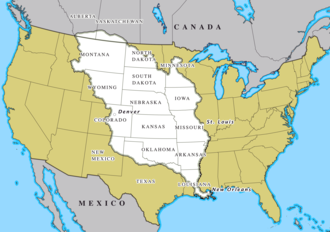
After the Louisiana Purchase in 1805, leaders split the land into 12 large areas called counties. In 1807, they changed these to 19 parishes. Over time, more parishes were added. By 1812, when Louisiana joined the Union as a state, there were 25 parishes. Over the years, new parishes kept forming, and by 1910, there were 64 parishes in total. Some of these parishes were created by splitting others or adding new lands. Today, Louisiana is the only state besides Alaska that does not use the word "county" to describe its main areas.
Listing
Louisiana is special because it has 64 parishes instead of counties like most other states. The word "parish" comes from old French times when the area was a colony, and it relates to church areas. In 38 of these parishes, the local government is run by a group called a police jury.
Former parishes
Some areas in Louisiana used to be called parishes but are not anymore.
- Attakapas Parish existed from 1807 to 1811.
- Biloxi Parish formed in 1811 from West Florida territory. It was eliminated in 1812 when it was transferred to the Mississippi Territory.
- Carroll Parish formed in 1838 from part of Ouachita Parish. In 1877, it was divided into East Carroll Parish and West Carroll Parish.
- Feliciana Parish formed in 1810 from West Florida territory. In 1824, it was divided into East Feliciana Parish and West Feliciana Parish.
- Pascagoula Parish formed in 1811 from West Florida territory. It was eliminated in 1812 when it was transferred to the Mississippi Territory.
- Warren Parish formed in 1811 from part of Concordia Parish, and merged into Concordia Parish and Ouachita Parish in 1814.
Territorial counties
In 1805, leaders in Louisiana made a map with 12 areas called counties. These were based on church areas set up when Spain ruled the land. In 1807, they changed these 12 counties into 19 parishes.
The original 12 counties were:
- Acadia County – became Ascension and St. James parishes.
- Attakapas County – became St. Martin and St. Mary parishes.
- Concordia County – became Concordia Parish.
- German Coast County – became St. Charles and St. John the Baptist parishes.
- Iberville County – became Iberville Parish.
- Lafourche County – became Assumption and Lafourche Interior parishes.
- Natchitoches County – became Natchitoches Parish.
- Opelousas County – became St. Landry Parish.
- Orleans County – became Orleans, St. Bernard, and Plaquemines parishes.
- Ouachita County – became Ouachita Parish.
- Pointe Coupée County – became Baton Rouge and Pointe Coupée parishes.
- Rapides County – became Avoyelles and Rapides parishes.
In 1810, the area known as the Republic of West Florida became part of Louisiana. In 1824, Feliciana Parish was split into East Feliciana and West Feliciana parishes.
Fictional parishes
In several stories and films, authors and filmmakers have created imaginary places called parishes in Louisiana. For example, the books Little Altars Everywhere, Divine Secrets of the Ya-Ya Sisterhood, and Ya-Yas in Bloom by Rebecca Wells feature a fictional place called Garnet Parish. The movie Steel Magnolias is said to happen in Chinquapin Parish, even though it was filmed in Natchitoches.
Other stories set in made-up parishes include The Rift by Walter Jon Williams with Spottswood Parish, the Southern Vampire Mysteries books and the TV show True Blood with Renard Parish, and the movie In the Electric Mist with St. Clare Parish. Many more films, books, and games feature their own special parishes, adding fun and imagination to Louisiana’s real world.
Keep exploring

This article is a child-friendly adaptation of the Wikipedia article on List of parishes in Louisiana, available under CC BY-SA 4.0.
Images from Wikimedia Commons. Tap any image to view credits and license.