
Ludwig Thoma
Ludwig Thoma was a German author, publisher, and editor born on 21 January 1867 in Oberammergau and passed away on 26 August 1921 in Tegernsee. He became well-known for his lively and sometimes exaggerated stories about everyday life in Bavaria.
After finishing school at the Imperial Latin School in Landstuhl, Thoma studied forestry in Aschaffenburg and later law at the Ludwig-Maximilians-Universität München and the University of Erlangen–Nuremberg. He worked as a lawyer in Dachau and Munich before turning to writing.
From 1899 onward, Thoma contributed to the magazine Simplicissimus, creating humorous tales, plays, and novels. His works often laughed at life in small Bavarian towns and farms. Some of his famous books include Andreas Vöst, Der Wittiber, and Lausbubengeschichten (Tales of a Rascal). He also wrote plays that showed the traditions and humor of local people.
Thoma married Marietta di Rigardo, who came from the Philippines, but they divorced in 1911. Later in life, he supported strong national ideas and wrote pieces against political opponents. During World War I, he helped as a medical orderly. Some of his stories, like Lausbubengeschichten, were turned into popular movies.
Birth and schooling
Ludwig Thoma was born in Oberammergau as the fifth child of a forester and his wife. His family had a history of working in the forest service. He grew up near the River Isar, a quiet and remote place.
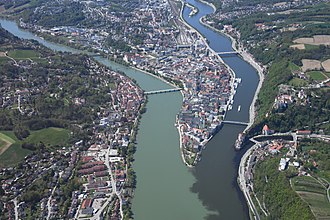
Ludwig’s mother wanted him to become a priest, so she made sure he got a good education. Private tutors taught him to read and write before he started school. When Ludwig was seven, his father passed away, leaving the family with little money. Ludwig and his sister were taken in by their uncle in Landstuhl, where he began his schooling. Ludwig had a hard time in school and often got into trouble. He moved between different schools, repeating a year at one point. Eventually, he finished his studies and passed his exams in Landshut. When it was time for his graduation speech, Ludwig couldn’t speak, and the headmaster had to help save the day.
Legal studies and career
Ludwig Thoma, like his father, started by studying forest science in Aschaffenburg, but he left after one year. He then went to the Ludwig-Maximilians-Universität München to study law. Later, he studied at the University of Erlangen–Nuremberg and finished his legal training there.
From 1890, Thoma worked as a legal intern in Traunstein. He also wrote a dissertation called The Theory of Self-Defence but never had it printed, so he did not receive a doctorate certificate.
Early successes as a writer
In April 1895, Thoma's short story called "Der Truderer" was published. It described cheerful moments from life in the countryside. Thoma also wrote about politics, discussing a meeting of the Bavarian SPD and their ideas about farming for a newspaper.
Thoma thought about getting married. He met a woman named Johanna Sachs in 1892 but her father did not support their relationship, so Thoma decided not to pursue it. Later in 1896, he tried again by answering a marriage advertisement, but it did not work out. He made fun of women in his first comedy called Witwen ("Widows"). In spring 1897, Thoma moved to Munich and shared an apartment with a friend. He started a small law practice but spent less time on it over the years. In 1897, his first book, a collection of stories called Agricola: Bauerngeschichten, was illustrated by two artists and published in Passau.
In 1898, Thoma began sending his writings to the magazine Simplicissimus, which were liked by both the publisher and readers. When an issue of the magazine was taken away in 1899, the publisher needed someone to stay in Munich to manage things. The publisher chose Thoma, and in September 1899, Thoma sold his law practice and became a full-time editor for Simplicissimus.
Editor-in-Chief at Simplicissimus
Ludwig Thoma became an important writer for Simplicissimus. He often used different names when writing, especially "Peter Schlemihl" for his poems. In 1901, he wrote a short play called Die Medaille, set in Dachau, which first performed in Munich’s Residence Theatre. The play was also shown in Berlin, and Thoma traveled there with the show in November 1901.
That same year, Thoma wrote another play called Die Lokalbahn, which opened on October 19, 1902, also at the Residence Theatre.
Material achievements and travel
In 1903, Thoma met graphic artist Ignatius Taschner, and they became good friends. By the time his novel Lokalbahn became successful, Thoma was earning a lot of money and no longer worried about finances. He began to live a more comfortable lifestyle. With a friend named Albert Langen, he rented a hunting area in Unterweikertshofen near Dachau, a place he had visited often since 1895. In March and April 1903, Thoma rode a bicycle to Rome with some colleagues from a magazine called Simplicissimus. During this trip, he wrote a funny story called Der heilige Hies and started his first novel, Andreas Vöst.
In 1906, Thoma joined Hermann Hesse as an editor for a magazine named März.
Mockery and condemnation
In 1906, Ludwig Thoma was put in prison for six weeks. This happened because of a funny poem he wrote called "On the morality of Preachers in Köln am Rheine." People thought the poem was rude to a group that cared about good behavior, so he had to stay in Stadelheim Gaol near Munich.
Marriage to Marion
In 1907, Ludwig Thoma married a dancer named Marion, whose full name was Marietta di Rigardo. Marion was born in the Philippines and was known for being independent and free-thinking for her time. However, their personalities were very different, and the marriage did not last long. They divorced in 1911, but stayed friends after that.
At Tegernsee
In 1908, Ludwig Thoma moved into his house called "Auf der Tuften" in Tegernsee. That same year, his comedy Moral had its first performance and became very popular. In the play, a member of a group that promotes good behavior says something funny about how showing good behavior in public matters more than just being good in private. The leader of this group also makes a humorous comment about married couples and honesty.
First World War
Ludwig Thoma used to have strong opinions about society, the church, and the government. But when the First World War began, his views changed. He joined as a medic and went to fight in Galicia in 1915 but fell very ill and could no longer serve.
In 1916, he wrote many works. By 1917, he supported the war strongly, speaking for a group that wanted to keep fighting until they won. However, when the war looked like it would end in loss for Germany in 1918, he felt confused and withdrew from public life.
In 1918, he met and fell deeply in love with Maidi Liebermann von Wahlendorf but she did not leave her husband, so they remained close but did not live together.
Articles for the Miesbacher Anzeiger
In the last 14 months of his life, Ludwig Thoma wrote 175 articles for the Miesbacher Anzeiger. Many of these articles were anonymous and often criticized the government in Berlin and ideas about social democracy.
Thoma also wrote about different groups of people in ways that were unkind and unfair. He used hurtful words and made negative comments about many, which is not the way we should treat others. Some of his writings were influenced by ideas that were popular at the time but are now known to be wrong and harmful.
Death and estate
Ludwig Thoma had an operation for a stomach problem in Munich. He passed away from stomach cancer on 26 August 1921 at his home in Tegernsee. He left most of his money and earnings to Maidi von Liebermann. His former wife Marion, his sisters Katharina Hübner and Bertha Zurwesten, and his brother Peter Thoma each received a sum of money, with Peter also getting a yearly payment for life.
Thoma was buried in the churchyard of the Church of St. Lawrence in Egern, near Lake Tegernsee. His grave is now next to his friend, the writer Ludwig Ganghofer, and close to Maidi von Liebermann.
Assessment
Ludwig Thoma used his writing to show the problems he saw in society. He spoke out against what he thought were unfair ideas and criticized the way people lived, especially in the towns and villages of Bavaria. His stories and plays were funny and full of sharp remarks, and many people thought they were very true to life because Thoma had worked as a lawyer and knew a lot about everyday life in the countryside.
Some later writers said that in his last years, Thoma wrote very harsh things about certain groups of people. He also faced some trouble when he was put in prison for a short time. Even though he never finished his university work, he still called himself "Doctor Ludwig Thoma."
Honours
Ludwig Thoma is still very popular in Upper Bavaria today. You can find products named after him, like a special beer called Ludwig-Thoma-Bier from a brewery in Berchtesgaden.
Several schools are named in his honor, including a middle school in Munich, a primary school in Dachau, a grammar school in Prien am Chiemsee, and another primary school in Traunstein. The railway line between Dachau and Altomünster is also called the Ludwig-Thoma-Bahn. His bust can be seen in the Hall of Fame in Munich.
The city of Munich once gave out a Ludwig Thoma Medal, but they stopped doing this in 1990 after learning more about some of his old writings.
Works
Ludwig Thoma wrote many books that showed life in Bavaria in a funny way. Some of his popular works include Die Lokalbahn from 1901, Lausbubengeschichten from 1905, and Andreas Vöst from 1906. He also wrote Tante Frieda in 1907 and Moral in 1909. Other famous books are Ein Münchner im Himmel from 1911 and Jozef Filsers Briefwexel from 1912. Later works include Altaich in 1918, Münchnerinnen in 1919, and Der Jagerloisl in 1921.
Pictures
Keep exploring



This article is a child-friendly adaptation of the Wikipedia article on Ludwig Thoma, available under CC BY-SA 4.0.
Images from Wikimedia Commons. Tap any image to view credits and license.