 Safekipedia
Mathematical and theoretical biology
Adapted from Wikipedia · Discoverer experience
Mathematical and theoretical biology, also known as biomathematics, is a special area of biology that uses math to understand living things. Instead of just doing experiments, scientists in this field create models and use math to learn about how plants, animals, and other organisms grow, change, and behave. This helps them make better guesses about what might happen in nature.
This kind of biology is different from regular experiments because it uses numbers and equations to study living systems. By using math, scientists can make very exact predictions and study parts of nature that are hard to see just by looking. This can help both in understanding big ideas and in solving real-world problems.
Because living things are very complicated, this field uses many parts of math. It has even helped create new math methods to better understand the world around us.
History
Early history
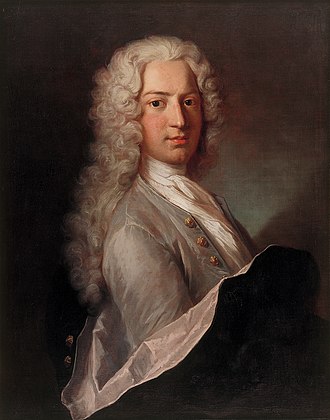
People have used math to study living things for a very long time. In the 1200s, a man named Fibonacci used numbers to show how rabbit families grow. Later, in the 1700s, Daniel Bernoulli used math to study how diseases like smallpox affect people. In 1789, Thomas Malthus wrote about how human populations grow quickly. In 1836, Pierre François Verhulst created a way to describe how populations grow but slow down when there isn’t enough space or food.
In 1879, Fritz Müller was the first to use math to explain how animals can look alike to stay safe — a concept now called Müllerian mimicry. The words “theoretical biology” were first used by Johannes Reinke in 1901. A very important book named On Growth and Form by D’Arcy Thompson came out in 1917. Other smart thinkers like Ronald Fisher, Vito Volterra, and Conrad Hal Waddington also helped start this field.
Recent growth
Since the 1960s, more and more people have become interested in this area of study. This happened for several reasons. First, we now have lots of information from studying genes, which is hard to understand without math. Second, new math ideas like chaos theory help us study complicated living systems. Third, computers have become very powerful, making it easier to do complex calculations and experiments on computers instead of with real animals, which can be tricky or unethical.
Fibonacci series Daniel Bernoulli Thomas Malthus Pierre François Verhulst Fritz Müller Müllerian mimicry evolutionary ecology population growth Charles Darwin carrying capacity Johannes Reinke Jakob von Uexküll On Growth and Form D'Arcy Thompson Ronald Fisher Hans Leo Przibram Vito Volterra Nicolas Rashevsky Conrad Hal Waddington genomics chaos theory computing simulations in silico
Areas of research
Mathematical and theoretical biology uses math to study living things. This field looks at how living systems work by creating models and using math to understand them. It is different from experiments, which test ideas in a lab.
Abstract relational biology
Abstract relational biology studies complex living systems using simple models. These models help us understand how cells and organisms are organized without focusing on details like shapes or sizes.
Algebraic biology
Algebraic biology uses algebra to solve problems in biology. It is often used in areas like genetics and the study of genes and proteins.
Complex systems biology
This area builds on systems biology to study more complicated life processes. It started in the 1970s and uses ideas from math and computer science.
Computer models and automata theory
This field uses computers to model biological systems. It includes models of cells, nerves, and other biological processes. It also looks at how computers can help us understand biology.
Modeling cell and molecular biology
This area grew because molecular biology became very important. It includes studying how cells move, how diseases like cancer develop, and how cells work together.
Modelling physiological systems
This includes models of how blood vessels work, how the heart functions, and how muscles work together.
Computational neuroscience
Computational neuroscience studies the nervous system using math and computer models. It helps us understand how nerves send signals and how the brain works.
Evolutionary biology
Ecology and evolutionary biology have always been big parts of mathematical biology. Evolutionary biology looks at how animals and plants change over time. It uses math to study how genes change and how new traits appear.
Mathematical biophysics
Early mathematical biology focused on biophysics, which uses math to study physical aspects of living things. This includes using math to understand how molecules move and change.
Deterministic processes (dynamical systems)
These are processes where the outcome is fixed if you start from the same point. They include different types of equations that describe how things change over time.
Stochastic processes (random dynamical systems)
These processes include some randomness. The outcome can vary even if you start from the same point. They use probability to describe what might happen.
Spatial modelling and dynamical systems
This area includes classic work on how patterns form in living things. It studies things like how animals form groups, how patterns appear on shells, and how wounds heal.
Geometric organisation and spatial patterning
Many living things show patterns in their shapes and arrangements. Math helps us understand how these patterns form, grow, and relate to the biology of the organism. Patterns can be seen in DNA, animal coats, plant leaves, and even large ecosystems.
Mathematical methods
A mathematical model of a living system uses equations to describe how the system works. Solving these equations helps predict how the system will behave over time.
Molecular set theory
Molecular set theory uses math to study how molecules change and react. It was introduced by Anthony Bartholomay and is used in biology and medicine.
Organizational biology
This area studies how different parts of living things depend on each other. It looks at how these parts work together in cycles and relationships.
Model example: the cell cycle
Main article: Cellular model
The way a cell grows and divides is very complex and important because problems with this process can lead to cancers. Scientists use math to understand this process better. They create models that show how proteins inside a cell change over time. These models help explain how cells work in different living things.
These models use special math equations to describe how proteins change. By studying these equations, scientists can learn how the cell behaves under different conditions. They look at points where the cell's behavior changes suddenly, which helps explain why cells sometimes act in certain ways. This math helps us understand the hidden rules that control cell growth and division.
Software
Here are some tools used in the study of mathematical and theoretical biology:
Images
Related articles




This article is a child-friendly adaptation of the Wikipedia article on Mathematical and theoretical biology, available under CC BY-SA 4.0.
Images from Wikimedia Commons. Tap any image to view credits and license.