 Safekipedia
Mount Washington
Adapted from Wikipedia · Discoverer experience
Mount Washington is a very tall mountain in the state of New Hampshire. It is the highest peak in the Northeastern United States, standing at 6,288.2 feet tall. People often visit Mount Washington because it offers many fun activities like hiking and special kinds of flying.
The mountain is famous for having very strong and quick changes in weather. In fact, on April 12, 1934, a weather station at the top measured winds blowing as fast as 231 miles per hour! This was the fastest wind ever recorded until 1996, and it was not caused by a tornado or a big storm like a tropical cyclone.
Mount Washington is part of a group of mountains called the Presidential Range inside the bigger White Mountains. You can reach the top of the mountain in different ways, such as riding on the Mount Washington Cog Railway or driving up the Mount Washington Auto Road. Many hikers also enjoy walking up to the summit using paths like the Appalachian Trail.
History
The Abenaki people called the mountain Agiochook, meaning "the place of the Great Spirit". They believed mountains were sacred and did not climb them.
In 1524, an explorer named Giovanni da Verrazzano was the first European to see the mountain from far away. In 1642, Darby Field made the first climb to show that the mountain was not home to gods, which helped Europeans claim the land.
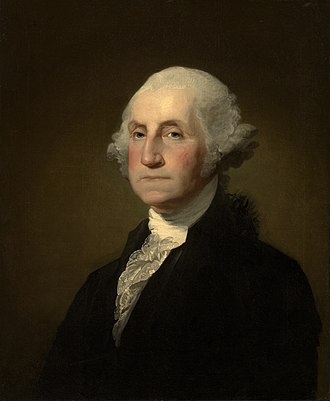
Later, the mountain was named after George Washington. In 1819, a path was built for people to hike to the top. In the mid-1800s, the mountain became a popular place for tourists, with hotels and special roads built to reach the summit.
Climate
Mount Washington has very special weather. Because of its height and position, it often experiences very strong winds and lots of rain or snow. The mountain’s peak has a cold climate, while areas lower down are a bit warmer.
The weather there can change quickly. Strong winds happen often, and the mountain once recorded one of the highest wind speeds ever seen. The area also gets a lot of precipitation each year, sometimes as rain and sometimes as snow.
Geographical features
Mount Washington is made from ancient rocks called schist and quartzite from the Devonian era.
The mountain has different shapes on each side. The west side has a straight path for the Cog Railway, but the other sides are more complicated. On the north side, there is a large bowl-shaped area called Great Gulf, surrounded by several peaks. These peaks have no trees because they are very high up.
To the east of the top of the mountain, there is a flat area called the Alpine Gardens. This place has special plants that only grow in certain high, cold areas. There are also two deep valleys where people can climb rocks and ice, or go skiing and hiking.
South of the top is another flat area called Bigelow Lawn. From here, several more peaks stretch out in different directions.
Uses
The mountain is a popular place for hiking, with the Appalachian Trail passing below the top near the Lakes of the Clouds Hut, one of eight mountain huts run by the Appalachian Mountain Club. In winter, Tuckerman Ravine is famous for skiing on its steep slopes. The mountain’s tricky weather makes it a good place for glider flying. It was named the 14th National Landmark of Soaring in 2005.
The most common hiking trail to the top is the Tuckerman Ravine Trail, which is 4.1 miles long and starts at the Pinkham Notch area. It climbs quickly up the ravine. At the top, there is a center with a museum, gifts, food, and a place to look around. Other trails lead up the eastern and western sides of the mountain.
Winter brings different paths to climb, helping avoid dangerous snow and ice. The Mount Washington Cog Railway has been taking visitors to the top since 1869. It was the first successful rack railway in the United States.
The Mount Washington Auto Road is a private road that winds up the east side of the mountain. It was opened to the public in 1861, before the railway. Each year, people race cars and bicycles up this road.
Every June, runners race up the mountain in the Mount Washington Road Race. In August, cyclists race up the same road in the Mount Washington Auto Road Bicycle Hillclimb. The mountain also hosts an old car race, the Mount Washington Hillclimb Auto Race, which began in 1904.
Main article: Tuckerman Ravine
Tuckerman Ravine is a favorite spot for skiing, drawing many skiers each year. It became a well-known place for challenging ski runs soon after people first skied there in 1931.
Transmission facilities
Because Mount Washington is the highest mountain in the northeastern United States, it is a great place for radio and television stations that need to send signals far away. Since the 1930s, people have used the top of the mountain for these stations. The high spot helps the signals travel far, especially for radio waves that can only go straight.
Many stations have used the mountain over the years. One early station, W1XER, started in 1937 to share weather information and later became a regular radio station. Today, there are still radio stations on the mountain, and there have been television stations too. Sometimes, things like fires can cause problems, but people fix them up again so the stations can keep working.
Deaths
Main article: List of people who died on the Presidential Range
Many people have faced dangers while trying to climb Mount Washington since records began. Most of these troubles come from not planning well or not understanding how the weather can change quickly up high. Even though the mountain isn’t very hard to climb if you’re ready, the weather can become very harsh because there’s no trees to protect you. One famous climber, William Buckingham Curtis, died from tiredness during a sudden snowstorm in the summer of 1900.
Artistic tributes
Mount Washington has inspired many famous paintings and photographs. Artists from the White Mountain art group, influenced by the Hudson River School, traveled to the area to capture its natural beauty. The arrival of train service brought more visitors and led to the building of the Glen House, where artists like Albert Bierstadt and his brother stayed. Other artists, such as John P. Soule, John B. Heywood, and the Kilburn Brothers, also created images of the mountain's scenery.
Images
Related articles



This article is a child-friendly adaptation of the Wikipedia article on Mount Washington, available under CC BY-SA 4.0.
Images from Wikimedia Commons. Tap any image to view credits and license.