
Mystic River
The Mystic River is a 7.0-mile-long river in Massachusetts. In the Massachusett language, the name means "large estuary," showing that the river changes with the tides. This similarity to the English word mystic is simply a coincidence.
The river lies north of Boston and flows close to the Charles River. It passes through several towns, including East Boston, Chelsea, Charlestown, Everett, Medford, Somerville, and Arlington, before joining the Charles River to form Boston Harbor. The area around the river includes many lakes and ponds, with Spot Pond being the largest.
For a long time, the Mystic River has been used for industry, but it also faces water quality issues. Some parts of the river are being cleaned up, especially with the building of Everett's new Encore Boston Harbor casino.
History
American Indians and colonists used special structures called weirs to catch fish and help grow their crops. In 1631, the very first ship built in Massachusetts, named the Blessing of the Bay, was launched from the shores of the Mystic River. The first bridge across the river was built in 1637, and nearby towns argued about who should pay for it for over a hundred years!
The Mystic River was important during the American Revolution. On September 1, 1774, British soldiers rowed up the river to take gunpowder from a place called the Powder House. This caused a big upset called the Powder Alarm. Later, battles such as the Battle of Chelsea Creek and the Battle of Bunker Hill also happened near the river.
In 1805, a canal called the Middlesex Canal connected the Mystic River to other rivers. During the 1800s, many shipyards along the Mystic River built over 500 ships. Shipbuilding was busiest in the 1840s. In 1909, locks were built that changed the river’s marshes, and in 1966, a dam named after Amelia Earhart was completed. The Maurice J. Tobin Bridge, finished in 1950, connects two towns across the river.
Wildlife
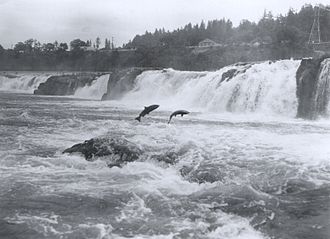
The Mystic River used to be full of many kinds of fish, like salmon, alewife, and striped bass. Today, these fish still live there, but their numbers have gone down a lot because of pollution and dams. In the past, pollution came from mills and a small ship building yard. Now, the main problem is drainage from nearby cities and towns. This pollution has made the river less clean and harder for fish to live in.
In popular culture
The Mystic River has appeared in many stories and poems. In 1844, a writer named Lydia Maria Child wrote about traveling over the river to her grandfather’s house in a poem called "Over the River and Through the Wood."
Later, a famous novel by Dennis Lehane used the Mystic River as an important part of its story, and Clint Eastwood made a well-known movie from that book. Even Henry Wadsworth Longfellow mentioned the river in his 1861 poem "Paul Revere's Ride."
Crossings


Keep exploring


This article is a child-friendly adaptation of the Wikipedia article on Mystic River, available under CC BY-SA 4.0.
Images from Wikimedia Commons. Tap any image to view credits and license.