 Safekipedia
Potomac River
Adapted from Wikipedia · Discoverer experience
The Potomac River is a large river in the Mid-Atlantic region of the United States. It flows from the Potomac Highlands in West Virginia to the Chesapeake Bay in Maryland. The river is 405 miles long and has a drainage area of 14,700 square miles, making it the fourth-largest river along the East Coast of the United States. More than 6 million people live within its watershed.
The Potomac River forms a boundary between different areas. On one side are Maryland and Washington, D.C., and on the other side are West Virginia and Virginia. Special parts of the river were named a National Recreation Trail in 2006, and a part in Charles County, Maryland, became the Mallows Bay–Potomac River National Marine Sanctuary in 2019.
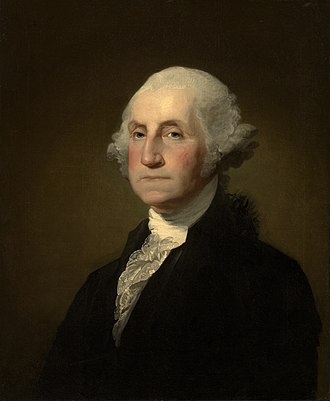
The river is very important in history and politics. The nation’s capital, Washington, D.C., is located on its banks, as is Mount Vernon, the home of George Washington. During a big war called the American Civil War, the river separated two sides, and a large army was named after it.
Course
The Potomac River is 405 miles long and flows from the Fairfax Stone Historical Monument State Park in West Virginia to Point Lookout in Maryland. It drains an area of 14,700 square miles. The river has two main branches: the North Branch and the South Branch, which meet just east of Green Spring in Hampshire County, West Virginia.
The North Branch starts at the Fairfax Stone and flows through several communities before joining the South Branch. The South Branch begins near Hightown in Virginia and flows through various areas, joining the North Branch to form the Potomac. The river passes through five geological regions on its way to the Chesapeake Bay. Below Little Falls, tides influence the river as it flows through Washington, D.C., and the salinity increases as it approaches the Bay.
Main article: North Branch Potomac River
Main article: South Branch Potomac River
This stretch of the Potomac River runs from where the North and South Branches meet near Shepherdstown, West Virginia, through Opequon Creek. Several smaller streams flow into the river along this part of its course.
This part of the Potomac River runs from just above Harpers Ferry in West Virginia to Little Falls in Maryland. Many smaller streams and creeks join the river here.
The Tidal Potomac River is the part of the river below the Fall Line, stretching 108 miles from just below Washington, D.C., to the Chesapeake Bay. Many tributaries flow into the river along this section.
History
Natural history
The Potomac River is very old, at least 3.5 million years. It may be even older, possibly ten to twenty million years. The river has changed shape, especially around Great Falls, during times when glaciers covered the land.
Human history
The Potomac River has been home to Native American people for a very long time. Many different groups lived along the river, such as the Piscataway and their allies. They had their own names for parts of the river.
In 1608, explorer Captain John Smith traveled up the river and made maps. He called it "Patawomeck" based on what the local people told him. Over time, the name changed a little and is now "Potomac".
The river played an important role during the American Civil War. It separated the two sides and was crossed by soldiers many times. Important battles happened nearby.
George Washington spent much of his life near the river. The nation’s capital, Washington, D.C., is also located close to the Potomac. The river has been used for transportation and as a water source for the city.
Hydrology
Water supply and water quality
In the Washington area, about 486 million US gallons of water is taken from the Potomac River each day. This water helps meet the needs of around 6.1 million people who live there.
In the past, the water in the Potomac River was not very clean because of pollution from mining, farming, and cities. This made the water smell bad and look green. In the 1960s, leaders worked to clean the river, and laws were passed to stop pollution. Today, the river is much cleaner, and people can enjoy fishing and boating again. However, the river still faces problems with pollution and needs careful protection.
Discharge
The Potomac River usually flows at about 11,498 cubic feet per second. In March 1936, it flowed much faster, reaching 426,000 cubic feet per second, which was the highest ever recorded. In September 1966, the flow was much slower at 601 cubic feet per second, the lowest ever recorded.
Legal issues
Maryland and Virginia have long disagreed about who controls the Potomac River. Their original agreements from long ago gave both states rights to the whole river, which is unusual. In 1776, Virginia agreed to share the river but kept some rights, leading to more debates. They finally agreed in 1785 and again in 1877, deciding that Maryland would control the river from bank to bank, but Virginia could still use it without blocking ships.
In 1996, Maryland refused a request from Virginia to build a water system near the river, worrying it would harm Maryland’s interests. Virginia took the issue to the Supreme Court of the United States, which decided in favor of Virginia in 2003.
When West Virginia became a state in 1863, there were also questions about its rights to land and the river. The Supreme Court settled these in 1910, saying neither state fully owned the disputed areas.
Fauna
Fish
The Potomac River is home to many kinds of fish, such as bass, muskellunge, pike, and walleye. An invasive fish called the northern snakehead, which looks like the native bowfin, was first seen here in 2004. You can also find sunfish in the river. Although it’s rare, bull sharks sometimes visit too.
The number of American shad in the river has grown again thanks to a project started in 1995. This project added over 22 million young shad to the river and built a special path to help adult shad get past a dam to reach their spawning spots upstream.
Mammals
When Europeans first lived near the Potomac, many large animals such as bison, elk, wolves (gray and red), and cougars were there, but they were hunted until they disappeared by the mid-1800s. Beavers and otters also disappeared, but small groups of American mink and martens survived in hidden areas.
Although no one recorded seeing dolphins in the Potomac when settlers arrived, people reported seeing Atlantic bottle-nosed dolphins in the 1800s. In July 1844, a group of 14 dolphins was seen as far up the river as the Aqueduct Bridge, near where Key Bridge stands today.
Since 2015, many more of these dolphins have been seen in the Potomac. Scientists believe this is because of warmer weather, higher water levels in the Chesapeake Bay, and cleaner water in the river. Over 500 dolphins have been identified in this area during this time.
Birds
Reptiles
Amphibians
Images
Related articles



This article is a child-friendly adaptation of the Wikipedia article on Potomac River, available under CC BY-SA 4.0.
Images from Wikimedia Commons. Tap any image to view credits and license.