 Safekipedia
Rocky Mountain Laboratories
Adapted from Wikipedia · Discoverer experience
Rocky Mountain Laboratories (RML) is part of the NIH Intramural Research Program and is located in Hamilton, Montana. It is operated by the National Institute of Allergy and Infectious Diseases. This special laboratory studies very dangerous germs that can make people very sick.
RML works with some of the most careful safety rules in the world. It has special labs called Biosafety level 4, which are designed to keep very dangerous germs safe. These labs also study other harmful germs and things called prions.
One of the important things RML studies is a germ called Ebola. They also look at other germs like Coxiella burnetii and Francisella tularensis. These studies help scientists learn how to protect people from diseases. RML also has labs with Biosafety level 3 rules to study less dangerous but still important germs.
History
RML started with research on Rocky Mountain spotted fever around 1900 in the Bitterroot Valley. Early settlers faced a mysterious illness with a dark rash, called "black measles." In 1909, Dr. Howard Taylor Ricketts discovered the germ that causes this disease.
RML officially opened in 1928 as the Montana Board of Entomology Laboratory to study the fever and the ticks, Dermacentor andersoni, that spread it. People nearby were worried ticks might escape, so the building had a moat for protection. In 1932, the federal government took over and renamed it Rocky Mountain Laboratory. Over time, it grew to study many animal diseases like typhus, tularemia, and Q-fever.
During World War II, the lab helped make a vaccine for yellow fever. Later, it also looked into diseases like Lyme disease, which was discovered in 1982.
Post 9/11 and BSL-4 Facility
After the September 11 attacks, Dr. Anthony Fauci and others helped President George W. Bush plan a national program to protect against diseases. This included building a very safe lab at RML because the main lab in Bethesda didn’t have enough space and RML had a long history of studying diseases that animals can pass to humans.
The new lab, called the Integrated Research Facility, opened in 2008. It helped scientists study new diseases carried by ticks and mosquitoes in North America. It also has special tools for looking at the shape of tiny germs. Later, scientists at RML worked on vaccines to stop diseases like Ebola from spreading among animals. In 2018, they received projects to develop vaccines for animals from DARPA.
Contributions to Understanding SARS-CoV-2
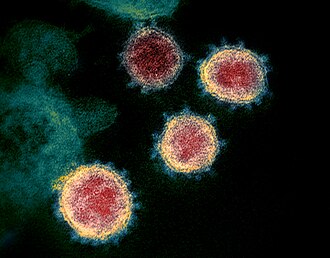
Dr. Vincent Munster and Dr. Michael Letko started working in 2016 to create tools that help scientists learn how certain viruses, including MERS-CoV, get inside cells. In 2020, Dr. Munster’s team used these tools to study a new virus called SARS-CoV-2. They discovered that this virus uses a specific protein called ACE2 to enter human cells. In February 2020, some of the first detailed images of SARS-CoV-2 were made at the Rocky Mountain Laboratories.
Related articles


This article is a child-friendly adaptation of the Wikipedia article on Rocky Mountain Laboratories, available under CC BY-SA 4.0.
Images from Wikimedia Commons. Tap any image to view credits and license.