 Safekipedia
Space archaeology
Adapted from Wikipedia · Discoverer experience
Space archaeology is a special kind of archaeology that studies human-made objects found in space. It looks at things like old satellites, pieces of rockets, and structures on the Moon or Mars to learn about our adventures in space. These objects tell stories about how humans have explored the universe and help us understand our history beyond Earth.
This field also includes studying launch sites on Earth and pieces of space junk that orbit our planet. Experts in space archaeology work to decide which of these space items are important enough to protect for the future. They think about how these objects fit into laws about preserving cultural heritage, making sure we keep valuable pieces of our space history safe for generations to come.
By studying these space artifacts, scientists can learn more about past space missions and the technology we have used to explore other worlds. Space archaeology helps us remember and appreciate our journey as we continue to reach further into the cosmos.
Cultural heritage
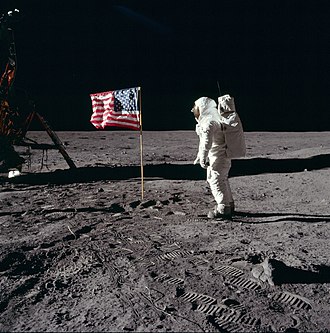
Space tourism might affect important old objects, like those left on the Moon. People are starting to think these objects are important parts of our history and need to be protected. Some ideas suggest keeping old space stations in orbit like in a museum to save them. Experts say staying connected to our past helps us understand our present.
This work also helps scientists find signs of life or old technology on other planets. In January 2025, the World Monuments Fund included the Moon in its World Monuments Watch for the first time. This is because of the Moon’s importance to human history, especially from the Apollo missions and other lunar landings, and because more people and companies are traveling to space. The ICOMOS Aerospace Heritage International Scientific Committee, created in 2023, suggested the Moon for this special list.
Satellites
Satellites help us learn about how humans have explored space and the objects we leave behind. Some important satellites include:
- Vanguard 1 - Launched in 1958, Vanguard 1 is the oldest human-made satellite still in orbit. It stopped communicating in 1964 but is still up there.
- Asterix-1 - This was the first satellite made by France, launched in 1969 to test their rocket. It only sent signals for two days but is still orbiting.
- Skynet 1A - Launched in 1969, this satellite provided communication for forces in the Middle East. It no longer works but will stay in orbit for over a million years.
Legal matters
Main article: Space law
See also: Common heritage of mankind
Space archaeology faces many legal challenges because international laws are still unclear about how to protect space sites. Two famous astronauts, Harrison Schmitt and Neil Armstrong, helped explain these laws. The main rule is the Outer Space Treaty from 1967, which says that space belongs to all countries and each country is responsible for its own space activities.
A later agreement called the Moon Agreement was signed in 1979, but many countries did not fully accept it. A group called For All Moonkind, Inc. is working to create better rules to protect important space sites. In 2018, their efforts led the United Nations Committee on the Peaceful Uses of Outer Space to think about creating a special program to protect space heritage sites.
Background and history
In 1999, a question was asked about whether preservation laws apply on the Moon. This led to important projects and studies about protecting historic sites in space.
In 2006, experts documented the Apollo 11 landing site on the Moon. Since 2015, the International Space Station Archaeological Project has studied the International Space Station to learn about life in space. In 2022, they began a special study called SQuARE to observe how space station areas are used over time.
Images
Related articles


This article is a child-friendly adaptation of the Wikipedia article on Space archaeology, available under CC BY-SA 4.0.
Images from Wikimedia Commons. Tap any image to view credits and license.