 Safekipedia
Space art
Adapted from Wikipedia · Discoverer experience
Space art, also known as astronomical art, is a special kind of art that shows pictures of the universe in many different styles. It can also mean artworks that have been sent into space.
As telescopes and cameras got better, artists could see the night sky more clearly and create more accurate pictures. Some artists work with scientists to find new ways to express ideas about space, the stars, and other amazing discoveries.
For many years, artists have used paints to show space, and now they also use computers and digital tools. Science-fiction magazines were some of the first places where space art appeared, showing planets, spaceships, and strange new worlds. Famous artists like Chesley Bonestell and David A. Hardy helped people imagine space travel and new places in space.
In 1962, NASA started a Space Art program. Artists in this program drew beautiful pictures of stars, planets, and moons, helping everyone dream about the wonders of space.
Astronomical art
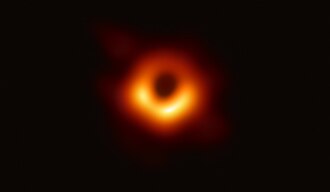
Astronomical art is a type of space art that shows pictures of outer space. It includes ideas like space as a new frontier for humans, pictures of worlds far away, and art about amazing things like black holes. It draws from the study of astronomy.
This kind of art began in the 1940s and 1950s. Chesley Bonestell was known for creating realistic pictures of space. Today, contemporary artists keep making new art about space ideas, like interstellar travel and what might happen far out in deep-space. Many of these artists use traditional painting or digital tools to show space in realistic ways, sometimes after visiting places like desert environments to imagine what Mars might look like.
Space art appeared in science fiction magazines such as Fantasy and Science Fiction, Amazing, Astounding (later renamed Analog), and Galaxy. Today, it can be found in magazines like Sky and Telescope and The Planetary Report. The NASA fine arts program invites artists to create works about space missions, helping to record these events in a special way.
Photography
Further information: Astronaut photo
The first photographs of the entire Earth taken by satellites and Apollo missions helped people see our planet in a new way and showed how connected we all are. Pictures taken by explorers on the Moon made us feel like we were in a different world. The famous Pillars of Creation and other photos from the Hubble Space Telescope often amaze people. For example, Hubble's pictures of planetary nebulae create strong feelings in many viewers.
Artistry
Artists have gotten to feel weightless thanks to flights with NASA, the Russian and French Space Agencies, and the Zero Gravity Arts Consortium. In the past, artists have sent different kinds of art into space, like paintings, holograms, special mobiles that float, literary works, and sculptures.
History
People have been drawing pictures of space for a very long time. Ancient artifacts show early drawings of planets and the Moon. For example, a Babylonian stone piece from around 1200 BC has pictures of Venus, the Moon, and the Sun.
Artists continued to imagine space in many ways. In the 1500s, Albrecht Altdorfer painted a battle scene showing the Earth from far above. In the 1600s, Galileo drew what he saw on the Moon through his telescope.
The 1900s brought many new space paintings. In 1944, Chesley Bonestell created wonderful paintings of Saturn that appeared in Life magazine. His art helped many people imagine space for the first time. Later, artists began sending their work into space itself. In 1993, a sculpture called Cosmic Dancer was placed on a space station, letting people on Earth see art that was actually in space.
Art in space
The first artist in space was Alexei Leonov, who made a drawing during his flight on Voskhod 2 in 1965. It showed an orbital sunrise.
An experiment with art happened on the Space Shuttle Columbia STS-61-C in January 1986. Artist Ellery Kurtz sent four oil paintings into space. These were the first oil paintings to go around Earth. The shuttle flew 98 times around our planet during its six-day mission.
Small art pieces have flown on Apollo missions, like gold emblems and a tiny Fallen Astronaut statue left on the Moon during Apollo 15. Astronauts and cosmonauts have also made drawings of things hard to photograph, like the glowing air at twilight and details of the solar corona.
Artists have continued to create in space. In 2009, astronaut Nicole Stott became the first to paint with watercolors in space during her mission on the International Space Station.
The Sojourner 2020 project sent small art projects to the International Space Station. The payload had three parts that spun to mimic different kinds of gravity. Artists used many materials, including stone, liquids, and tiny living things.
Some artworks have also been sent into space, like The Golden Record: Greetings and Sounds of the Earth and Orbital Reflector by Trevor Paglen. Humans have explored many ways to create and enjoy art in the unique environment of space.
Organizations
The International Association of Astronomical Artists (IAAA) was started in 1982 by Kim Poor. This group helps artists who create pictures and artworks about space and the universe.
Images
Related articles


This article is a child-friendly adaptation of the Wikipedia article on Space art, available under CC BY-SA 4.0.
Images from Wikimedia Commons. Tap any image to view credits and license.