
Temple of Zeus, Olympia
The Temple of Zeus was an ancient Greek temple located in Olympia, Greece. It was built as a place to honor the powerful god Zeus. People constructed this amazing building during the second quarter of the fifth century BC, which means it was finished a very long time ago.
This temple is special because it shows the perfect style of classical Greek buildings. It followed the rules of the Doric order, one of the main designs used by ancient Greeks for their important buildings. The Temple of Zeus stood as a wonderful example of how clever and artistic the Greeks were when they built things.
Construction
The Temple of Zeus was built at Olympia, a very old holy place. The area, called the Altis, included a sacred grove, open-air altars, and a large mound, the tumulus of Pelops. The temple itself was built between about 472 and 456 BC.
The temple had a special design with columns all around and porches at the front and back. It stood on a platform with three steps. Inside, there were columns dividing the space. A visit by Pausanias in the second century AD described the temple as very tall—about 68 feet high, 95 feet wide, and 230 feet long. The building used local poros stone, which was covered with a layer of stucco to look like marble. The roof was made of thin Pentelic marble tiles that let in soft light, and it had 102 waterspouts shaped like lion heads, some of which still remain today.
Sculpture and decorations
See also: Apollon of Olympia
The temple was beautifully decorated with carved stone pieces made from special marble. The carvings showed important stories from myths. On one side, there was a scene of a race between two heroes, Pelops and Oenomaus. On the other side, there was a battle between people and strong horse-like creatures. The carvings were made by talented artists, and they told stories of famous heroes and gods.
Statue of Zeus
Main article: Statue of Zeus at Olympia
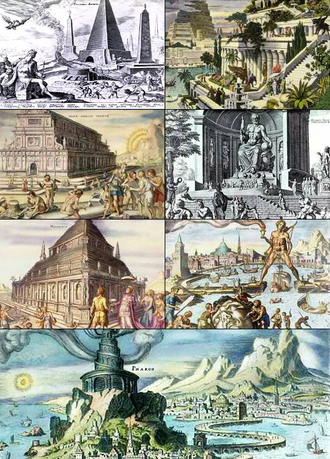
The temple held a very famous statue of Zeus, which was one of the Seven Wonders of the Ancient World. This amazing statue was made of gold and ivory and stood about 13 meters (43 feet) tall. A talented artist named Phidias created it in his workshop right at Olympia. It took around 13 years to finish, from 470 to 457 BC, and became one of the most admired artworks in ancient Greece.
When the huge statue was placed inside, the temple had to be changed a lot. The columns inside and their bases were moved, and the roof might have needed new tiles too. The floor, which was made of special stone, got a new coating of lime to keep moisture away from the statue’s ivory parts.
Subsequent history
The Roman general Mummius placed twenty-one special shields on the temple after winning a battle in 146 BC. These shields were attached to the front and side of the temple.
Later, the temple was likely damaged by strong earthquakes in the years 522 and 551. Some think the temple’s columns might have been taken down on purpose long ago. Flooding from a nearby river caused people to stop using the area, and over time, the site became hidden under layers of dirt.
In 1766, an English explorer named Richard Chandler found the hidden temple site. In 1829, a French group of scientists visited and dug up parts of the temple for the first time, taking some pieces back to a museum in France. Since 1875, German archaeologists have been carefully digging at the site, and they are still working there today.
Pictures
Keep exploring



This article is a child-friendly adaptation of the Wikipedia article on Temple of Zeus, Olympia, available under CC BY-SA 4.0.
Images from Wikimedia Commons. Tap any image to view credits and license.