 Safekipedia
Tourism in Hawaii
Adapted from Wikipedia · Discoverer experience
Hawaii is a beautiful group of islands in the Pacific Ocean and is part of the U.S. state. The main islands where many people visit are Hawaii, Oʻahu, Maui, and Kauaʻi. These islands are known for their warm weather, stunning beaches, and rich culture, making them very popular with visitors.
In recent years, millions of people have come to enjoy the beauty and charm of Hawaii. In 2017, more than 9 million visitors spent over $16 billion. This number kept growing, reaching about $21 billion by 2023. Many people like to visit during the summer and on holidays, especially to escape cold weather elsewhere.
People from many countries visit Hawaii, but many visitors come from Japan. This is because of strong ties between Japan and the United States, and because it is not too far to travel. In 2017, nearly 1.6 million people from Japan visited the islands to explore and enjoy their time.
History of travel to Hawaii
Hawaii was first populated between 1000 and 1200 AD by people of Polynesian origin. Western contact began due to exploration during the European Enlightenment and continued with Protestant ministers from New England in the early 19th century.
16th century
According to Hawaiian tradition, a vessel wrecked near Keʻei close to Kealakekua Bay in the 1560s with only two survivors: the captain and his sister. Their posture led to the place being named Kūlou; they later married into the native population, and their descendants became important leaders. This timing matches the voyage of a small fleet of three ships commanded by Álvaro de Saavedra Cerón, who left Mexico on October 31, 1569. During that trip, two ships disappeared after a storm.
Spaniard Juan Gaetano, who served on a 1522 expedition led by Ruy López de Villalobos, claimed to have discovered the Hawaiian Islands during that voyage. Official records said a group of islands were found after about 30 days of sailing west from Mexico, later thought to be the Caroline Islands or Marshall Islands, not Hawaii. Details of Gaetano's discovery were not shared outside Spain until 1743. Even then, while the latitude was close and the features similar, the longitude was off by 17°. Spanish records from 1865 said an old map confirmed Gaetano's discovery in 1555, naming the islands Islas de Mesa. There remains debate about whether Spain visited the islands before James Cook.
18th century
In 1748, a redrawn version of a captured map was published in A Voyage Round the World, one of the best-selling books of its time. This map showed the Pacific as mostly empty, but the three voyages of James Cook would add much more detail.
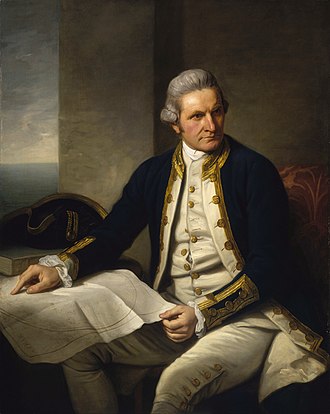
The first recorded Western visitor to Hawaii was Captain James Cook on his final voyage in the Pacific. Cook’s ships first saw Niʻihau and Kauai on January 19, 1778, and anchored near Waimea the next evening. During this first visit, the locals showed great respect and kindness to the visitors, and both sides traded goods. However, there were also issues with theft. Cook later returned to Hawaii in November to resupply and map the coastline. They anchored in Kealakekua Bay in January 1779 and stayed for 19 days. They left on February 6 but had to return for repairs on February 11. A series of misunderstandings led Cook to try to take the leader of the island of Hawaii, Kalaniʻōpuʻu, resulting in Cook’s death.
19th century
Prominent travelers to Hawaii in the 19th century included journalist Isabella Bird, as well as American and British authors. Tourist visits stayed around 2,000 per year from 1872 to 1898. American writers like Mark Twain traveled to Hawaii as a journalist in 1866, and Herman Melville deserted from his whaler in 1843. British writer Robert Louis Stevenson also visited and later wrote In the South Seas based on his time there.
Regular steamship service to Hawaii began in 1870 with the North Pacific Transportation Company of Australia. The Oceanic Steamship Company was created in 1881 to run a steamship line between San Francisco and Hawaii. This helped increase tourism, which continued to grow into the 21st century. However, the Native Hawaiian population decreased, leading to a loss of traditional Hawaiian culture on the islands.
20th century
In 1907, Jack London and his wife sailed to Hawaii, learning to surf and traveling to Haleakalā and Hana, as described in his book The Cruise of the Snark. By 1929, 22,000 tourists visited Hawaii, and the number exceeded 1 million for the first time in 1967.
Marine service
The second SS Lurline, completed in 1908, was the first steamship built specifically for passengers as well as cargo. Matson added Wilhelmina, which began its journey from San Francisco to Honolulu in February 1910. Both ships were named after daughters of company leaders.
By 1913, Matson was building more passenger ships for the Honolulu route, including Manoa and Matsonia. Direct service from Hawaii to Los Angeles started in October 1914 with Manoa. Another Matson ship, Maui, was launched in 1916. However, World War I interrupted Matson’s Hawaiian routes, as the government took three of their ships for troop transport. After the war, tourist travel grew. Matson opened its headquarters in 1924 and conducted marine operations in San Francisco. Matson acquired the Oceanic Steamship operation in 1926 and introduced the SS Malolo in 1927, one of the largest passenger ships built in the United States at the time. This, along with a new luxury hotel and golf course, helped make Hawaii a top resort destination. However, Malolo collided with another ship during sea trials in May 1927, delaying its start. Despite this, tourist numbers jumped from 17,500 in 1927 to 22,000 in 1929 until the Great Depression began, reducing tourism to less than 11,000 in 1932 and 1933.
Matson built three sister ships to Malolo, completed in 1932: Mariposa, Monterey, and a new Lurline. After Lurline completed her long maiden voyage in early 1933, Matson started regular service between Honolulu and other places. Matson also bought hotels in Honolulu, giving cruise passengers choices. In 1934, a planned long cruise on Malolo was canceled due to high demand for passenger service to Hawaii. By 1941, tourism had recovered to pre-Depression levels, with 31,000 tourists visiting Hawaii.
Lurline was traveling from Honolulu to San Francisco when the attack on Pearl Harbor happened; she returned quickly to San Francisco. The United States entering World War II led the government to take Matson’s ships as troopships. After the war, Matsonia was the first to return to passenger service in May 1946. Lurline returned in April 1948 after a major rebuild, greeted with a very long lei.
Rebuilds of Mariposa and Monterey were planned but stopped due to high costs. New ships entered service in 1956. The rise of jet travel, which made voyages much shorter and cheaper, ended cruise passenger travel, and Matson left the passenger business in 1970, selling its last ship, Lurline.
Air service
The United States Navy tried the first nonstop flight to Hawaii from mainland America in 1925 using seaplanes, but faced difficulties. They succeeded in 1927 when Lieutenants Lester Maitland and Albert Hegenberger completed the first successful nonstop flight to Hawaii in the Fokker C-2 Bird of Paradise.
Inspired by Charles Lindbergh’s transatlantic flight, pineapple magnate James Dole announced the Dole Air Race in 1927, offering a prize for the first nonstop flight from Oakland to Honolulu. Eight planes tried, but only two succeeded, and ten people died in the attempt.
The first commercial passenger flight to Hawaii started on October 21, 1936, operated by Pan American Airways. After World War II, other airlines like United Airlines and Northwest Airlines began service to Honolulu.
21st century
After the September 11 attacks, fear of flying reduced tourism in Hawaii. Although tourism increased in 2006 and 2007, it declined again due to economic problems, high fuel prices, and recessions in Japan and the U.S.
In 2007, Japanese tourists used to spend more than American tourists, but this changed with economic issues in Japan. Now, tourists from South Korea and China are visiting more.
By 2014, a record 8.3 million visitors arrived in Hawaii, spending $14.7 billion. This increased to 9.4 million visitors spending over $16 billion in 2017.
Impacts of tourism in Hawaii
As Hawaii grew from a kingdom to a state, its main jobs changed a lot. In the past, farming, especially pineapples, was very important. But when flights to Hawaii started, more and more visitors came. This made tourism very important to Hawaii's money and jobs. Even though this brought growth, it can also be risky if things like fuel prices go up or if there are big money problems everywhere.
Tourism has created many jobs in Hawaii. In 2017, about 204,000 jobs came from tourism. This brought in a lot of money for the islands — about $16.78 billion from visitors and $1.96 billion in taxes. Big hotels and airlines are the ones that benefit the most from this.
Tourism can also affect the environment. Many hotels are near beautiful beaches, but they use a lot of water. This can cause problems, especially in places where it doesn't rain much. Building many hotels changes the land and can hurt plants and animals. Some places that used to be homes for birds and other wildlife are lost when buildings are built. Also, when many people visit beaches and go snorkeling, they can accidentally hurt the plants, animals, and coral reefs.
Hawaii uses a lot of energy, and many hotels and cars need power. Most of this energy still comes from fuels that aren't good for the environment. Hawaii wants to use more clean energy in the future.
Finally, tourism can change how people live. Some local people feel that their culture is shown in ways that aren't true, and they worry about losing their land and jobs to tourism. Others see tourism as important for the state's money, even though it can bring some problems.
Images
Related articles



This article is a child-friendly adaptation of the Wikipedia article on Tourism in Hawaii, available under CC BY-SA 4.0.
Images from Wikimedia Commons. Tap any image to view credits and license.