 Safekipedia
Tropical year
Adapted from Wikipedia · Discoverer experience
A tropical year, also called a solar year, is the time it takes for the Sun to return to the same position in the sky as seen from Earth. This happens when we go from one vernal equinox to the next, or from one summer solstice to the next. It is the kind of year used in tropical solar calendars.
The tropical year is one kind of astronomical year and a special orbital period. Another kind is the sidereal year, which is a bit longer because of something called the precession of the equinoxes.
Astronomers have worked for a long time to understand the tropical year very well. On average, it is about 365 days, 5 hours, 48 minutes, and 45 seconds long. This is why we have leap days in the Gregorian calendar – to keep our calendar year matching up with the solar year.
History
The word "tropical" comes from the Greek word tropikos, meaning "turn." This is because the tropics of Cancer and Capricorn mark the points where the Sun appears directly overhead and seems to "turn" in its yearly path. Early cultures like the Chinese, Hindus, and Greeks tried to measure the time it takes for the Sun to return to the same place in the sky.
In the 2nd century BC, Hipparchus measured the time it took for the Sun to go from one equinox to the next. He found the year to be just a little shorter than 365.25 days. He also noticed that the points where the equinoxes occur move slowly over time, a phenomenon called "precession of the equinoxes."
During the Middle Ages and Renaissance, better tables were made to predict the positions of the Sun, Moon, and planets. These helped improve calendars. In 1252, the Alfonsine Tables gave the length of the tropical year as about 365.24255 days. Later, in 1437, Ulugh Beg in Uzbekistan calculated it to be 365.242535 days. In the 16th century, Copernicus suggested a new way to understand the solar system, which led to more calculations.
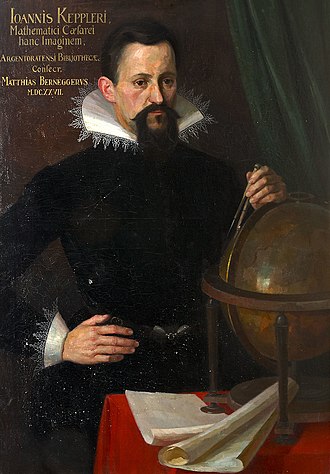
In the 17th century, Johannes Kepler and Isaac Newton made big advances in understanding how planets move. Their work helped create even better tables to predict celestial events. In the 18th and 19th centuries, scientists like Pierre-Simon de Laplace and Joseph Louis Lagrange developed theories to understand small changes in the length of the year.
In the 20th and 21st centuries, new tools like satellites, radars, and laser measurements helped scientists understand the tropical year even better. These tools, along with better computers, allowed for more precise calculations. Einstein's theory of relativity also helped improve these measurements. Scientists also discovered that Earth's rotation is slowing down slightly over time due to tides.
| Name | Equation | Date on which T = 0 |
|---|---|---|
| Leverrier | Y = 365.24219647 − 6.24×10⁻⁶ T | January 0.5, 1900, Ephemeris time |
| Newcomb (1898) | Y = 365.24219879 − 6.14×10⁻⁶ T | January 0, 1900, mean time |
Time scales and calendar
Apparent solar time is the time shown by a sundial, based on the Sun’s apparent movement caused by Earth’s rotation and its orbit around the Sun. Mean solar time adjusts for changes in the Sun’s speed during Earth’s orbit. The most important time scale is Universal Time, which is the mean solar time at 0° longitude (the IERS Reference Meridian). Civil time is based on UT, actually UTC, and counts mean solar days.
Earth’s rotation is not perfectly regular and is actually slowing down compared to more stable time measures, like the motion of planets and atomic clocks.
Ephemeris time (ET) was used from 1960 to 1984 in calculating the positions of objects in the Solar System. The SI second, defined by atomic time, was created to match the ephemeris second from older observations. Later, ET was renamed Terrestrial Time (TT). Currently, TT runs ahead of Universal Time (UT1) by about 69 seconds. This difference is called Δ_T_, or Delta T.
Because Earth’s rotation is slowing, the tropical year — the time it takes for the Sun to return to the same position in the sky — measured in solar days, gradually falls out of step with calculations based on TT.
Long-term estimates of the tropical year’s length helped shape the Julian calendar, which later led to the Gregorian calendar. The table below shows estimates and uncertainties for ΔT at key dates in that process.
A simple formula shows that ΔT changes over time: Δ_T_ in seconds = −20 + 32_t_2, where t counts Julian centuries from 1820. This helps us see that ΔT_ is important when studying calendars over long periods.
| Event | Year | Nearest S & M Year | ΔT | σ |
|---|---|---|---|---|
| Julian calendar begins | −44 | 0 | 2h 56m 20s | 4m 20s |
| First Council of Nicaea | 325 | 300 | 2h 8m | 2m |
| Gregorian calendar begins | 1582 | 1600 | 2m | 20s |
| Low-precision extrapolation | 4000 | 4h 13m | ||
| 10,000 | 2d 11h |
Length of tropical year
A tropical year is the time it takes for the Sun to return to the same place in the sky, finishing a full cycle of seasons. One way to think about it is the time from the March equinox to the next March equinox, or from the June solstice to the next June solstice.
The tropical year is a little shorter than another type of year called the sidereal year. This happens because while the Sun moves, the direction we use to measure its position also moves a tiny bit. When we measure the time between equinoxes, we find small changes caused by the pull of the Moon and planets on Earth.
The average length of a tropical year today is about 365 days, 5 hours, 48 minutes, and 45 seconds. This length changes very slowly over thousands of years.
| Days | Hours | min | s | |
|---|---|---|---|---|
| 1985–1986 | 365 | 5 | 48 | 58 |
| 1986–1987 | 365 | 5 | 49 | 15 |
| 1987–1988 | 365 | 5 | 46 | 38 |
| 1988–1989 | 365 | 5 | 49 | 42 |
| 1989–1990 | 365 | 5 | 51 | 06 |
| Year 0 | Year 2000 | |
|---|---|---|
| Between two March equinoxes | 365.242137 days | 365.242374 days |
| Between two June solstices | 365.241726 | 365.241626 |
| Between two September equinoxes | 365.242496 | 365.242018 |
| Between two December solstices | 365.242883 | 365.242740 |
| Mean tropical year (Laskar's expression) | 365.242310 | 365.242189 |
Calendar year
The Gregorian calendar is the calendar most of the world uses today. It matches closely with the time it takes for the Earth to go around the Sun, called a tropical year. The Gregorian calendar has a pattern that repeats every 400 years, with 365 days most years and a few extra days in leap years. This pattern helps keep our calendar in sync with the seasons.
This calendar was created to fix problems with an older calendar. It helps make sure important dates, like Easter, stay close to the real seasons. If we keep using this calendar for many thousands of years, we might need to make small changes to keep it matching the seasons perfectly. Some ideas have been suggested, like changing when we add extra days, to keep our calendar accurate.
Images
Related articles


This article is a child-friendly adaptation of the Wikipedia article on Tropical year, available under CC BY-SA 4.0.
Images from Wikimedia Commons. Tap any image to view credits and license.