 Safekipedia
Space telescope
Adapted from Wikipedia · Explorer experience
Space Telescopes
Space telescopes are special telescopes that float high above Earth in space. They look at stars, planets, and other amazing things far away. Because they are above the air, they can see much more clearly than telescopes on the ground.
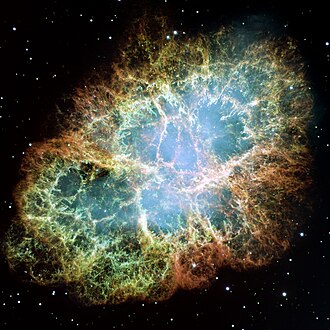
The idea of putting a telescope in space was first suggested by a scientist named Lyman Spitzer in 1946. The first space telescopes were launched in the 1960s and 1970s. One of the most famous is the Hubble Space Telescope, which was launched in 1990 by the Space Shuttle Discovery.
Space telescopes help us see things that we cannot see from Earth. Some kinds of light, like X-rays and infrared light, are blocked by Earth’s air. That is why telescopes like the Chandra X-ray Observatory and the James Webb Space Telescope are needed. They can see these special kinds of light and show us new parts of the universe.
Many countries have sent space telescopes into space. These include NASA, ESA, and others. Scientists use these telescopes to learn more about stars, planets, and everything in space. They have made many exciting discoveries and helped us understand the universe better.
Images
Related articles


This article is a child-friendly adaptation of the Wikipedia article on Space telescope, available under CC BY-SA 4.0.
Images from Wikimedia Commons. Tap any image to view credits and license.