
1932 Summer Olympics
The 1932 Summer Olympics, officially called the Games of the X Olympiad and also known as Los Angeles 1932, were a big international sports event. It happened from July 30 to August 14, 1932, in Los Angeles, California, United States.
These Games took place during a tough time called the Great Depression, when many people around the world had very little money. Because of this, some countries could not send their athletes to Los Angeles. Fewer countries competed in these Games compared to the 1928 Games in Amsterdam. Even the U.S. President Herbert Hoover did not attend.
The event was organized by a local sports fan and real estate developer named William May Garland. Despite the difficult economic times, the 1932 Summer Olympics brought together athletes from many nations to compete in many exciting sports.
Host city selection
Main article: Los Angeles bid for the 1932 Summer Olympics
The host city for the 1932 Summer Olympics was chosen in Rome, Italy, on April 9, 1923. Only one city, Los Angeles, wanted to host the Games. Because no other cities wanted to host, Los Angeles was chosen.
Development and preparations
The 1932 Summer Olympics in Los Angeles were supported by local businesses and a special vote by people in the area. The games were paid for partly by a special vote called "Proposition 2" in 1928.
Many cars helped people get around during the Olympics. Buses took athletes from their housing to the places where they competed, and police helped manage traffic. The games used places that already existed to save money, like parks and roads. Only one new place, the Swimming Stadium, was built just for these Olympics.
Artists showed their work inspired by sports during the games, and a special song was made for the event. Tickets for the opening ceremony cost $3, and tickets for other events cost between $1 and $3. A special pass for all events cost $22, and children could get tickets for 50 cents.
| Venue | Sports | Capacity |
|---|---|---|
| 160th Regiment State Armory | Fencing, Modern pentathlon (fencing) | 1,800 |
| Los Angeles Harbor | Sailing | Not listed |
| Los Angeles Police Pistol Range | Modern pentathlon (shooting), Shooting | Not listed |
| Long Beach Marine Stadium | Rowing | 17,000 |
| Los Angeles Avenue | Cycling (road) | Not listed |
| Olympic Auditorium | Boxing, Weightlifting, Wrestling | 10,000. |
| Olympic Stadium | Athletics, Equestrian (eventing, jumping), Field hockey, Gymnastics | 105,000 |
| Pacific Coast Highway | Cycling (road) | Not listed |
| Riverside Drive at Griffith Park | Athletics (50 km walk) | Not listed |
| Riviera Country Club | Equestrian (dressage, eventing), Modern pentathlon (riding) | 9,500 |
| Rose Bowl in Pasadena | Cycling (track) | 85,000 |
| Sunset Fields Golf Club | Modern pentathlon (running) | Not listed |
| Swimming Stadium | Diving, Modern pentathlon (swimming), Swimming, Water polo | 10,000 |
| Vineyard Avenue | Cycling (road) | Not listed |
| Westchester | Equestrian (cross-country riding) | Not listed |
Marketing
The emblem for the 1932 Summer Olympics was designed by Henry E. Huntington. It showed the coat of arms of the United States with the Olympic rings. The Olympic motto was "Citius, Altius, Fortius," meaning "Faster, Higher, Stronger."
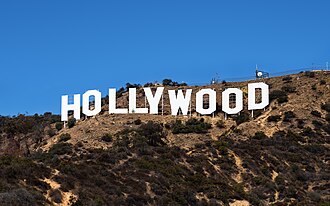
An Olympic mascot, a Scottish Terrier named Smoky, appeared for the first time. The games had help from local companies and Hollywood. Brands like Coca-Cola gave out small athlete figures.
Participating nations
A total of 37 nations took part in the 1932 Games. Colombia joined the Olympics for the first time. The Republic of China also competed for the first time after trying in the 1924 Games.
Number of athletes by National Olympic Committees
| Participating National Olympic Committees |
|---|
 Argentina (32) Argentina (32) Australia (12) Australia (12) Austria (19) Austria (19) Belgium (36) Belgium (36) Brazil (82) Brazil (82) Canada (102) Canada (102) Colombia (1) Colombia (1) Czechoslovakia (7) Czechoslovakia (7) Denmark (43) Denmark (43) Estonia (2) Estonia (2) Finland (40) Finland (40) France (103) France (103) Germany (134) Germany (134) Great Britain (108) Great Britain (108) Greece (10) Greece (10) Haiti (2) Haiti (2) Hungary (58) Hungary (58) India (19) India (19) Ireland (8) Ireland (8) Italy (112) Italy (112) Japan (157) Japan (157) Latvia (2) Latvia (2) Mexico (73) Mexico (73) Netherlands (45) Netherlands (45) New Zealand (21) New Zealand (21) Norway (5) Norway (5) Philippines (8) Philippines (8) Poland (51) Poland (51) Portugal (6) Portugal (6) South Africa (12) South Africa (12) Spain (6) Spain (6) Sweden (81) Sweden (81) Switzerland (6) Switzerland (6) United States (474) (host) United States (474) (host) Uruguay (1) Uruguay (1) Yugoslavia (1) Yugoslavia (1) |

Calendar
For the first time, the Games lasted 16 days and had three weekends. This pattern has been used ever since. Before this, the Summer Olympics always lasted less than 79 days.
All dates are in Pacific Standard Time (UTC-7)
| OC | Opening ceremony | ● | Event competitions | 1 | Gold medal events | CC | Closing ceremony |
| July/August 1932 | 30th Sat | 31st Sun | 1st Mon | 2nd Tue | 3rd Wed | 4th Thu | 5th Fri | 6th Sat | 7th Sun | 8th Mon | 9th Tue | 10th Wed | 11th Thu | 12th Fri | 13th Sat | 14th Sun | Events | |
|---|---|---|---|---|---|---|---|---|---|---|---|---|---|---|---|---|---|---|
 Ceremonies Ceremonies | OC | CC | —N/a | |||||||||||||||
| Aquatics |  Diving Diving | ● | ● | ● | ● | ● | 4 | 16 | ||||||||||
 Swimming Swimming | ● | ● | ● | ● | ● | ● | ● | 11 | ||||||||||
 Water polo Water polo | ● | ● | ● | 1 | ||||||||||||||
 Athletics Athletics | 4 | 3 | 3 | 5 | 4 | 4 | 2 | 5 | 29 | |||||||||
 Boxing Boxing | ● | ● | ● | ● | 8 | 8 | ||||||||||||
| Cycling |  Road cycling Road cycling | 1 | 1 | 1 | 6 | |||||||||||||
 Track cycling Track cycling | 1 | 1 | 1 | |||||||||||||||
 Equestrian Equestrian | 2 | ● | ● | ● | 4 | 6 | ||||||||||||
 Fencing Fencing | ● | ● | ● | ● | 7 | 7 | ||||||||||||
 Field hockey Field hockey | ● | ● | ● | ● | ● | ● | ● | 1 | 1 | |||||||||
 Gymnastics Gymnastics | 1 | 2 | 3 | 5 | 11 | |||||||||||||
 Modern pentathlon Modern pentathlon | ● | ● | ● | ● | 1 | 1 | ||||||||||||
 Rowing Rowing | ● | ● | ● | ● | 7 | 7 | ||||||||||||
 Sailing Sailing | ● | ● | ● | ● | ● | 4 | 4 | |||||||||||
 Shooting Shooting | 1 | 1 | 2 | |||||||||||||||
 Weightlifting Weightlifting | 3 | 2 | 5 | |||||||||||||||
 Wrestling Wrestling | ● | ● | 7 | ● | ● | ● | 7 | 14 | ||||||||||
| Daily medal events | 3 | 6 | 5 | 5 | 14 | 4 | 4 | 3 | 13 | 1 | 9 | 9 | 6 | 1 | 31 | 4 | 117 | |
| Cumulative total | 3 | 9 | 14 | 19 | 34 | 38 | 42 | 55 | 56 | 65 | 74 | 81 | 82 | 113 | 117 | 117 | ||
| July/August 1932 | 30th Sat | 31st Sun | 1st Mon | 2nd Tue | 3rd Wed | 4th Thu | 5th Fri | 6th Sat | 7th Sun | 8th Mon | 9th Tue | 10th Wed | 11th Thu | 12th Fri | 13th Sat | 14th Sat | Total events | |
The Games
Ceremonies
The opening ceremony had more than 100,000 people. There was a big orchestra and a choir. The head of the organizing committee spoke, and then the Vice President opened the games.
The ceremony lasted two hours. About 2,000 athletes, coaches, and officials from 37 nations were there. There were also 800 journalists.
Sports
The 1932 Olympics had 117 events in 20 areas, covering 14 sports. In one equestrian jumping event, no medals were given. Here are the sports that were part of the games:
- Aquatics
- Athletics
- Boxing
- Cycling
- Road
- Track
- Equestrian
- Dressage
- Eventing
- Show jumping
- Fencing
- Field hockey
- Gymnastics
- Modern pentathlon
- Rowing
- Sailing
- Shooting
- Weightlifting
- Wrestling
- Freestyle
- Greco-Roman
Demonstration sports
Athletic Achievements
- In athletics, Babe Didrikson won two gold medals in the javelin and the hurdles event.
- Eddie Tolan won both the 100 m and 200 m sprint events. Poland's Stanisława Walasiewicz won the gold medal in the women's 100 m.
- Several women's events were added, such as the 80 meters hurdles and javelin throw. Babe Didrikson won both events.
- In field hockey, only three nations competed.
- Romeo Neri won three gold medals in gymnastics.
- Helene Madison won three gold medals in swimming.
- Kusuo Kitamura won the gold medal in the men's 1500 meter freestyle swimming race. He was the youngest male swimmer to win a gold medal at the Olympic Games.
- Dunc Gray won Australia's first cycling gold medal and set a world record.
Medal count
These are the top ten nations that won medals at the 1932 Games.
| Rank | Nation | Gold | Silver | Bronze | Total |
|---|---|---|---|---|---|
| 1 | United States* | 44 | 36 | 30 | 110 |
| 2 | Italy | 12 | 12 | 12 | 36 |
| 3 | France | 10 | 5 | 4 | 19 |
| 4 | Sweden | 9 | 5 | 9 | 23 |
| 5 | Japan | 7 | 7 | 4 | 18 |
| 6 | Hungary | 6 | 5 | 5 | 16 |
| 7 | Finland | 5 | 8 | 12 | 25 |
| 8 | Great Britain | 5 | 7 | 5 | 17 |
| 9 | Germany | 3 | 12 | 5 | 20 |
| 10 | Australia | 3 | 1 | 1 | 5 |
| Totals (10 entries) | 104 | 98 | 87 | 289 | |
Legacy
The 1932 Summer Olympics had a big impact on Los Angeles and sports around the world. The Coliseum and the Rose Bowl were used again for the 1984 Summer Olympics and will host events in the 2028 Summer Olympics too. These venues will be the first stadiums to host three different Olympic Games.
The 1932 Games introduced new ideas that changed the Olympics. For the first time, an Olympic Village was built to house athletes, and the famous victory podium was used. Stopwatches and photo finish cameras made timing in competitions much more accurate. Tenth Street in Los Angeles was renamed Olympic Boulevard to honor these Games.
Pictures
Keep exploring


This article is a child-friendly adaptation of the Wikipedia article on 1932 Summer Olympics, available under CC BY-SA 4.0.
Images from Wikimedia Commons. Tap any image to view credits and license.