 Safekipedia
Combustion
Adapted from Wikipedia · Adventurer experience
Combustion, also known as burning, is a high-temperature chemical reaction between a fuel and an oxidant, usually oxygen from the air. This reaction makes oxidized products, often gases called smoke. Combustion does not always create a visible flame, but when it does, the flame shows that the reaction is happening.
To start combustion, energy such as a lit match is needed. Once it begins, the heat from the flame can keep the reaction going. Combustion can be complex and often produces light and releases a lot of heat. For example, when hydrogen burns in oxygen, it creates water vapor and releases energy, which is used in rocket engines.
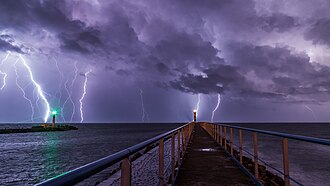
Fires happen naturally from sources like lightning or volcanic activity, but humans have used controlled combustion for thousands of years, from campfires to power plants. Combustion is important for producing energy from fuels like coal, oil, or wood, and it is the only way to power rockets. While combustion is useful, it can also create harmful by-products like smoke and nitrogen oxides, so technologies such as catalytic converters are used to clean up the emissions.
Types
Complete and incomplete
See also: Pyrolysis
Complete
When something burns completely, it uses all the oxygen around it and makes a few products. For example, when a hydrocarbon like gasoline burns, it mainly makes carbon dioxide and water. If you burn other things like sulfur or iron, they make their own special oxides, like sulfur dioxide or iron oxide.
Sometimes, burning doesn’t go all the way. The amount of these extra compounds depends on the temperature and how much extra oxygen there is.
In most fires and engines, the oxygen comes from air. If there isn’t enough oxygen, the fuel doesn’t burn completely.
Incomplete
See also: Charring
When there isn’t enough oxygen, burning is incomplete. Water still forms, but instead of carbon dioxide, you get carbon or carbon monoxide. For fuels like diesel, coal, or wood, pyrolysis happens first, which means the material breaks down before it burns.
Incomplete burning can make harmful substances. For example, burning ethanol can make acetaldehyde, and burning carbon can make carbon monoxide, which is dangerous.
Devices like burners and internal combustion engines can be designed to burn better. Tools like catalytic converters help catch extra pollution.
Problems associated with incomplete combustion
Environmental problems
Some burning products mix with water and oxygen in the air to make acids that fall as rain. This can hurt plants and animals.
Human health problems
Breathing in carbon monoxide can make you feel sick or dizzy. It can be very dangerous.
Smoldering
Smoldering is a slow, quiet way of burning without flames. It happens when oxygen slowly eats away at things like coal, cellulose, wood, or even cotton. This can start fires in furniture from small heat sources like a cigarette.
Spontaneous
Spontaneous combustion happens when materials heat up by themselves and catch fire without any help. For example, some chemicals like phosphorus can catch fire just sitting out. Even compost piles can get so hot from bacteria that they might catch fire.
Turbulent
Most industrial burning, like in gas turbines or gasoline engines, uses turbulent flames. This mixing helps the fuel and oxygen blend better.
Micro-gravity
Micro-gravity means very little gravity, like in space. In these conditions, flames behave differently. Studying burning in space helps us understand fires better.
Micro-combustion
Micro-combustion is burning in very tiny spaces. The small size makes it harder to keep the flame stable, but it’s important for new technologies.
Chemical equations
The chemical equation for burning a hydrocarbon in oxygen looks like this:
CxHy + (x + y/4) O2 → x CO2 + (y/2) H2O
For example, burning methane in oxygen is:
CH4 + 2 O2 → CO2 + 2 H2O
When burning happens using air instead of pure oxygen, nitrogen from the air can be added to the equation. Air has about 20.95% oxygen and the rest is mostly nitrogen. For methane burning in air, it looks like this:
CH4 + 2 O2 + 7.54 N2 → CO2 + 2 H2O + 7.54 N2
Sometimes, when there isn’t enough oxygen, burning isn’t complete. This is called incomplete burning. It makes a mix of gases including carbon dioxide, carbon monoxide, water, and hydrogen. For example, burning propane with not enough oxygen creates a mix of different gases.
Combustion management
Good heating needs us to use as much of a fuel’s energy as we can. Sometimes, hot air leaves the system and we lose heat. By watching how much air and fuel we use, we can make sure all the fuel burns completely.
We want the right amount of air for the fuel, but not too much. Too much air can waste energy. By measuring the air and fuel carefully, we can find the best balance to save energy and keep things safe.
Reaction mechanism
Combustion with oxygen happens in steps where special particles help the reaction. Oxygen needs energy to start burning. Once it starts, the reaction makes more heat to keep going.
When fuels like gasoline burn, they start by losing a hydrogen atom, creating new particles that react further. Burning alcohol can make a substance called acetaldehyde.
Solid fuels and thick liquids break down into gases that burn more easily. If there isn’t enough oxygen, burning can create harmful smoke. The speed of burning can be measured in grams or kilograms per second.
Studying these reactions is complex because it involves many different chemicals and steps. Scientists use special methods to simplify these processes for computers.
Temperature
When fuel burns completely, we can find out the highest temperature it will reach. This temperature depends on a few things:
- The energy the fuel can release when it burns.
- The right mix of air and fuel.
- How much heat the fuel and air can hold.
- The starting temperatures of the air and fuel.
The temperature gets higher when the fuel releases more energy, when the air and fuel start warmer, and when the mix of air and fuel is just right. For example, coal can reach about 2,200 °C, oil about 2,150 °C, and natural gas about 2,000 °C under these perfect conditions.
Instabilities
Combustion instabilities are strong, repeating pressure changes in a combustion chamber. These changes can be very loud and can wear out engine parts over time.
In rocket engines, these instabilities caused damage, but engineers fixed the problem by changing the design of the fuel injector. In jet engines, controlling the size and spread of fuel droplets can help reduce these instabilities.
These instabilities matter a lot in gas turbine engines because they affect pollution levels. Running the engine with less fuel can lower some pollution, but it can also make the engine more likely to have these pressure changes.
The Rayleigh Criterion helps scientists study these instabilities. It looks at how heat release and pressure changes relate to each other over time. When heat and pressure changes happen together, the instability gets worse. But if they happen at opposite times, the instability can be reduced.
Related articles


This article is a child-friendly adaptation of the Wikipedia article on Combustion, available under CC BY-SA 4.0.
Images from Wikimedia Commons. Tap any image to view credits and license.