 Safekipedia
Continental Congress
Adapted from Wikipedia · Adventurer experience
The Continental Congress was a group of leaders who helped govern the Thirteen Colonies of Great Britain in North America. They acted like a government before and during the American Revolutionary War. There were two main Congresses: the First and Second, and later the Congress of the Confederation. They met in different places, mostly at Independence Hall in Philadelphia.
The First Continental Congress met in Philadelphia in 1774. Tensions were high between the colonies and Britain, especially after the Intolerable Acts. They met for six weeks to discuss problems and protect the rights of colonists. They agreed to stop trading with Britain through something called the Continental Association.
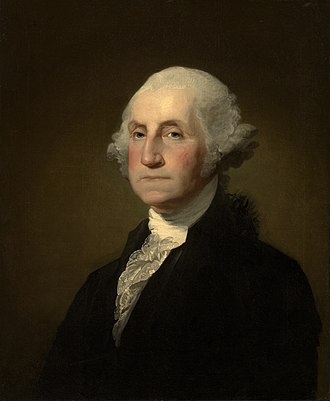
The Second Continental Congress began in 1775 after fighting started. They asked King George III for peace, created the Continental Army, and chose George Washington to lead it. In 1776, they approved the Declaration of Independence, declaring the colonies were now independent sovereign states.
The Second Continental Congress led the government during most of the war. In 1781, new rules called the Articles of Confederation were created, and the Congress became known as the Congress of the Confederation. This group met until 1789, when the 1st United States Congress took over under the new U.S. Constitution. The Congresses usually met in Philadelphia but sometimes moved to other cities, like New York City, which was the U.S. capital from 1785 to 1790.
History
Background
Further information: American Revolution, Boston Tea Party, and Committees of Correspondence
The idea for the Continental Congress began in 1754 during the French and Indian War. Leaders from seven colonies met in Albany, New York, including Benjamin Franklin, who suggested the colonies work together more closely. Later, as problems with Britain grew, colonies formed committees to stay connected.
In 1765, Britain passed the Stamp Act, which upset many colonists. Delegates met in New York City to protest and sent a document to Britain asking for fair treatment. The Stamp Act was later removed. More laws from Britain led to more protests, including the famous Boston Tea Party in 1773.
First Continental Congress
Main article: First Continental Congress
The First Continental Congress met in Philadelphia in 1774. Delegates from twelve colonies came together to talk about their problems with Britain. They agreed to stop buying British goods and asked the king to treat them more fairly. Some wanted to stay with Britain, while others began thinking about independence.
Second Continental Congress
Main article: Second Continental Congress
Further information: American Revolutionary War and United States Declaration of Independence
The Second Continental Congress started in May 1775, after fighting had begun. It acted like a government, organizing armies and making important decisions. In 1776, it approved the Declaration of Independence, written mainly by Thomas Jefferson. The Congress kept leading the new nation until 1781, creating committees to manage the war and forming the Articles of Confederation to unite the states.
Confederation Congress
Main article: Congress of the Confederation
Further information: Constitution of the United States, Annapolis Convention (1786), Philadelphia Convention of 1787, and Treaty of Paris (1783)
The Articles of Confederation became the law of the land on March 1, 1781, after all the Thirteen Colonies agreed to it. The Second Continental Congress then became the Congress of the Confederation, a group with representatives from each state. Its main goal was to protect the power of each state.
The Confederation Congress could declare war, make treaties, and help settle arguments between states. It could also borrow or print money, but it could not collect taxes. It worked to support the United States during the later part of the Revolutionary War but lost some of its power after the war ended.
Two big things the Confederation Congress did were passing the Northwest Ordinance in 1787, which set rules for new states west of Pennsylvania and north of the Ohio River, and organizing the Annapolis Convention in 1786. This led to the Philadelphia Convention in 1787, where leaders worked on improving the government. When the Constitution of the United States replaced the Articles of Confederation, the Confederation Congress was replaced by the United States Congress.
Organization
The Continental Congress was organized differently from the British Parliament or local colonial assemblies. It was more like the 1765 Stamp Act Congress. Nine delegates from that earlier congress attended the First Continental Congress in 1774 and helped shape its structure.
The Congress took on important duties usually handled by the British government, like foreign and military affairs, but it could not tax or control trade. Each state had one vote, and decisions were made by voting en bloc. Before voting, each state discussed the issue among its delegates. The majority decision within a state became the state's vote. If the vote was tied, it was counted as divided and not counted.
Delegates chose a president to lead meetings and keep records. After the colonies declared independence in 1776, this president acted as the head of the central government, though the role was more honorable than powerful. The Congress also had a secretary, scribe, doorman, messenger, and a Chaplain to help with its work.
Legacy
People have talked a lot about how well the Continental Congress worked. Some, like General George Washington, thought it would help soldiers, even if it moved slowly. Others, like James Madison, said the Congress was weak because it could not make people follow its rules.
Some historians say the Congress was not strong because it did not have clear leaders or rules. But others say the Continental Congress did many good things. It helped lead the fight for independence, created new kinds of governments, and knew when to change itself.
Timeline
First and Second Continental Congress
In 1774, leaders from the American colonies met in Philadelphia at Carpenter's Hall for the First Continental Congress. They talked about their worries over British rules and passed important papers.
When fighting started in 1775, the Second Continental Congress met in Philadelphia. They formed the Continental Army and chose George Washington to lead it. They also made the Continental Navy and Marines. In 1776, they adopted the Declaration of Independence, saying the colonies were free from Britain. Over the next years, they moved to different cities and worked on important papers. By 1789, the Continental Congress ended, and the new United States government began.
Images
Related articles



This article is a child-friendly adaptation of the Wikipedia article on Continental Congress, available under CC BY-SA 4.0.
Images from Wikimedia Commons. Tap any image to view credits and license.