
Decision theory
Decision theory, also known as the theory of rational choice, is a interesting area that mixes ideas from probability, economics, and philosophy. It helps us learn how people make choices, especially when they do not know what will happen. Instead of just watching how people decide, decision theory looks at what the best choice would be if someone were perfectly logical.
This field uses something called expected utility and probability to make models of smart behavior under uncertainty. It is mainly prescriptive, meaning it tells us how we should make choices to get the best results, rather than just describing how we actually make choices. Even though it is about perfect logic, decision theory is very useful for real-world studies. Social scientists use it to build math models that help explain behavior in many areas, such as sociology, economics, criminology, cognitive science, moral philosophy, and political science.
History
Decision theory began with probability theory. Blaise Pascal and Pierre de Fermat worked on this in the 1600s. It helped people understand risk and make better choices.
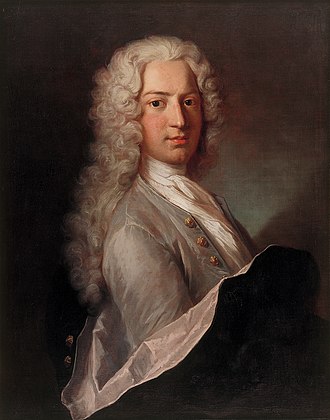
Later, Daniel Bernoulli talked about "expected utility" in games of chance. After World War II, decision theory became important in economics. It helped explain how people make choices. Experts like Daniel Kahneman and Amos Tversky showed that our decisions can be affected by our thinking habits.
Branches
Normative decision theory tries to find the best way to make choices. It imagines a perfect person who can calculate perfectly and always make sense. This helps create tools and software to help us make better decisions.
Descriptive decision theory looks at how people really make choices. It finds patterns in how people behave. This helps us understand how people think and choose.
Types of decisions
Choice under uncertainty
Further information: Expected utility hypothesis
Choice under uncertainty is an important part of decision theory. It began in the 1600s when Blaise Pascal thought about how to make good choices when you don’t know what will happen. The idea is to think about all the possible results of a decision, guess how good or bad they might be, and how likely they are. Then, you choose the option that seems best overall.
Later, people like Daniel Bernoulli and Abraham Wald added more ideas to help make better choices. They studied how to measure risk and how to choose wisely when things are unsure.
Intertemporal choice
Main article: Intertemporal choice
Intertemporal choice is about making decisions that affect you at different times in the future. For example, if you suddenly have extra money, you might spend it now or save it for later. The best choice depends on things like interest rates, inflation, and how long you expect to live. But people often don’t make the choice that theory says is best.
Interaction of decision makers
Some decisions are tricky because you have to think about how other people will react. Decision theory helps us understand these social decisions, especially in groups and during emergencies.
Complex decisions
Other parts of decision theory deal with choices that are very hard to make because they are so complicated. People don’t have endless time or brain power to figure out the perfect choice, so they often make good enough decisions instead. How choices are presented can also change what people decide.
Heuristics
Main article: Heuristics in judgment and decision-making
Heuristics are simple ways people make decisions without thinking through every possible outcome. They help us decide faster by focusing on just a few things. But this quick method can sometimes lead to mistakes.
One common mistake is called the gambler's fallacy. For example, if you flip a fair coin and it lands on tails several times in a row, you might think heads is more likely next. But each flip is independent, and heads still has a 50% chance every time. Another mistake is preferring middle options. People often think a choice that is not too high or too low is the best, even if it isn’t always right.
Alternatives
Decision theory uses probability to help make choices when we’re not sure what will happen. Many people like this because it gives clear rules for deciding, and it often works well.
But some think there may be better ways, like using fuzzy logic or other special methods. They say probability can change a lot with small changes, and other ways might be more reliable. Some also say decision theory might not see big, unexpected events that are hard to predict. This is called the ludic fallacy, where using models too much can make us miss things not in the model.
Main article: Ludic fallacy
Keep exploring




This article is a child-friendly adaptation of the Wikipedia article on Decision theory, available under CC BY-SA 4.0.
Images from Wikimedia Commons. Tap any image to view credits and license.