 Safekipedia
Dunedin
Adapted from Wikipedia · Adventurer experience
Dunedin is the second-biggest city in the South Island of New Zealand, after Christchurch. It is the main city of the Otago region and is named after Dùn Èideann, the Scottish Gaelic name for Edinburgh, the capital of Scotland.
The city has about 132,800 people. It is on the central-eastern coast of Otago, around the head of the Otago Harbour. The harbour and the nearby hills are what is left of an old volcano.
People have lived in this area since around 1250 to 1300 AD. In the 1840s, people from Scotland came and started the city. It grew fast during the 1860s because of the Otago gold rush. Today, Dunedin is famous for education. It is home to the University of Otago, New Zealand's oldest university, and the Otago Polytechnic. The city also has many cultural activities and was named a UNESCO City of Literature in 2014.
History
Main article: History of the Dunedin urban area
Archaeological evidence shows that the first Māori people arrived in New Zealand between 1250 and 1300 AD. They lived along the southeast coast. Near present-day Dunedin, there were many settlements, especially in the 14th century. These included fortified villages called pā, such as one at Taiaroa Head around 1650. Central Dunedin had a settlement until around 1785 but was abandoned by 1826. There were also Māori communities north and south of Dunedin.
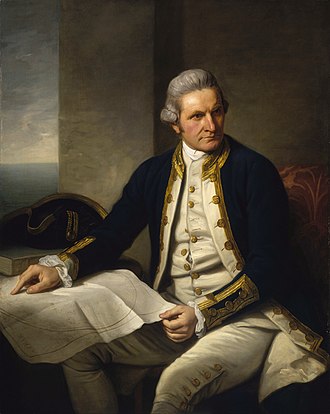
European exploration began when Lieutenant James Cook sailed near the coast in 1770. Sealers and whalers arrived soon after. The first European settler was William Tucker in 1815. Permanent European settlement started in 1831 with a whaling station at Otakou. Dunedin was officially founded in 1848 by the Free Church of Scotland, named after Edinburgh. By the 1850s, thousands of Scots had settled there.
The discovery of gold nearby in 1861 brought rapid growth, making Dunedin New Zealand’s largest city for a time. Many new residents came from Ireland, Italy, and other countries. Important buildings and schools were established, and the city became a center for trade and industry. Dunedin was known for its grand Victorian architecture and cultural institutions.
Geography
Dunedin is a big city in the South Island of New Zealand. It covers an area of 3,314.8 km² (1,279.9 sq mi). The city is at the head of the Otago Harbour, a narrow inlet of the sea. The central area of Dunedin is called the Octagon. This plaza was once a gully but was filled in during the mid-nineteenth century.
Dunedin has many hills around it, such as Mount Cargill and Flagstaff. The city is also home to Baldwin Street, which is known as the steepest street in the world. The Otago Peninsula, to the east of Dunedin, is a natural home for many rare animals. These include yellow-eyed and little penguins, seals, and shags. Taiaroa Head on the peninsula is important because it is home to the world’s only mainland breeding colony of royal albatrosses.
Demographics
The Dunedin City area has 132,800 people as of June 2025. This includes 104,000 people living in the Dunedin urban area, 15,100 in the Mosgiel urban area, and smaller numbers in other nearby places like Brighton, Waikouaiti, and surrounding rural areas.
In the 2023 census, Dunedin had 128,901 people, with numbers growing since previous years. The city has a mix of different age groups, ethnicities, and languages. Most people speak English, and many identify as European, with smaller groups from Māori, Asian, Pasifika, and other backgrounds. A large portion of the population has no religious affiliation, while others follow Christianity and other faiths.
| Year | Pop. | ±% p.a. |
|---|---|---|
| 2006 | 118,683 | — |
| 2013 | 120,249 | +0.19% |
| 2018 | 126,255 | +0.98% |
| 2023 | 128,901 | +0.42% |
| Source: | ||
| Year | Pop. | ±% p.a. |
|---|---|---|
| 2013 | 95,901 | — |
| 2018 | 99,885 | +0.82% |
| 2023 | 100,908 | +0.20% |
| Source: | ||
Culture
Literature
In December 2014, Dunedin became a UNESCO Creative City of Literature. This shows Dunedin's rich history with books and writing. Dunedin was the first city in New Zealand to get this title.
Famous writers have talked about Dunedin. Paul Theroux said it was "cold and frugal." Billy Connolly called it "a dreary town." Michael Palin said that behind Dunedin's gray look is a "wild heart." In 1895, Mark Twain joked that Scots settlers thought they had reached heaven.
Music
Choirs
Dunedin has many choirs. These include the large City of Dunedin Choir and the smaller Southern Consort of Voices. The Royal Dunedin Male Choir and the Dunedin RSA Choir also sing often. The all-female Dunedin Harmony Chorus and the Southern Children's Choir are important too. The University of Otago has three official choirs. Several churches in Dunedin have their own choirs. The Dunedin Red Cross Choir is one of only three Red Cross choirs in the world.
Instrumental classical and jazz ensembles
The Dunedin Symphony Orchestra is a well-known group. Other music groups include the Rare Byrds early music ensemble, the Collegiate Orchestra, and the Dunedin Youth Orchestra. There are also three brass bands and the Otago Symphonic Band.
Popular music
Dunedin is famous for the Dunedin sound, a style of indie rock that started in the 1980s. Bands like The Chills, The Clean, and The Verlaines became well-known. Today, Dunedin is home to artists such as Six60 and Nadia Reid.
Sport
Major teams
Dunedin has many sports teams. These include the Highlanders rugby team, the Otago Rugby Football Union team, and cricket teams like the Otago Volts and Otago Sparks. There are also netball, basketball, ice hockey, and rugby league teams.
Grounds and stadiums
Dunedin has several important sports places, such as Caledonian Ground, Forsyth Barr Stadium, and University Oval. University Oval is the southernmost place in the world to host Test Cricket.
Theatre
The city has a large theatre called the Regent Theatre. Dunedin was home to the world's southernmost professional theatre company, the Fortune Theatre, until it closed in 2018. Other smaller theatres include the Globe Theatre, the Mayfair Theatre, the New Athenaeum Theatre, and the Playhouse Theatre.
Visual arts
Dunedin has a big public art gallery, the Dunedin Public Art Gallery, located in the Octagon. There are many other galleries and art spaces in the city, including the Blue Oyster.
Marae
Dunedin has three marae (meeting places) for Ngāi Tahu, each with its own meeting house.
Honours
An asteroid named 101461 Dunedin was found in 1998 and named to honor the city.
Government
The Dunedin City Council takes care of the city of Dunedin. It has an elected mayor, Sophie Barker, and fourteen councillors from three areas. The city has its own flag with symbols like a castle and a ram's head.
Dunedin is part of two areas called Dunedin and Taieri, and one Māori area called Te Tai Tonga. The city often supports the New Zealand Labour Party. In the 2023 election, Rachel Brooking and Ingrid Leary represented Dunedin and Taieri for the Labour Party, while Tākuta Ferris represented Te Tai Tonga for Te Pāti Māori.
Media
Dunedin has a major daily newspaper called the Otago Daily Times. It is the oldest daily newspaper in New Zealand. The city also has community newspapers like The Star and a student magazine called Critic Te Ārohi.
All major national radio and television stations broadcast in Dunedin. The main television and FM radio transmitter is on Mount Cargill, north of the city. The AM transmitter is at Highcliff on the Otago Peninsula. Local radio stations include Radio Dunedin, Otago Access Radio, and the university station Radio One.
Television broadcasting in Dunedin began on July 31, 1962, with the launch of channel DNTV2. The city once had a local television station called Channel 39. Today, several media production companies, such as Natural History New Zealand and Taylormade Media, are based in Dunedin.
Education
Dunedin has 12 secondary schools. Eight are state schools and four are state-integrated schools. The oldest is Otago Boys' High School, founded in 1863. Otago Girls' High School is the oldest state girls' school in New Zealand. Other schools include Bayfield High School, Kaikorai Valley College, and Logan Park High School.
The city is also home to two major tertiary institutions: the University of Otago, which includes the Dunedin College of Education, and the Otago Polytechnic.
See also: List of schools in the Otago region § Dunedin_City
Infrastructure and services
Dunedin has important health services. Dunedin Hospital is the main public hospital. Other hospitals include Mercy Hospital, a private hospital, and Wakari Hospital. These hospitals are run by Te Whatu Ora. Ambulance services are provided by St John New Zealand.
The city’s electricity is managed by different companies. Aurora Energy serves the city and Taieri plains. OtagoNet Joint Venture handles rural areas north and west of Dunedin. Electricity comes from Transpower’s national grid through substations in Halfway Bush, South Dunedin, and Naseby.
Transport
Dunedin has many ways to travel around the city and nearby areas. The main road is State Highway 1, which connects Dunedin to other cities like Christchurch and Invercargill. There are also other roads such as State Highway 88 that lead to the city's port at Port Chalmers.
Buses are a common way to get around Dunedin, with many routes operated by different companies. The city's main train station, Dunedin Railway Station, no longer has regular passenger trains, but special tourist trains like the Taieri Gorge Railway still run from there.
Dunedin also has an airport, Dunedin International Airport, which offers flights to many places in New Zealand and some international destinations. There is also a ferry that travels between Port Chalmers and Portobello.
Panoramas
Here are some beautiful panoramic views of Dunedin, taken from hills around the city. From Mount Cargill, you can see the city centre, the harbour, and the Otago Peninsula. Views from Flagstaff Hill and Signal Hill also show the city centre and the areas around Dunedin.
Events
Dunedin has many fun events all year long. In January, the Whare Flat Folk Festival ends, and it starts again in December. Every February, the New Zealand Masters Games take place every two years. University and polytechnic students also have orientation week. March is when the Dunedin Fringe Festival happens, and in March or April, there is iD Dunedin Fashion Week.
In May, university students have Capping Week with a special show, and there is a big book sale at the Regent Theatre. June brings the Dunedin Midwinter Carnival and a Polar Plunge at St. Clair. July includes the New Zealand International Science Festival every two years and the Dunedin International Film Festival. September has the Dunedin City Marathon and Beer Festival. October brings the Dunedin Arts Festival every two years and Rhododendron Week. December ends the year with Samstock Music Festival, a Santa Parade, and preparations for New Year's Eve in the Octagon.
Main sights
Dunedin, a city in the South Island of New Zealand, has many interesting places to visit. Some of the main sights include the Dunedin Railway Station, a historic railway station, and Larnach Castle, a mock castle that looks like something from a fairy tale. You can also explore Olveston, a beautiful historic home and museum, and visit the Otago Farmers Market for local food and crafts every week.
Other popular spots are the University of Otago Clocktower complex, home to some of New Zealand's oldest university buildings, and the Orokonui Ecosanctuary, where you can see birds and other wildlife in a safe, fenced area. The Botanic Garden and Dunedin Chinese Garden offer lovely places to walk and enjoy nature.
International relations
Dunedin has friendly connections with several cities around the world, called sister cities. These include Edinburgh in Scotland, Otaru in Hokkaido, Japan, Portsmouth in Virginia, United States of America, and Shanghai in China. These partnerships began in different years, showing Dunedin's ties with these places.
Images
Related articles



This article is a child-friendly adaptation of the Wikipedia article on Dunedin, available under CC BY-SA 4.0.
Images from Wikimedia Commons. Tap any image to view credits and license.