
Federal Emergency Management Agency
The Federal Emergency Management Agency (FEMA) is part of the United States Department of Homeland Security. It was created by President Jimmy Carter in 1978 and began operating in 1979. FEMA helps manage big disasters in the United States when local and state governments need extra help.
When a disaster happens, like a big storm or earthquake, the governor of the state can ask the president to let FEMA help. FEMA then works with the federal government to support recovery efforts. This includes giving money for rebuilding, providing experts to help, and offering low-interest loans to people who need to fix their homes.
FEMA also helps train people who might respond to disasters and supports housing for people who need to move during emergencies. It plays an important role in keeping communities safe when faced with big challenges.
History
Federal emergency management in the U.S. has existed in some form for over 200 years.
Prior to 1930s
Early in the 1800s, big fires damaged the port city of Portsmouth, New Hampshire. In 1803, the 7th U.S. Congress passed a law to help Portsmouth merchants by giving them more time to pay taxes. This was the first time the federal government helped people after a disaster.
From 1803 to 1930, Congress passed many laws to help after disasters. These laws sometimes canceled taxes to help people after big fires or other problems.
Piecemeal approach (1930s–1960s)
After the Great Depression began in 1929, President Herbert Hoover created an agency called the Reconstruction Finance Corporation in 1932. This agency lent money to banks to help the economy. It also gave money after disasters.
Other agencies also helped after disasters. For example, the Bureau of Public Roads helped rebuild roads after disasters starting in 1934. The Flood Control Act of 1944 gave the U.S. Army Corps of Engineers the job of controlling floods and helping after flooding disasters.
Department of Housing and Urban Development (1973–1979)
In 1973, disaster help was put under the Department of Housing and Urban Development (HUD). A new part of HUD called the Federal Disaster Assistance Administration was created to manage disaster help.
Before 1979, many different agencies were involved in helping after disasters.
FEMA as an independent agency (1979–2003)
FEMA was created in 1978 and started working on April 1, 1979, under President Jimmy Carter. It took over many jobs from other agencies, like helping after disasters.
FEMA helped after big events like the toxic waste problem in Love Canal, New York, and the Three Mile Island nuclear accident. These events showed FEMA could work but also had some problems.
In 1993, President Bill Clinton appointed James Lee Witt as FEMA Director. Witt made changes to improve how FEMA helped after disasters. After the Cold War ended, FEMA focused more on preparing for natural disasters.
FEMA under Department of Homeland Security (2003–present)
After the attacks of September 11, 2001, Congress created the Department of Homeland Security (DHS) to better organize different federal agencies. FEMA became part of DHS in 2003.
After problems during Hurricane Katrina in 2005, new laws were passed to help FEMA work better. These laws made FEMA more independent inside DHS and added new teams to help during big disasters.
FEMA also started the Ready Campaign to teach people how to prepare for emergencies. The campaign asks people to build an emergency supply kit, make a family emergency plan, and learn about different types of emergencies.
FEMA was also put in charge of getting medical supplies during the COVID-19 pandemic.
Organization
Since March 2003, FEMA has been part of the Department of Homeland Security. Some people thought FEMA should stay independent, especially after the response to Hurricane Katrina. But laws confirmed FEMA's role in the department.
FEMA has a main office led by an administrator. It also has ten regional offices across the United States and several important offices. These offices help communities recover after disasters and support fire services. FEMA also helps states and local areas prepare for and recover from emergencies, giving billions of dollars each year.
- Regional map
- Region 1, Boston, MA – Serving CT, MA, ME, NH, RI, VT
- Region 2, New York, NY Serving NJ, NY, PR, USVI
- Region 3, Philadelphia, PA Serving DC, DE, MD, PA, VA, WV
- Region 4, Atlanta, GA Serving AL, FL, GA, KY, MS, NC, SC, TN
- Region 5, Chicago, IL Serving IL, IN, MI, MN, OH, WI
- Region 6, Denton, TX Serving AR, LA, NM, OK, TX
- Region 7, Kansas City, MO Serving IA, KS, MO, NE
- Region 8, Denver, CO Serving CO, MT, ND, SD, UT, WY
- Region 9, Oakland, CA Serving AZ, CA, HI, NV, GU, AS, CNMI, RMI, FM
- Region 10, Bothell, WA Serving AK, ID, OR, WA
FEMA has many teams with different skills. They help with communications, training, legal help, and more, before, during, and after disasters.
Pre-disaster mitigation programs
The Federal Emergency Management Agency (FEMA) works on programs to help prevent damage before disasters happen. These programs look at risks from floods, hurricanes, tropical storms, dams, and earthquakes to keep people safe.
FEMA helps pay for rebuilding after a disaster so that future disasters will cause less damage. It also makes sure homeowners in flood areas can get affordable flood insurance through the National Flood Insurance Program. Pre-Disaster Mitigation grants help buy land to turn it into open space, improve old buildings, and build shelters for tornado and storm safety.
Response capabilities
FEMA’s emergency response uses small, special teams trained in areas like the National Disaster Medical System and Urban Search and Rescue. These teams help with medical care, rescue work, and communication during disasters.
The National Response Coordination Center at FEMA headquarters helps manage big disasters by organizing support and resources. It helped during the 2013 Colorado floods. There are also teams that give medical help at disasters, rescue people from collapsed buildings, and provide communication support. In 2018, FEMA tested a national wireless emergency system that sent alerts to many electronic devices. FEMA also offers training classes to help people prepare for emergencies, including free online courses.
FEMA Corps
FEMA Corps is a group of people aged 18 to 26 who help with disasters. They work with FEMA and AmeriCorps for 10 months. Their work includes helping during disasters, recovery efforts, and getting ready for future disasters.
Members of FEMA Corps live and travel together in teams of 6 to 10 people. They also take part in community service activities, like exercises and special projects. They receive money for food and living expenses while they work.
Donations management
The Federal Emergency Management Agency (FEMA) has a program to help manage donations during disasters. This program makes it easier for companies or people to offer free help to states and the government when disasters happen. The program works with FEMA, relief groups, companies, and state governments to organize this support.
Criticisms
See also: Criticism of the United States government § Criticism of agencies
Hurricane Andrew
See also: Hurricane Andrew
In August 1992, Hurricane Andrew hit the coasts of Florida and Louisiana with very strong winds. FEMA was criticized for how it responded. Many people said FEMA did not act fast enough to help the people left homeless in the affected areas. Within five days, the government and nearby states sent 20,000 National Guard and army troops to help set up temporary homes. A report in 1993 found problems in how FEMA was organized.
Southern Florida hurricanes
The newspaper in South Florida kept records of many complaints about FEMA during four hurricanes that hit the area in 2004. Some complaints included:
- When Hurricane Frances hit South Florida, FEMA approved money for many people in Miami-Dade County, even though the storm did not hit that area hard. A government committee found FEMA made mistakes in deciding which areas needed help.
- FEMA paid for funerals of people who did not die because of the 2004 hurricanes.
Changes were made in 2019 to how flood insurance works in places like Florida.
Hurricane Katrina
See also: Criticism of the government response to Hurricane Katrina
FEMA faced a lot of criticism for its response to Hurricane Katrina in 2005. Although FEMA had teams ready in the area, they could not help right away. Many people needed to leave the city, but there were not enough helpers to assist them. Flood waters made it hard to move around, and communication between different government levels was poor.
The leader of FEMA at the time was criticized for not acting quickly. He was later removed from his position.
A report listed several problems, including not having enough trained staff and trouble providing shelter and supplies.
After the storm, many people were still without permanent homes months later.
Buffalo snowstorm
FEMA was criticized for its response to a big snowstorm in Buffalo, New York in October 2006. Some people said FEMA did not arrive until three days after the storm.
Dumas, Arkansas, tornadoes
People in Dumas, Arkansas were unhappy with FEMA's response after tornadoes hit on February 24, 2007.
California wildfires
See also: 2007 California wildfires
FEMA was criticized when it was found that a news conference about the October 2007 California wildfires was faked.
Hurricane Maria
See also: Hurricane Maria
FEMA helped fund projects to repair buildings after Hurricane Maria in 2017. When Hurricane Maria hit Dominica and Puerto Rico in 2017, it caused huge damage. Some people said politics made it hard for FEMA to send help quickly.
Hurricane Harvey
See also: Hurricane Harvey
Hurricane Harvey hit in August 2017 and caused major flooding in southeast Texas and other areas. Some people had to wait a long time for help from FEMA.
Coronavirus pandemic (COVID-19)
See also: COVID-19 pandemic in the United States
In 2020, during the coronavirus pandemic, FEMA took medical supplies from states and hospitals.
Hurricane Ian
See also: Hurricane Ian
Hurricanes Helene and Milton
See also: Hurricane Helene, Hurricane Milton, and Misinformation about the 2024 Atlantic hurricane season
July 2025 Central Texas floods
By July 2025, the number of people working at FEMA had been reduced. This might affect how well FEMA can help during disasters. There are also concerns that FEMA is not giving out money quickly enough to help local governments prepare for emergencies.
Federalism and FEMA
When disasters happen, states and local areas may need help. The President and the state’s leader must agree before federal aid can start. The federal government pays for most of the costs to fix public buildings, with local areas paying the rest, unless the state offers extra money. FEMA helps organize aid but does not pay for buildings that were not kept up well or for making buildings better. FEMA also works with groups like the Small Business Administration and the Farmers Home Administration, but it does not give them money directly. Money for FEMA comes from sharing government money, the Department of Housing and Urban Development, and the Department of Transportation. Flood control districts can also get money to get ready for disasters.
Each state has its own disaster help group. If a disaster is too big for a state to handle, that group’s leader will tell the state’s leader whether to say there is a state of emergency. If the President agrees, the state can then get help from the federal government.
Saying there is a state of emergency does not always mean help will come. States also help each other through special agreements, like the Emergency Management Assistance Compact. These agreements let states, cities, and counties share resources to be ready for emergencies.
Local governments are the first to respond to disasters. Four things affect how well they can respond: how much money they have, how much they lose from taxes, if they can get money in other ways, and how much debt they owe. If a city still has most of its money and businesses are safe, it can keep making money. Cities with lots of saved money and good agreements with others can respond better. Cities with lots of debt may struggle to pay back loans. Main article: U.S. v. Parish of Jefferson et al.
List of FEMA heads
The following people have served as the head of FEMA.
Titles
- Director of the Office of Emergency Preparedness within the General Services Administration (May 1975 – April 1, 1979)
- Director of Federal Emergency Management Agency as an independent agency (April 1, 1979 – April 15, 2003)
- Elevated to Cabinet-level (February 26, 1996 – January 20, 2001)
- Director of Federal Emergency Management Agency and Under Secretary of Homeland Security for Emergency Preparedness and Response within the Department of Homeland Security (April 15, 2003 – June 8, 2006)
- Director of Federal Emergency Management Agency and Under Secretary of Homeland Security for Federal Emergency Management within the Department of Homeland Security (June 8, 2006 – March 31, 2007)
- Administrator of Federal Emergency Management Agency within the Department of Homeland Security (March 31, 2007 – present)
| No. | Portrait | Name | Start | End | President | |
|---|---|---|---|---|---|---|
| – |  | James Hafer | May 1975 | April 1, 1979 | Gerald Ford (1974–1977) | |
| – | | Gordon Vickery Acting | April 1, 1979 | July 1979 | Jimmy Carter (1977–1981) | |
| – | | Thomas Casey Acting | July 1979 | August 1979 | ||
| 1 | 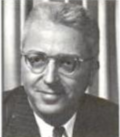 | John Macy | August 1979 | January 20, 1981 | ||
| – | | Bernard Gallagher Acting | January 20, 1981 | April 1981 | Ronald Reagan (1981–1989) | |
| – | | John McConnell Acting | April 1981 | May 1981 | ||
| 2 | | Jeff Giuffrida | May 1981 | September 1, 1985 | ||
| – | | Robert Morris Acting | September 1, 1985 | November 1985 | ||
| 3 | 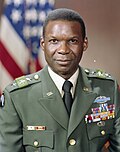 | Julius Becton | November 1985 | June 1989 | ||
| – | | Robert Morris Acting | June 1989 | May 1990 | George H. W. Bush (1989–1993) | |
| – | | Jerry Jennings Acting | May 1990 | August 1990 | ||
| 4 | | Wallace Stickney | August 1990 | January 20, 1993 | ||
| – | | William Tidball Acting | January 20, 1993 | April 5, 1993 | Bill Clinton (1993–2001) | |
| 5 |  | James Witt | April 5, 1993 | January 20, 2001 | ||
| – |  | John Magaw Acting | January 20, 2001 | February 15, 2001 | George W. Bush (2001–2009) | |
| 6 |  | Joe Allbaugh | February 15, 2001 | April 15, 2003 | ||
| 7 | Michael Brown | April 15, 2003 | September 12, 2005 | |||
| – |  | David Paulison | September 12, 2005 | June 8, 2006 | ||
| 8 | June 8, 2006 | January 21, 2009 | ||||
| – | 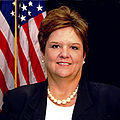 | Nancy Ward Acting | January 21, 2009 | May 19, 2009 | Barack Obama (2009–2017) | |
| 9 | 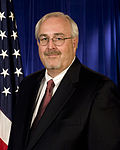 | Craig Fugate | May 19, 2009 | January 20, 2017 | ||
| – |  | Bob Fenton Acting | January 20, 2017 | June 23, 2017 | Donald Trump (2017–2021) | |
| 10 |  | Brock Long | June 23, 2017 | March 8, 2019 | ||
| – |  | Pete Gaynor | March 8, 2019 | January 14, 2020 | ||
| 11 | January 14, 2020 | January 12, 2021 | ||||
| – | | Bob Fenton Acting | January 12, 2021 | April 26, 2021 | Joe Biden (2021–2025) | |
| 12 |  | Deanne Criswell | April 26, 2021 | January 20, 2025 | ||
| – |  | Tony Robinson Acting | January 20, 2025 | January 22, 2025 | Donald Trump (2025–present) | |
| – |  | Cameron Hamilton Acting | January 22, 2025 | May 8, 2025 | ||
| – |  | David Richardson Acting | May 8, 2025 | November 30, 2025 | ||
| – | Karen Evans Acting | December 1, 2025 | May 12, 2026 | |||
| – | | Bob Fenton Acting | May 12, 2026 | Incumbent | ||
Pictures
Keep exploring


This article is a child-friendly adaptation of the Wikipedia article on Federal Emergency Management Agency, available under CC BY-SA 4.0.
Images from Wikimedia Commons. Tap any image to view credits and license.