 Safekipedia
Washington, D.C.
Adapted from Wikipedia · Adventurer experience
Main article: [District of Columbia]
Washington, D.C., officially called the District of Columbia, is the capital city of the United States. It is located on the Potomac River, with Virginia on one side and Maryland on the other.
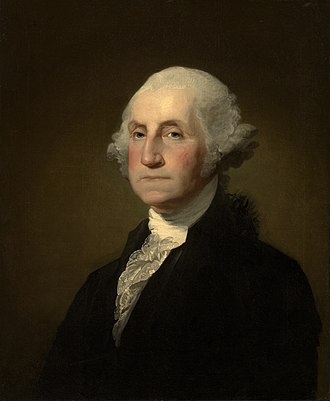
The city was named after George Washington, the first president of the country. It is not part of any state—it belongs to a special area called the federal district.
The U.S. Constitution set up Washington, D.C., as the nation’s capital. Important buildings such as the White House, the Capitol Building, and the Supreme Court Building are here, where leaders make decisions for the whole country.
The city has many famous monuments and museums, such as the Lincoln Memorial and the Washington Monument, that people visit from all over the world. It also holds offices for many countries and international groups, making it a key place in world affairs. With lots of history and important buildings, Washington, D.C., plays a central role in American life.
History
Main article: History of Washington, D.C.
For a chronological guide, see Timeline of Washington, D.C.
Washington, D.C., was built on land that was home to the Algonquian-speaking Piscataway people near the Potomac River. After Europeans arrived in the 1600s, the area's history changed.
The city became the nation’s capital in 1790. Leaders chose this spot because it was a central location. President George Washington picked the exact place, and construction began there. The city was named after him, and the district was called Columbia.
During the War of 1812, British forces burned many important buildings, including the White House and the Capitol. The buildings were repaired, and the city grew. In the 1860s, slavery ended in the district.
In the 1960s, the city faced some difficult times. Later, the district gained more control over its own laws and leaders. Today, people in Washington, D.C., discuss whether the district should become a full state.
Geography
Main article: Geography of Washington, D.C.
Washington, D.C. is located on the U.S. East Coast in the Mid-Atlantic region. It covers 68.34 square miles, most of it is land and some of it is water. The city borders Maryland to the north and east and Virginia to the west and south. The Potomac River forms part of the border with Virginia. The Anacostia River and Rock Creek are important water paths in the area.
Washington has many parks and green spaces. It has 683 parks covering about 7,464 acres, which is about 20% of the city. This means most people live close to a park. Some well-known parks are Rock Creek Park, one of the oldest national parks in the country, and the National Mall and Memorial Parks, where many important monuments are located. The city also has many smaller parks and gardens.
Cityscape
See also: Streets and highways of Washington, D.C.; Neighborhoods in Washington, D.C.; and List of tallest buildings in Washington, D.C.
Washington, D.C. was planned as a city. In 1791, President George Washington asked Pierre Charles L'Enfant, a French engineer, to make a plan for the city. L'Enfant’s plan had wide streets and open spaces, including a grand avenue called the National Mall. Another surveyor finished the plans, but L'Enfant is remembered for the city’s layout.
By law, buildings in Washington, D.C. cannot be too tall. This rule keeps the city’s sky open and gives it a special look. The city has four parts, each with its own streets and addresses. Famous places like the White House and the Capitol are easy to find because of this organized street system. The city has many types of buildings, from old styles to modern ones, making it fun to explore.
Architecture
Main articles: Architecture of Washington, D.C. and List of tallest buildings in the Washington metropolitan area
Washington, D.C. has many beautiful buildings. Some well-loved structures are the White House, Washington National Cathedral, and the United States Capitol. These buildings show styles like neoclassical and Gothic, with big columns and domes.
Many government buildings look like ancient Roman and Greek temples, with stone walls and large entrances. Other buildings have different styles, like the modern National Museum of African American History and Culture or the old Old Post Office. The city also has special places like the Watergate complex and the fancy CityCenterDC area, with stylish shops and restaurants.
-
Selection of neighborhoods in Washington, D.C.
[Bloomingdale](/wiki/Bloomingdale_\(Washington,_D.C.\))
[Capitol Hill](/wiki/Capitol_Hill)
[Chinatown](/wiki/Chinatown_\(Washington,_D.C.\))
-
_(cropped).jpg)
[Dupont Circle](/wiki/Dupont_Circle)
-
.jpg)
-
.jpg)
[Navy Yard](/wiki/Navy_Yard_\(Washington,_D.C.\))
Demographics
Main article: Demographics of Washington, D.C.
The U.S. Census Bureau says that Washington, D.C. had about 705,749 people living there in 2019. This is more than 100,000 people than in 2010. In 2010, Washington was the 24th most populated place in the United States. When people who come to work or visit during the day are counted, the population goes above one million. If Washington were a state, it would be the 49th most populated, just ahead of Vermont and Wyoming.
The area around Washington, including nearby towns and cities, is very large. It is the sixth largest area in the United States, with about six million people. When you also include the area around Baltimore, the total is over 9.8 million people.
Washington has many different kinds of people. In 2020, about 41% of the people were Black or African American, and almost 40% were White. There were also many people from Asia, and smaller groups from many other places. Many people in Washington came from countries such as El Salvador, Ethiopia, Mexico, and Guatemala.
The city has many places where people of different religions meet and worship. These include big churches, a large mosque, synagogues, and temples. Washington is home to important religious buildings such as Washington National Cathedral and the Basilica of the National Shrine of the Immaculate Conception, which is the largest Catholic church building in the United States.
| Census | Pop. | %± | |
|---|---|---|---|
| 1800 | 8,144 | — | |
| 1810 | 15,471 | 90.0% | |
| 1820 | 23,336 | 50.8% | |
| 1830 | 30,261 | 29.7% | |
| 1840 | 33,745 | 11.5% | |
| 1850 | 51,687 | 53.2% | |
| 1860 | 75,080 | 45.3% | |
| 1870 | 131,700 | 75.4% | |
| 1880 | 177,624 | 34.9% | |
| 1890 | 230,392 | 29.7% | |
| 1900 | 278,718 | 21.0% | |
| 1910 | 331,069 | 18.8% | |
| 1920 | 437,571 | 32.2% | |
| 1930 | 486,869 | 11.3% | |
| 1940 | 663,091 | 36.2% | |
| 1950 | 802,178 | 21.0% | |
| 1960 | 763,956 | −4.8% | |
| 1970 | 756,510 | −1.0% | |
| 1980 | 638,333 | −15.6% | |
| 1990 | 606,900 | −4.9% | |
| 2000 | 572,059 | −5.7% | |
| 2010 | 601,723 | 5.2% | |
| 2020 | 689,545 | 14.6% | |
| 2025 (est.) | 693,645 | 0.6% | |
| Source: Note: 2010–2020 | |||
| Demographic profile | 2020 | 2010 | 1990 | 1970 | 1940 |
|---|---|---|---|---|---|
| White | 39.6% | 38.5% | 29.6% | 27.7% | 71.5% |
| —Non-Hispanic whites | 38.0% | 34.8% | 27.4% | 26.5% | 71.4% |
| Black or African American | 41.4% | 50.7% | 65.8% | 71.1% | 28.2% |
| Hispanic or Latino (of any race) | 11.3% | 9.1% | 5.4% | 2.1% | 0.1% |
| Asian | 4.8% | 3.5% | 1.8% | 0.6% | 0.2% |
Economy
Main article: Economy of the Washington metropolitan area
Washington, D.C. has a strong economy. Many people work in jobs like services, tourism, entertainment, and government. The area has high incomes, and many people earn good wages.
The federal government employs many people in Washington, D.C. Other workers are in companies that support the government. The city is also home to research groups that study important topics, like peace and public policy. There are many non-profit groups working on global and local issues. Tourism is very important, with millions of visitors each year coming to see famous monuments, museums, and other attractions.
Culture
Main article: Culture of Washington, D.C.
Washington, D.C. is a special place for the arts. It has many concert halls and theaters. The John F. Kennedy Center for the Performing Arts has shows like the National Symphony Orchestra, Washington National Opera, and the Washington Ballet. Every year, the Kennedy Center Honors celebrate people who have made the United States' culture better.
The old Ford's Theatre is still open as a theater and a museum. Near Capitol Hill is the Marine Barracks, home to the United States Marine Band, the country's oldest musical group. Arena Stage, started in 1950, helped grow the city's theater scene.
Washington, D.C. is also known for its music and food. It is famous for jazz and a local music style called go-go. The city has many restaurants with foods from all over the world, like Ethiopian cuisine in the Shaw neighborhood. Popular local foods are the half-smoke sausage and mumbo sauce.
The city has many famous museums. The National Museum of Natural History and the National Gallery of Art are very popular. The Smithsonian Institution runs most of the city's museums, and they are free for everyone. Other museums include the National Gallery of Art, the National Building Museums, and the United States Holocaust Memorial Museum.
The National Mall is a big park from the Lincoln Memorial to the United States Capitol. It has many events, like concerts and fireworks shows. The Washington Monument and the Jefferson Memorial are popular places to visit, as is the Tidal Basin with its cherry blossoms each spring. Other landmarks are the Old Post Office, the Washington National Cathedral, and the Library of Congress, the world's largest library.
Sports
Main article: Sports in Washington, D.C.
Washington, D.C. has several famous sports teams. The Washington Nationals are a popular baseball team that plays in Nationals Park. The Washington Commanders are a football team that plays nearby in Landover, Maryland. Other teams include the Washington Wizards for basketball, the Washington Capitals for hockey, and the Washington Mystics for women’s basketball.
The city also has teams for soccer, rugby, tennis, and more. Two big marathons, the Marine Corps Marathon and the Rock 'n' Roll USA Marathon, are held here every year. College teams from local universities also add to the excitement in Washington, D.C.
City government
Main article: Government of the District of Columbia
Washington, D.C. is the capital city of the United States. It is run by a mayor and a council. But Congress can still change local laws. The city has eight areas, called wards. Each ward has its own representative on the council. People also elect four members to represent the whole city. There are smaller groups called Advisory Neighborhood Commissions. They give advice on local issues.
The city celebrates special days, like Emancipation Day. This day marks the end of slavery in the district. It also has its own flag. The flag is inspired by George Washington’s family coat of arms. Washington, D.C. works with other cities around the world as sister cities. It also hosts many foreign embassies. Many of these embassies are along a street called Embassy Row.
Federal voting rights
See also: District of Columbia voting rights; Political party strength in Washington, D.C.; and District of Columbia federal voting rights
Washington, D.C. is not a state. Because of this, people there do not have full voting rights in Congress. They can choose someone to go to the House of Representatives to help talk about new laws, but this person cannot vote on the final decision. D.C. also does not have anyone in the United States Senate.
Even though D.C. is not a state, people there pay federal taxes, just like people in states do. Many people did not know that D.C. residents have less say in Congress than people in the 50 states. Some people think D.C. should have full voting rights in Congress.
In 1961, the people of Washington, D.C. got the right to vote for the president through the 23rd Amendment. This gave them three votes in the Electoral College, just like the smallest state.
Education
See also: District of Columbia Public Schools and List of parochial and private schools in Washington, D.C.
The District of Columbia Public Schools runs public schools in Washington, D.C. The city has many school options. There are public charter schools and private schools for families to choose from.
Washington, D.C. is home to several well-known universities, including the University of the District of Columbia, American University, Gallaudet University, George Washington University, Georgetown University, and Howard University.
See also: List of colleges and universities in Washington, D.C.
Washington, D.C. has many libraries. The Library of Congress is the research library for the United States Congress. The District of Columbia Public Library has many locations. The Folger Shakespeare Library on Capitol Hill has a large collection about William Shakespeare.
Media
Main article: Media in Washington, D.C.
See also: List of newspapers in Washington, D.C.; List of films set in Washington, D.C.; and List of television shows set in Washington, D.C.
Washington, D.C. is an important place for news and media in the United States. The Washington Post, which began in 1877, is the city's most popular daily newspaper and one of the most important in the country. The city is also home to two local radio stations, WAMU and WETA, that many people enjoy.
Other newspapers in the city include The Washington Times, Washington City Paper, and The Atlantic. There are also many smaller papers that cover different communities and topics, such as Washington Blade, Metro Weekly, and Congressional Quarterly. The area is also a big spot for television, with many channels and companies based there.
Infrastructure
Transportation
Main article: Transportation in Washington, D.C.
Washington, D.C. has many ways to get around, including streets, highways, biking paths, walking areas, bridges, trains, buses, and airports. The city has many streets and highways. Public transportation is very popular.
Cycling is easy in D.C., with many bike lanes, including protected paths. The city has a bike-sharing program with many bikes at stations. Walking is popular, especially in neighborhoods like U Street, Dupont Circle, and Mount Vernon Square.
There are many bridges crossing the Potomac and Anacostia rivers, such as the Arlington Memorial Bridge and the Francis Scott Key Bridge. The Washington Metro is a busy subway system with many stations, helping people travel quickly. Union Station is a major train hub, connecting D.C. to cities up and down the East Coast.
Buses are another key part of transportation, with Metrobus serving many riders each day. There are also special buses for tourists and visitors. Three big airports serve the area, though they are not inside the city. These airports connect D.C. to many places around the world.
Utilities
The city gets its water from the Potomac River through the Washington Aqueduct, which stores and treats the water. An electric company called Pepco provides power to the area, with most wires buried underground. Natural gas is supplied by Washington Gas to homes and businesses in D.C. and nearby areas.
Crime and police
Main article: Crime in Washington, D.C.
See also: List of law enforcement agencies in the District of Columbia
Washington, D.C. has had some safety problems in the past. In the early 1990s, there were many serious crimes. Since then, the numbers have gone down. By 2012, serious crimes were at their lowest level in many years. Later, there were small increases, but by 2024, serious crimes were low again.
Many police groups work to keep people safe in the city. These include the Metropolitan Police Department and federal agencies like the U.S. Park Police. Special rules let the president help manage safety when it is very needed.
Images
Related articles




This article is a child-friendly adaptation of the Wikipedia article on Washington, D.C., available under CC BY-SA 4.0.
Images from Wikimedia Commons. Tap any image to view credits and license.