Green Bay Packers
The Green Bay Packers are a professional American football team based in Green Bay, Wisconsin. They play in the National Football League and are part of the National Football Conference North division. The Packers are one of the oldest teams in the NFL, started in 1919. They are special because they are owned by the community, which makes them unique among big league sports teams in the United States.
Since 1957, the Packers have played their home games at Lambeau Field. They have won more games than any other team in NFL history and hold the record for the most league championships, with 13 total wins. This includes nine titles before the Super Bowl and four Super Bowl victories. Some of their most successful years were under coach Vince Lombardi, who led the team to win the first two Super Bowls.
The Packers have had many great players, such as Brett Favre and Aaron Rodgers, who helped bring the team back to success in the 1990s and 2000s. The team has a long history of competing against rivals like the Chicago Bears, Minnesota Vikings, and Detroit Lions, making each game exciting for fans.
History
Main article: History of the Green Bay Packers
The Green Bay Packers are a professional football team based in Green Bay, Wisconsin. They play in the National Football League (NFL) and were started in 1919, making them one of the oldest teams. The Packers are special because they are owned by the community, with many fans holding shares in the team.
The team has a long and successful history. In the early years led by coach Curly Lambeau, the Packers won many NFL championships. Later, under famous coach Vince Lombardi in the 1960s, the team achieved great success, including winning the first two Super Bowls. More recently, the Packers have kept competing well, with notable seasons under coaches like Mike McCarthy and Matt LaFleur.
Curly Lambeau years (1919–1949)
The Green Bay Packers were founded on August 11, 1919, by Earl "Curly" Lambeau and George Whitney Calhoun. Lambeau used money from his job to buy uniforms and equipment, and the team was named after his company. The Packers joined the American Professional Football Association (now the NFL) in 1921 and have played in Green Bay longer than any other NFL team.
During this time, the Packers won their first NFL titles in 1929, 1930, and 1931, led by players like Mike Michalske, Johnny McNally, Cal Hubbard, and Arnie Herber. They also had a record of 29 consecutive home games without a loss. The arrival of Don Hutson in 1935 helped the team win more championships in 1936, 1939, and 1944. Hutson was a talented player who set many records and was later inducted into the Pro Football Hall of Fame.
After Hutson retired, the team faced harder times. A fire destroyed a lodge where players lived, and Lambeau left after the 1949 season. The next few years were tough, with the team struggling to win games.
Vince Lombardi years (1959–1967)
Vince Lombardi became the Packers' coach in 1959 and led the team to great success. Under Lombardi, the Packers won five championships, including the first two Super Bowls. Key players during this time included Bart Starr, Jim Taylor, Carroll Dale, Paul Hornung, Forrest Gregg, and Jerry Kramer.
The Packers' first game under Lombardi was a win against the Chicago Bears. They had their first winning season since 1947 and went on to win the NFL Championship in 1961, 1962, and 1965. In 1966, they won the first Super Bowl, and in 1967, they won Super Bowl II. After the 1967 season, Lombardi left the team, and the NFL renamed the Super Bowl trophy in his honor.
Mike Holmgren years (1992–1998)
In 1992, Mike Holmgren became the Packers' coach. He brought in quarterback Brett Favre, who helped the team return to the playoffs. In 1996, the Packers won Super Bowl XXXI, defeating the New England Patriots. This was a high point for the team, and they were considered one of the best in the league.
The next few years saw the Packers reach the Super Bowl again but lose to the Denver Broncos. After the 1998 season, Holmgren left to coach another team, and the Packers began a period of rebuilding.
Mike McCarthy years (2006–2018)
Mike McCarthy became the Packers' coach in 2006. He led the team back to the playoffs and, in 2010, to Super Bowl XLV, where they won against the Pittsburgh Steelers. This was the team's first Super Bowl victory since 1996. Aaron Rodgers, who took over as quarterback after Brett Favre left, was named Super Bowl MVP.
McCarthy continued to lead the Packers to the playoffs many times, but they didn't win another Super Bowl during his time. In 2018, after a disappointing season, McCarthy was replaced as coach.
Matt LaFleur years (2019–present)
Matt LaFleur became the Packers' coach in 2019. In his first season, he led the team back to the playoffs. Under LaFleur, the Packers have had several successful seasons, including reaching the NFC Championship game. In 2023, after longtime quarterback Aaron Rodgers left the team, Jordan Love took over as the starting quarterback.
The Packers continue to be a competitive team in the NFL, with hopes of returning to the Super Bowl in the future.
Community ownership
The Green Bay Packers are special because they are owned by the community, not by one person or a big company. Thousands of people own a small piece of the team called stock. This keeps things fair for everyone. The team has stayed in Green Bay for many years, even though the city is small.
Green Bay is a small city, but fans of the team come from all over Wisconsin and nearby areas. The team used to play some games in Milwaukee but now plays all its home games in Green Bay. Owning stock means you can vote on some decisions and get special offers, but you can't sell your stock or get rich from it. The team also has a foundation that helps many good causes in the community.
Board of directors
Green Bay Packers, Inc., is led by a group of seven people chosen from a larger group of directors. They help make big decisions for the team.
Green Bay Packers Foundation
The team started the Green Bay Packers Foundation in 1986 to help important projects in the community, like education and health services.
Fan base
Further information: Cheesehead
The Green Bay Packers have very loyal fans. Every game in Green Bay, whether it is during the regular season or playoffs, has been sold out since 1960. Even though the Packers have the smallest TV audience, they are still one of the most popular teams in the NFL. There is a long waiting list for season tickets.
Fans of the Packers are often called cheeseheads, a nickname that comes from Wisconsin’s famous cheese. Many fans wear bright orange triangular hats that look like cheeseheads when the team plays.
During summer training, young fans can bring their bikes for the players to ride to practice. The team also holds a special scrimmage called Family Night at Lambeau Field, where many fans come to watch. In 2008, ESPN.com said that Packers fans were among the best in the NFL. The team tied with the Pittsburgh Steelers for having the best fans.
Branding
Nickname
The Green Bay Packers got their name when their founder, Curly Lambeau, needed money for uniforms. His employer, the Indian Packing Company, gave him $500 and asked to be named on the team. Early reports called the team “the Indians,” but soon “Packers” became their name.
In 1920, Indian Packing was bought by Acme Packing Company, which kept supporting the team. The first season’s jerseys even said “ACME PACKERS.”
Team colors
The team’s colors come from Curly Lambeau’s time at Notre Dame, where the team wore navy blue and gold. Early on, people called the Packers “the Bays” or “the Blues.” By 1950, they changed navy blue to kelly green but kept a lighter gold. Navy blue stayed as a secondary color for a while but was later dropped. In 1958, kelly green turned into a darker hunter green, which the team still uses today with gold. In 1994, they wore old navy blue and gold uniforms for a special celebration, and they did this again in 2001 and 2003 for special games.
Logo
In 1951, the Packers switched from leather to plastic gold helmets. In 1961, they added the famous oval “G” logo, designed by a student at St. Norbert College. This logo has been on their helmets ever since. The Packers have allowed some other schools and the city of Green Bay to use a similar “G” in their logos.
Uniform variation
Usually, teams wear white jerseys at home early in the season because it keeps players cooler, but the Packers have only done this twice, in the first two games of 1989. In 2016, they introduced a special all-white uniform called “Color Rush,” which they have worn five times. In 2024, they paired this uniform with a new white helmet.
The Packers have also worn special throwback uniforms to honor their history. In 2010, they wore navy blue uniforms from 1929, then switched to ones from 1937–1949 in 2015, and then to all-green uniforms from the 1950s in 2021. In 2025, they will wear a navy blue uniform from 1923 with hand-painted leather-style helmets.
The team’s uniforms are made by Ripon Athletic from Berlin, who has made them since the 1960s. When the NFL switched to Nike in 2012, the Packers kept their traditional design except for the required logo changes. In 2025, their new 1923 throwback uniform was the first to use Nike’s “Vapor FUSE” design.
Rivalries
Divisional
Chicago Bears
Main article: Bears–Packers rivalry
The Green Bay Packers and Chicago Bears have been rivals since 1920, one of the oldest in football. The Packers have more wins, and they have played important playoff games. The Bears won once and later won a championship. The Packers won another time and later won the Super Bowl. They played their first game in 1921, with the Bears winning.
Minnesota Vikings
Main article: Packers–Vikings rivalry
The Packers and Minnesota Vikings started their rivalry in the 1960s. It is very intense. The Packers have more wins overall.
Detroit Lions
Main article: Lions–Packers rivalry
The Packers and Detroit Lions have been rivals since 1930. The Packers have more wins overall.
Conference
Dallas Cowboys
Main article: Cowboys–Packers rivalry
The Packers and Dallas Cowboys have played many important games, including the "Ice Bowl". The Packers have more wins overall.
San Francisco 49ers
Main article: 49ers–Packers rivalry
The Packers and the San Francisco 49ers became rivals in the 1990s. The Packers have more wins overall.
Seattle Seahawks
Main article: Packers–Seahawks rivalry
After the Seattle Seahawks moved to the NFC in 2002, they and the Packers have met in the playoffs. The Packers have more wins overall.
New York Giants
Main article: Giants–Packers rivalry
The Packers and New York Giants have played each other since 1928. The Packers have more wins overall.
Tampa Bay Buccaneers
Main article: Buccaneers–Packers rivalry
The Tampa Bay Buccaneers and Packers were division rivals until 2002. The Packers have more wins overall.
Stadium history
See also: List of Green Bay Packers stadiums and Green Bay Packers home games in Milwaukee
The Green Bay Packers first played their home games at different parks. In 1925, they moved to City Stadium and won many championships there. By the 1950s, the old wooden stadium needed to be replaced. The city built a new stadium that opened in 1957, later named Lambeau Field for Curly Lambeau.
Lambeau Field has grown over the years and now holds over 70,000 fans. All games have been sold out since 1960, and many fans are waiting to buy tickets. The Packers used to play some games in Milwaukee but now play all their home games in Green Bay. They have practice fields nearby in Ashwaubenon, Wisconsin. The team's main store, the Pro Shop, is located at Lambeau Field.
Statistics and records
Main article: List of Green Bay Packers team records
Season-by-season results
Here are the Packers' results for the last five seasons. For all their seasons, see List of Green Bay Packers seasons.
Note: These results are for the regular season only.
Records
Main article: List of Green Bay Packers team records
Playoff record
| Super Bowl champions | Conference champions | Division champions | Wild Card berth |
| Season | Team | League | Conference | Division | Regular season | Postseason results | Awards | |||
|---|---|---|---|---|---|---|---|---|---|---|
| Finish | Wins | Losses | Ties | |||||||
| 2021 | 2021 | NFL | NFC | North | 1st | 13 | 4 | 0 | Lost Divisional Playoffs (49ers) 13–10 | — |
| 2022 | 2022 | NFL | NFC | North | 3rd | 8 | 9 | 0 | — | — |
| 2023 | 2023 | NFL | NFC | North | 2nd | 9 | 8 | 0 | Won Wild-Card Playoffs (at Cowboys) 48–32 Lost Divisional Playoffs (at 49ers) 21–24 | — |
| 2024 | 2024 | NFL | NFC | North | 3rd | 11 | 6 | 0 | Lost Wild-Card Playoffs (at Eagles) 10–22 | — |
| 2025 | 2025 | NFL | NFC | North | 2nd | 9 | 7 | 1 | Lost Wild-Card Playoffs (at Bears) | |
| All-Time Packers leaders | |||
|---|---|---|---|
| Leader | Player | Record Number | Years on Packers |
| Passing | Brett Favre | 61,655 passing yards | 1992–2007 |
| Rushing | Ahman Green | 8,322 rushing yards | 2000–2006; 2009 |
| Receiving | Donald Driver | 10,137 receiving yards | 1999–2012 |
| Coaching wins | Curly Lambeau | 209 wins | 1919–1949 |
| Year | Game | Opponent | Result |
|---|---|---|---|
| 1936 | NFL Championship | Boston Braves | W 21–6 |
| 1938 | New York Giants | L 17–23 | |
| 1939 | New York Giants | W 27–0 | |
| 1941 | Western Division Championship | Chicago Bears | L 14–33 |
| 1944 | NFL Championship | New York Giants | W 14–7 |
| 1960 | Philadelphia Eagles | L 13–17 | |
| 1961 | New York Giants | W 37–0 | |
| 1962 | New York Giants | W 16–7 | |
| 1965 | Western Conference Championship | Baltimore Colts | W 13–10 (OT) |
| NFL Championship | Cleveland Browns | W 23–12 | |
| 1966 | Dallas Cowboys | W 34–27 | |
| Super Bowl I | Kansas City Chiefs | W 35–10 | |
| 1967 | Conference Championship | Los Angeles Rams | W 28–7 |
| NFL Championship | Dallas Cowboys | W 21–17 | |
| Super Bowl II | Oakland Raiders | W 33–14 | |
| 1972 | Divisional Round | Washington Redskins | L 3–16 |
| 1982 | First Round | St. Louis Cardinals | W 41–16 |
| Second Round | Dallas Cowboys | L 26–37 | |
| 1993 | Wild Card | Detroit Lions | W 28–24 |
| Divisional Round | Dallas Cowboys | L 17–27 | |
| 1994 | Wild Card | Detroit Lions | W 16–12 |
| Divisional Round | Dallas Cowboys | L 9–35 | |
| 1995 | Wild Card | Atlanta Falcons | W 37–20 |
| Divisional Round | San Francisco 49ers | W 27–17 | |
| NFC Championship | Dallas Cowboys | L 27–38 | |
| 1996 | Divisional Round | San Francisco 49ers | W 35–14 |
| NFC Championship | Carolina Panthers | W 30–13 | |
| Super Bowl XXXI | New England Patriots | W 35–21 | |
| 1997 | Divisional Round | Tampa Bay Buccaneers | W 21–7 |
| NFC Championship | San Francisco 49ers | W 23–10 | |
| Super Bowl XXXII | Denver Broncos | L 24–31 | |
| 1998 | Wild Card | San Francisco 49ers | L 27–30 |
| 2001 | NFC Wild Card | San Francisco 49ers | W 15–25 |
| Divisional Round | St. Louis Rams | L 17–45 | |
| 2002 | NFC Wild Card | Atlanta Falcons | L 7–27 |
| 2003 | NFC Wild Card | Seattle Seahawks | W 33–27 (OT) |
| Divisional Round | Philadelphia Eagles | L 17–20 (OT) | |
| 2004 | NFC Wild Card | Minnesota Vikings | L 17–31 |
| 2007 | Divisional Round | Seattle Seahawks | W 42–20 |
| NFC Championship | New York Giants | L 20–23 (OT) | |
| 2009 | NFC Wild Card | Arizona Cardinals | L 45–51 (OT) |
| 2010 | NFC Wild Card | Philadelphia Eagles | W 21–16 |
| Divisional Round | Atlanta Falcons | W 48–21 | |
| NFC Championship | Chicago Bears | W 21–14 | |
| Super Bowl XLV | Pittsburgh Steelers | W 31–25 | |
| 2011 | Divisional Round | New York Giants | L 20–37 |
| 2012 | NFC Wild Card | Minnesota Vikings | W 24–10 |
| Divisional Round | San Francisco 49ers | L 31–45 | |
| 2013 | NFC Wild Card | San Francisco 49ers | L 20–23 |
| 2014 | Divisional Round | Dallas Cowboys | W 26–21 |
| NFC Championship | Seattle Seahawks | L 22–28 (OT) | |
| 2015 | NFC Wild Card | Washington Redskins | W 35–18 |
| Divisional Round | Arizona Cardinals | L 20–26 (OT) | |
| 2016 | NFC Wild Card | New York Giants | W 38–13 |
| Divisional Round | Dallas Cowboys | W 34–31 | |
| NFC Championship | Atlanta Falcons | L 21–44 | |
| 2019 | Divisional Round | Seattle Seahawks | W 28–23 |
| NFC Championship | San Francisco 49ers | L 20–37 | |
| 2020 | Divisional Round | Los Angeles Rams | W 32–18 |
| NFC Championship | Tampa Bay Buccaneers | L 26–31 | |
| 2021 | Divisional Round | San Francisco 49ers | L 10–13 |
| 2023 | NFC Wild Card | Dallas Cowboys | W 48–32 |
| Divisional Round | San Francisco 49ers | L 21–24 | |
| 2024 | NFC Wild Card | Philadelphia Eagles | L 10–22 |
| 2025 | NFC Wild Card | Chicago Bears | L 27–31 |
| Overall Playoff Record: 37–28 | |||
Championships
The Green Bay Packers have won the league championship 13 times, more than any other team. They won their first three titles by having the best record. Then they won six more in the NFL Title Game, and finally won four Super Bowls. The Packers are the only team to win three NFL titles in a row, doing this twice—once from 1929 to 1931 and again from 1965 to 1967.
Super Bowl championships
Since 1966, the Super Bowl has decided the league’s ultimate champion. The Packers have won four Super Bowls.
NFL championships (pre Super Bowl era)
Before the Super Bowl, from 1933 to 1969, the NFL held a championship game to decide its champion. The Packers won 8 of these NFL Championship Games. During this time, from 1966 to 1969, the NFL Championship Game was followed by the Super Bowl.
NFC championships
The Packers have won three NFC Championship Games, though they have lost twice as many. The NFC Championship Game began after the AFL–NFL merger in 1970.
NFL championship by standings
From 1920 to 1932, the NFL did not hold a championship game. Instead, the team with the best record won the title. The Packers won three championships this way.
Division Championships
The Packers have won 21 division championships.
| Year | Coach | Super Bowl | Location | Opponent | Score | Record |
|---|---|---|---|---|---|---|
| 1966 | Vince Lombardi | I | Los Angeles Memorial Coliseum (Los Angeles) | Kansas City Chiefs | 35–10 | 12–2 |
| 1967 | II | Orange Bowl (Miami) | Oakland Raiders | 33–14 | 9–4–1 | |
| 1996 | Mike Holmgren | XXXI | Louisiana Superdome (New Orleans) | New England Patriots | 35–21 | 13–3 |
| 2010 | Mike McCarthy | XLV | Cowboys Stadium (Arlington, Texas) | Pittsburgh Steelers | 31–25 | 10–6 |
| Total Super Bowls won: 4 | ||||||
| Year | Coach | Location | Opponent | Score | Record |
|---|---|---|---|---|---|
| 1936 | Curly Lambeau | Polo Grounds (New York) | Boston Redskins | 21–6 | 10–1–1 |
| 1939 | Dairy Bowl (West Allis, Wisconsin) | New York Giants | 27–0 | 9–2 | |
| 1944 | Polo Grounds (New York) | New York Giants | 14–7 | 8–2 | |
| 1961 | Vince Lombardi | New City Stadium (Green Bay) | New York Giants | 37–0 | 11–3 |
| 1962 | Yankee Stadium (New York) | New York Giants | 16–7 | 13–1 | |
| 1965 | Lambeau Field (Green Bay) | Cleveland Browns | 23–12 | 10–3–1 | |
| 1966 | Cotton Bowl (Dallas) | Dallas Cowboys | 34–27 | 12–2 | |
| 1967 | Lambeau Field (Green Bay) | Dallas Cowboys | 21–17 | 9–4–1 | |
| Total NFL championships won: 8 | |||||
| Year | Coach | Location | Opponent | Score | Record |
|---|---|---|---|---|---|
| 1996 | Mike Holmgren | Lambeau Field (Green Bay) | Carolina Panthers | 30–13 | 13–3 |
| 1997 | 3Com Park (San Francisco) | San Francisco 49ers | 23–10 | 13–3 | |
| 2010 | Mike McCarthy | Soldier Field (Chicago) | Chicago Bears | 21–14 | 10–6 |
| Total NFC Championships won: 3 | |||||
| Year | Coach | Record |
|---|---|---|
| 1929 | Curly Lambeau | 12–0–1 |
| 1930 | 10–3–1 | |
| 1931 | 12–2 | |
| Total NFL championships by best record: 3 | ||
| Year | Coach | Division | Record |
|---|---|---|---|
| 1936 | Curly Lambeau | NFL West | 10–1–1 |
| 1938 | 8–3 | ||
| 1939 | 9–2 | ||
| 1944 | 8–2 | ||
| 1967 | Vince Lombardi | NFL Central | 9–4–1 |
| 1972 | Dan Devine | NFC Central | 10–4 |
| 1995 | Mike Holmgren | 11–5 | |
| 1996 | 13–3 | ||
| 1997 | 13–3 | ||
| 2002 | Mike Sherman | NFC North | 12–4 |
| 2003 | 12–4 | ||
| 2004 | 10–6 | ||
| 2007 | Mike McCarthy | 13–3 | |
| 2011 | 15–1 | ||
| 2012 | 11–5 | ||
| 2013 | 8–7–1 | ||
| 2014 | 12–4 | ||
| 2016 | 10–6 | ||
| 2019 | Matt LaFleur | 13–3 | |
| 2020 | 13–3 | ||
| 2021 | 13–4 | ||
| Total NFC Divisional Championships won: 21 | |||
Notable players
Main article: Lists of Green Bay Packers players
Main article: List of Green Bay Packers in the Pro Football Hall of Fame
The Green Bay Packers have many famous players in the Pro Football Hall of Fame—second only to the Chicago Bears. Most of these players were honored for their time with the Packers.
Main article: Wisconsin Athletic Hall of Fame
Some Packers players and coaches are also in the Wisconsin Athletic Hall of Fame. In 2018, Ron Wolf, a Packers leader, was added to this group.
Main article: List of Green Bay Packers retired numbers
The Packers have retired six numbers from important players. These numbers and names are shown on Lambeau Field.
The Green Bay Packers Hall of Fame was made to honor the team’s history. It was the first hall of fame for a single football team. Many great players and leaders are part of this hall.
| Green Bay Packers Pro Football Hall of Famers | |||||||||
|---|---|---|---|---|---|---|---|---|---|
| Players | |||||||||
| No. | Name | Positions | Seasons | Inducted | No. | Name | Positions | Seasons | Inducted |
| 26 | Herb Adderley | CB | 1961–1969 | 1980 | 64 | Jerry Kramer | G | 1958–1968 | 2018 |
| 36 | LeRoy Butler | S | 1990–2001 | 2022 | 20 | Earl (Curly) Lambeau | HB Coach | 1919–1929 1930–1949 | 1963 |
| 3 | Tony Canadeo | HB | 1941–1944 1946–1952 | 1974 | 80 | James Lofton | WR | 1978–1986 | 2003 |
| 87 | Willie Davis | DE | 1960–1969 | 1981 | 24 | Johnny "Blood" McNally | HB | 1929–1933 1935–1936 | 1963 |
| 44 | Bobby Dillon | S | 1952–1959 | 2020 | 2 | Mike Michalske | OG | 1929–1935 1937 | 1964 |
| 4 | Brett Favre | QB | 1992–2007 | 2016 | 66 | Ray Nitschke | LB | 1958–1972 | 1978 |
| 75 | Forrest Gregg | OT | 1956 1958–1970 | 1977 | 51 | Jim Ringo | C | 1953–1963 | 1981 |
| 56 | Ted Hendricks | LB | 1974 | 1990 | 89 | Dave Robinson | LB | 1963–1972 | 2013 |
| 38 | Arnie Herber | QB | 1930–1940 | 1966 | 84 | Sterling Sharpe | WR | 1988–1994 | 2025 |
| 30 | Clarke Hinkle | FB | 1932–1941 | 1964 | 15 | Bart Starr | QB | 1956–1971 | 1977 |
| 5 | Paul Hornung | HB | 1956–1962 1964–1966 | 1986 | 31 | Jim Taylor | FB | 1958–1966 | 1976 |
| 36 | Cal Hubbard | OT | 1929–1933 1935 | 1963 | 92 | Reggie White | DE | 1993–1998 | 2006 |
| 14 | Don Hutson | E | 1935–1945 | 1963 | 24 | Willie Wood | S | 1960–1971 | 1989 |
| 74 | Henry Jordan | DT | 1959–1969 | 1995 | 21 | Charles Woodson | CB | 2006–2012 | 2021 |
| Coaches and Executives | |||||||||
| Name | Positions | Seasons | Inducted | ||||||
| Vince Lombardi | Coach | 1959–1967 | 1971 | ||||||
| Ron Wolf | General manager | 1991–2001 | 2015 | ||||||
 |  |  |  | 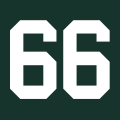 |  |
| Tony Canadeo HB, 1941–1944, 1946–1952 Retired 1952 | Brett Favre QB, 1992–2007 Retired 2015 | Don Hutson WR, 1935–1945 Retired 1951 | Bart Starr QB, 1956–71 Retired 1973 | Ray Nitschke LB, 1958–1972 Retired 1983 | Reggie White DE, 1993–1998 Retired 2005 |
Notable coaches
Main article: List of Green Bay Packers head coaches
| Name | Tenure | Record | Titles | ||
|---|---|---|---|---|---|
| W | L | T | |||
| Earl (Curly) Lambeau | 1919–1949 | 231 | 108 | 21 | 6 |
| Gene Ronzani | 1950–1953 | 14 | 31 | 1 | |
| Hugh Devore* | 1953 | 0 | 2 | 0 | |
| Ray (Scooter) McLean* | |||||
| Lisle Blackbourn | 1954–1957 | 17 | 31 | 0 | |
| Ray (Scooter) McLean | 1958 | 1 | 10 | 1 | |
| Vince Lombardi | 1959–1967 | 98 | 30 | 4 | 5 |
| Phil Bengtson | 1968–1970 | 20 | 21 | 1 | |
| Dan Devine | 1971–1974 | 25 | 28 | 4 | |
| Bart Starr | 1975–1983 | 53 | 77 | 3 | |
| Forrest Gregg | 1984–1987 | 25 | 37 | 1 | |
| Lindy Infante | 1988–1991 | 24 | 40 | 0 | |
| Mike Holmgren | 1992–1998 | 73 | 36 | 0 | 1 |
| Ray Rhodes | 1999 | 8 | 8 | 0 | |
| Mike Sherman | 2000–2005 | 56 | 39 | 0 | |
| Mike McCarthy | 2006–2018 | 125 | 77 | 2 | 1 |
| Joe Philbin* | 2018 | 2 | 2 | 0 | |
| Matt LaFleur | 2019–present | 79 | 46 | 1 | |
Media
The Green Bay Packers show their games in Green Bay and Milwaukee. Their games have been shown locally since 1960 because they sell out every game.
Radio
The main radio station for the Packers is WRIT-FM (95.7) in Milwaukee, operated by iHeartMedia. Games are also on other stations in Green Bay, Appleton, and the Fox Cities. Wayne Larrivee is the main announcer, and Larry McCarren gives expert comments.
Television
Local TV stations in Green Bay and Milwaukee show the Packers' preseason games. These games are also shown on many other TV stations across several states. Kevin Harlan and Rich Gannon announce the preseason games.
In popular culture
The Green Bay Packers have been in many TV shows and movies. In That '70s Show, a character gave tickets to a Packers game, and another wore a different team's jersey, which upset real fans. In the movie Pitch Perfect 2, some Packers players appeared as a singing group. In Danny Phantom, a villain was a big fan of the team. And in There's Something about Mary, a character talked about her boyfriend named "Brett," who was a famous Packers player.
Pictures
Keep exploring


This article is a child-friendly adaptation of the Wikipedia article on Green Bay Packers, available under CC BY-SA 4.0.
Images from Wikimedia Commons. Tap any image to view credits and license.