 Safekipedia
Hot Springs, Arkansas
Adapted from Wikipedia · Adventurer experience
Hot Springs is a resort city in Arkansas, United States. It is the county seat of Garland County. The city is in the Ouachita Mountains and has many natural hot springs.
As of the 2020 United States census, Hot Springs had a population of 37,930. It is the eleventh-most populous city in Arkansas.
The center of Hot Springs is the oldest federal reserve in the United States. It is now Hot Springs National Park. People have long believed the hot spring water has healing properties. The city became a popular spa town after it was protected by the federal government in 1832. The city was incorporated on January 10, 1851. It has been home to Major League Baseball spring training and is where Bill Clinton grew up.
Much of Hot Springs’ history is protected by government groups. Hot Springs National Park is cared for by the National Park Service. This includes Bathhouse Row, which has eight old bathhouse buildings and gardens along Central Avenue. Downtown Hot Springs is part of the Central Avenue Historic District, listed on the National Register of Historic Places.
History
Settlement
Many Native American tribes gathered in the valley for years to enjoy the healing properties of the thermal springs.
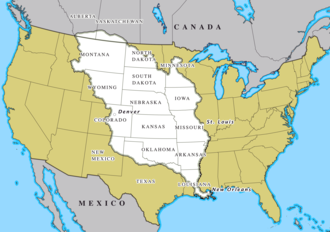
In 1673, Father Marquette and Jolliet explored the area and claimed it for France. The 1763 Treaty of Paris ceded the land to Spain; however, in 1800, control was returned to France until the Louisiana Purchase of 1803.
In December 1804, George Hunter and William Dunbar made an expedition to the springs, finding a lone log cabin and a few simple shelters used by people visiting the springs for their healing properties. In 1807, a man named Prudhomme became the first settler of modern Hot Springs, and he was soon joined by John Perciful and Isaac Cates.
On August 24, 1818, the Quapaw Native Americans ceded the land around the hot springs to the United States in a treaty. After Arkansas became its own territory in 1819, the Arkansas Territorial Legislature asked in 1820 that the springs and adjoining mountains be set aside as a federal reservation. Twelve years later, in 1832, the Hot Springs Reservation was created by the United States Congress, granting federal protection of the thermal waters. The reservation was renamed Hot Springs National Park in 1921.
Civil War
The start of the American Civil War caused Hot Springs to have fewer visitors to its baths. After Confederate forces lost the Battle of Pea Ridge in March 1862, Union troops moved toward the Confederate city of Little Rock. Confederate Governor Henry M. Rector moved his staff and state records to Hot Springs. Union forces did not attack Little Rock, and the government returned to the capital city on July 14, 1862.
Many residents of Hot Springs fled to Texas or Louisiana and stayed there until the end of the war. In September 1863, Union forces occupied Little Rock. During this time, Hot Springs was attacked by guerrilla bands loosely linked to either Union or Confederate forces. They damaged and burned much of the nearly empty town, leaving only a few buildings standing at the end of the Civil War.
Rebuilding
After the Civil War, much rebuilding of bathhouses and hotels took place at Hot Springs. The year-round population grew to 1,200 people by 1870. By 1873 six bathhouses and 24 hotels and boardinghouses stood near the springs. In 1873, Hot Springs became the county seat of the newly formed Garland County. Before 1873, the city had been a part of Hot Spring County. In 1874, Joseph Reynolds announced plans to build a narrow-gauge railroad from Malvern to Hot Springs; its completion in 1875 helped increase visits to the springs. Samuel W. Fordyce and two other entrepreneurs built the first luxury hotel in the area, the first Arlington Hotel, which opened in 1875.
During the Reconstruction Era, several land claims were brought to the U.S. Congress and led to a Supreme Court ruling on April 24, 1876 that the land title of Hot Springs belonged to the federal government. Protests followed. To settle the situation, Congress formed the Hot Springs Commission to plan streets in the town of Hot Springs, handle land claims, set property lines, remove buildings built illegally on the permanent reservation (now the national park), and create a process for claimants to buy land. The commission set aside 264.93 acres (1.0721 km2) with the hot springs and Hot Springs Mountain as a permanent government reservation. Another 1,200 acres (4.9 km2) became the Hot Springs townsite, with 700 acres (2.8 km2) given to claimants. The townsite had 196 blocks and 50 miles (80 km) of streets and alleys. The remaining part of the original four sections of government land had hills and mountains which were mostly empty, and Congress added those lands to the permanent reservation in June 1880.
Hot Springs was incorporated on April 5, 1876, after 467 people signed a petition presented to Judge J.W. Jordan. On March 5, 1878, a fire that lasted for eight hours destroyed large parts of the town and left over 1,000 people without homes. The town used springs and wells for water before the Hot Springs Water Company was created in 1882.
Baseball in Hot Springs
Hot Springs has a long history with baseball. During the early 20th century, Hot Springs was known for baseball training camps. Often called the "birthplace" of Spring training baseball, Hot Springs first welcomed Major League Baseball in 1886, when the Chicago White Stockings (now the Chicago Cubs), brought their coaches and players to the city to prepare for the upcoming season. Chicago White Stockings' President Albert Spalding, the founder of A.G Spalding, and player/manager Cap Anson introduced the idea of players having training and fitness before the start of the regular season. This move helped earn Hot Springs the title of the "birthplace of spring training baseball". Both Spalding and Anson liked the city and the natural springs for their players. They first played behind what is now the Garland County Courthouse on Ouachita Avenue at what was called the Hot Springs Baseball Grounds. Many other teams followed Chicago and began training and playing games in Hot Springs.
The Cleveland Spiders, Pittsburgh Pirates, Brooklyn Dodgers, Chicago Cubs, Cincinnati Reds, Detroit Tigers, New York Yankees, St. Louis Cardinals and Boston Red Sox were among the major league teams that trained in Hot Springs. Needing more places for teams to play, Whittington Park was built in 1894, followed by Majestic Park in 1908 and Fogel Field in 1912. 134 members of the Baseball Hall of Fame trained or played in Hot Springs.
Negro league baseball teams also trained in Hot Springs. The Pittsburgh Crawfords used Fogel Field for spring training from 1932 to 1935. Their team included Baseball Hall of Fame players Cool Papa Bell, Josh Gibson, Oscar Charleston and Judy Johnson. The Homestead Grays, trained at Fogel Field in 1930 and 1931. Their team had many Hall of Fame players: Cool Papa Bell, Josh Gibson, Oscar Charleston, Jud Wilson, Bill Foster, Judy Johnson, Smokey Joe Williams, Willie Wells and Cum Posey.
St. Patrick's Day, 1918, is called the "Day that changed Baseball Forever." Boston Red Sox' pitcher Babe Ruth hit a long Home Run into the Arkansas Alligator Farm and Petting Zoo that changed the course of baseball history. In the opening exhibition game against Brooklyn at Whittington Park, Ruth (coming off a 24–13 season) was a last-minute replacement at first base, his first time playing a position other than pitcher. Ruth hit two long home runs that day while playing the field for the first time. His first home run was a long hit that landed in a wood pile. But, his second Home run was famous for its distance and effect on Ruth. It was a hit that traveled an estimated 573 feet.
After that day Ruth became a hitter, switching from being just a pitcher. In Hot Springs, Ruth could be seen walking the streets, visiting the bath spas, and gambling at the nearby horse track. There is a Ruth plaque both inside and outside the Alligator Farm, as well as a home plate marker at the former Whittington Park across the street.
The Pittsburgh Pirates trained for over a decade at Whittington Park. Hall of Fame shortstop Honus Wagner became well known in the city. As proof of this, Wagner bought and gave basketball uniforms and equipment to Hot Springs High School in 1912. The uniforms were in the Pittsburgh Pirates colors of black and gold, and after that, the high school changed permanently to those colors. Wagner also refereed a basketball game for the school that season, something he would do again.
In 1952, an 18-year old Hank Aaron played in the Negro American League championship for the Indianapolis Clowns against the Birmingham Black Barons at Majestic Park.
On October 22, 1953, Jackie Robinson played in an exhibition game at Majestic Park. Having broken Major League Baseball's color barrier in 1947, Robinson's team played the Negro American League All-Stars that day, and lost 14–9.
The First Boys of Spring is a 2015 documentary about the history of Hot Springs Baseball spring training. The film features many Hot Springs historical items and references. Produced by Arkansas filmmaker Larry Foley, it is narrated by Hot Springs area native, actor Billy Bob Thornton. The Foley documentary is shown nationally on the MLB Network, first shown in February 2016.
Today, part of the Hot Springs Baseball Historic Trail has 26 green plaques/markers placed throughout Hot Springs that show the key people and locations, with an app available to give live information.
1913 fire
On September 5, 1913, a fire started on Church Street, a few blocks southeast of Bathhouse Row, near the Army and Navy Hospital. The fire moved southeast, away from the hospital, until the wind changed an hour later. Blowing toward the business section, it destroyed the Ozark Sanitarium and Hot Springs High School on its way across Malvern Avenue. Along the way, it destroyed the Public Utilities plant, which took away the firefighters' water supply. A wide front then was blown toward Ouachita Avenue which destroyed the Garland County Court House. The Hot Springs Fire Department fought alongside the Little Rock Fire Department, which had rushed over on a special train. Despite their efforts, many homes, at least a hundred businesses, four hotels, the Iron Mountain Railroad facilities, and the Crystal Theater were destroyed. A rainstorm finally put out the blaze at Hazel Street. Although Central Avenue was saved (mostly by desperate use of dynamite), much of the southern part of the city was destroyed. Damage was estimated at $10,000,000 across 60 blocks.
Formation of the Assemblies of God
From April 2–12, 1914, several Pentecostal Christian leaders met in Hot Springs to form what became known as the Assemblies of God. It has since grown to become one of the largest Pentecostal denominations in the United States.
Army-Navy Hospital
After the Civil War, the idea of building an Army-Navy hospital in Hot Springs was supported by A.S. Garnett, a former Navy surgeon with a local practice, and John A. Logan, a retired Union general turned politician who was a former patient of Garnett's. In 1884, Logan persuaded Congress to give $100,000 for the purpose. Built under the supervision of Captain J.W. Jacobs, the 100-bed hospital was made of wood and brick in the "pavilion style" that required patients and clinicians to walk long distances.
After World War I, Congress gave $1.5 million to build a new facility. Built under Captain Edward George, it could hold 500 patients and had such new technology as an X-ray wing and temperature-controlled morgue. The operating rooms and equipment were thought to be the best in the country.
Yet after the United States entered World War II, the hospital was filled again. The Army and Navy sent some extra patients to the nearby Arlington and Majestic hotels. The hospital also trained dentists, surgeons, and pharmacists, and housed the first enlisted medical technician school for the Women's Army Corps. The grounds had a kitchen and living quarters for nurses and physicians. Famous people treated at the hospital included Helen Keller and Joe DiMaggio. The hospital closed on April 1, 1960, likely because local demand dropped. The grounds were sold to the state of Arkansas for one dollar.
World War II
The military took over the large Eastman Hotel across the street from the Army and Navy Hospital in 1942 because the hospital was not large enough to hold the sick and wounded coming in. In 1944, the Army began sending back soldiers returning from overseas; officials checked hotels in 20 cities before choosing Hot Springs as a place for returning soldiers. In August 1944, the Army took over most of the hotels in Hot Springs. Soldiers from the west-central states got a 21-day rest before reporting to the redistribution station. They spent 14 days updating their military records and getting physical and dental treatment. The soldiers had time to enjoy the baths at a lower price and other activities. The redistribution center closed in December 1945 after helping more than 32,000 military members. In 1946, after the war, the Eastman was torn down when the federal government no longer needed it.
21st century
In 2013, the area was named by Forbes as one of the top "small places for business and careers", for its low cost of doing business, high job growth and educated workers. The first cannabis dispensary in the state opened in May 2019 in the city.
Geography
Hot Springs is located in southeastern Garland County. It is at the southeastern edge of the Ouachita Mountains and is 55 miles (89 km) southwest of Little Rock.
The United States Census Bureau says the city of Hot Springs covers a total area of 35.1 square miles (91.0 km2). Of this, 35.0 square miles (90.7 km2) is land and 0.1 square miles (0.3 km2), or 0.35%, is water.
Further information: Hell's Half Acre (Hot Springs, Arkansas)
Natural springs
The city is named after the natural warm water that flows from 47 springs on the western slope of Hot Springs Mountain in the historic downtown area. About 1,000,000 US gallons (3.8 ML) of water, heated to 143 °F (62 °C), flows from the springs each day. The amount of water flowing does not change with the amount of rain in the area. Scientists have found that the water reaching the surface in Hot Springs fell as rain 4,400 years ago. The water moves very slowly through the earth until it reaches hot areas deep below the surface, then rushes up to come out of the 47 hot springs.
Hot Springs Creek starts at Whittington Avenue, then runs underground under Bathhouse Row (Central Ave). It comes out from the tunnel south of Bathhouse Row, then flows through the southern part of the city before joining Lake Hamilton, a lake on the Ouachita River.
Climate
Hot Springs has a humid subtropical climate (Köppen Cfa). This means the area has hot, humid summers and usually mild to cool winters. July is the warmest month, with an average high temperature of 93.1 °F (33.9 °C) and an average low of 72.1 °F (22.3 °C).
Rainfall happens in a pattern that changes through the year, with wetter times in spring and fall, and drier times in summer and winter, though there is rain in every month. Spring has more rain than fall, with May being the wettest month. The rain patterns in Hot Springs are influenced by the orographic effect of the Ouachita Mountains.
Demographics
As of the 2020 census, the Hot Springs metropolitan area—which includes all of Garland County—had a population of 100,180.
2020 census
As of the 2020 census, Hot Springs had a population of 37,930. The median age was 44.5 years. 20.1% of residents were under the age of 18 and 24.0% were 65 years or older. For every 100 females there were 88.5 males.
98.6% of residents lived in urban areas.
| Census | Pop. | Note | %± |
|---|---|---|---|
| 1860 | 201 | — | |
| 1870 | 1,276 | 534.8% | |
| 1880 | 3,554 | 178.5% | |
| 1890 | 8,086 | 127.5% | |
| 1900 | 9,973 | 23.3% | |
| 1910 | 14,434 | 44.7% | |
| 1920 | 11,695 | −19.0% | |
| 1930 | 20,238 | 73.0% | |
| 1940 | 21,370 | 5.6% | |
| 1950 | 29,307 | 37.1% | |
| 1960 | 28,337 | −3.3% | |
| 1970 | 35,631 | 25.7% | |
| 1980 | 35,781 | 0.4% | |
| 1990 | 32,462 | −9.3% | |
| 2000 | 35,750 | 10.1% | |
| 2010 | 35,193 | −1.6% | |
| 2020 | 37,930 | 7.8% | |
| 2025 (est.) | 37,979 |  | 0.1% |
| U.S. Decennial Census | |||
| Race | Number | Percent |
|---|---|---|
| White | 25,393 | 66.9% |
| Black or African American | 6,275 | 16.5% |
| American Indian and Alaska Native | 344 | 0.9% |
| Asian | 537 | 1.4% |
| Native Hawaiian and Other Pacific Islander | 31 | 0.1% |
| Some other race | 1,910 | 5.0% |
| Two or more races | 3,440 | 9.1% |
| Hispanic or Latino (of any race) | 3,638 | 9.6% |
2000 census
As of the census of 2000, there were 35,750 people in the city. The racial makeup of the city was 78.86% White, 16.87% Black or African American, 0.55% Native American, 0.79% Asian, 0.05% Pacific Islander, 1.02% from other races, and 1.86% from two or more races. 3.80% of the population were Hispanic or Latino of any race.
The median age was 42 years. For every 100 females, there were 88.4 males.
The median income for a household in the city was $26,040. About 13.7% of families and 19.2% of the population were below the poverty line.
Arts and culture
Hot Springs is a fun place to visit because of its warm waters and many attractions. You can visit Oaklawn Park, where horse races happen, or Magic Springs, a theme park. The city is known for its art and has many art activities. There are special music festivals, like the Hot Springs Music Festival, and film festivals, such as the Hot Springs Documentary Film Festival, held each October.
Annual cultural events
The city has many yearly events. There are music festivals and free jazz and blues festivals in September. In the spring, you can enjoy Bathtub Races and a Big Barbecue Cookoff. Every March 17, there is a short parade for St. Patrick’s Day. There is also a skating rink open from November to January. Places like Low Key Arts and the Arlington Hotel host live music.
Sports
Hot Springs will become the home of a new team in The Arena League starting in 2025.
Tourism
Arkansas Alligator Farm and Petting Zoo
Main article: Arkansas Alligator Farm and Petting Zoo
The Arkansas Alligator Farm and Petting Zoo, started in 1902, has alligators. You can see animals like cougars, turkeys, chickens, wild boars, turtles, bobcats, and lemurs. There is a petting zoo where you can touch and feed goats, emus, llamas, white-tailed deer, pigs, and baby alligators. There are also shows about alligators.
Bathhouse Row, Hot Springs National Park
Main articles: Bathhouse Row and Hot Springs National Park
Bathhouse Row has eight old buildings from the early 1900s and is part of Hot Springs National Park, cared for by the National Park Service. Fordyce Bathhouse was fixed up in 1989 to be the park’s visitor center. Buckstaff Bathhouse, open since 1912, is one of the best-preserved buildings there. Other bathhouses have been turned into spas, offices, or breweries.
Atop Hot Springs Mountain is the Hot Springs Mountain Tower, a tall observation tower built in 1982.
Central Avenue
Central Avenue, also known as Highway 7, has many old buildings, shops, and places to visit. This area is protected and includes important buildings like the 1924 Arlington Hotel, the Medical Arts Building, and the Wade Building.
Garvan Woodland Gardens
Main article: Garvan Woodland Gardens
Garvan Woodland Gardens is a big garden started in 1985. It has plants from the Ouachita Mountains and a Japanese garden. The garden is next to Lake Hamilton and was once a private garden before it was given to the University of Arkansas.
Historic hotels and districts
Hot Springs has many old hotels, like the Arlington Hotel, Jack Tar Hotel and Bathhouse, and Mountainaire Hotel. There are also historic neighborhoods, such as the Pleasant Street Historic District.
Lake Catherine and Lake Hamilton
Main article: Lake Hamilton and Lake Catherine
See also: Lake Catherine State Park
Lake Hamilton and Lake Catherine are two lakes for fun activities. Lake Catherine State Park, created in 1935, is a place for fishing, camping, and water fun. Lake Hamilton, made in the 1930s, has many homes and businesses around it and is also good for fishing.
Oaklawn Park
Main article: Oaklawn Racing & Gaming
Oaklawn Park has been hosting horse races since 1904. Many famous people, including former President Bill Clinton, have visited. Each year from December to May, there is a racing season called the “Fifth Season.” In April, there is a big racing event called the Arkansas Derby. In 2015, American Pharoah won this race before winning a big competition. A bronze sculpture of him was put up in 2018.
Sister city
Additional
Government
Hot Springs uses a special way of running the city called the council-manager system. Many smaller cities in the United States use this system. The city is split into six areas, and each area chooses a director to help run the city. Together with a mayor, these seven people make important decisions like creating budgets and rules. The mayor is chosen by everyone in the city and helps manage the city's daily activities but does not make laws. Elections for these positions happen every four years, with some happening at the same time as the U.S. Presidential elections and others happening in between.
forms of local government in the United States
council-manager
Education
Hot Springs has many schools! There are five school districts, and students can graduate from five different high schools. Most of the city is part of the Hot Springs School District, where students graduate from Hot Springs High School. Other districts include Lakeside, Cutter–Morning Star, Fountain Lake, and Lake Hamilton, each with their own high schools.
There is also a special school called the Arkansas School for Mathematics, Sciences, and the Arts. It is for students from all over the state who get to live there for two years. Hot Springs Christian School is the only private school for grades K–12. For students wanting to study after high school, National Park College is the main place to go. It has about 3,000 students each year.
Media
See also: List of newspapers in Arkansas, List of radio stations in Arkansas, and List of television stations in Arkansas
The newspaper in Hot Springs is called the Sentinel-Record. It is published every day.
There are seven AM radio stations and fifteen FM stations that broadcast from the area. Many radio stations from Little Rock can also be heard in Hot Springs. The city is part of the Little Rock television market.
Transportation
U.S. Route 70 and U.S. Route 270 pass south of downtown Hot Springs on a four-lane road named for Dr. Martin Luther King Jr. U.S. Route 70 Business goes through the city center along Grand Avenue, Summer Street, Albert Pike Road, and Airport Road. U.S. Route 270 Business enters from the east as Malvern Avenue, joins U.S. Route 70 Business along Grand Avenue and Summer Street, and leaves to the west as Albert Pike Road. U.S. Route 70 goes east to Benton and west-southwest to Glenwood, while U.S. Route 270 goes southeast to Malvern and west-northwest to Mount Ida. Interstate 30 passes southeast of Hot Springs, with the closest access 17 miles away via U.S. Route 270.
Arkansas Highway 7 runs through the center of Hot Springs along Central Avenue and Park Avenue, leading north to Russellville on the Arkansas River and south to Arkadelphia. Arkansas Highway 128 starts from U.S. Route 270 Business in southeastern Hot Springs and goes south to Red Oak.
The city has three bus routes that run along Central Avenue, Albert Pike Road, and Hot Springs National Park. All buses start at the Transportation Depot in downtown Hot Springs and run six days a week, except Sundays and six holidays each year.
Hot Springs has Memorial Field Airport, but most people fly into Little Rock National Airport, which is about 55 miles away.
Notable people
Hot Springs, Arkansas, has been home to many famous people. Some well-known individuals from the city include:
- Steve Barton, an actor, singer, dancer, choreographer, stage director, and teacher.
- Bobby Bones, a popular radio personality who was born in Hot Springs.
- Bill Clinton, the 42nd president of the United States, who lived in Hot Springs as a boy.
- Roger Clinton Jr., a musician and actor, and half-brother of Bill Clinton, born in Hot Springs.
- Alan Ladd, a famous actor born in Hot Springs in 1913.
- Bobby Mitchell, a Hall of Fame football player born in Hot Springs.
- Paul Runyan, a golfer born in Hot Springs who won two PGA championships and is in the World Golf Hall of Fame.
- Billy Bob Thornton, an actor, director, and Academy Award-winning screenwriter born in Hot Springs.
Images
Related articles


This article is a child-friendly adaptation of the Wikipedia article on Hot Springs, Arkansas, available under CC BY-SA 4.0.
Images from Wikimedia Commons. Tap any image to view credits and license.