 Safekipedia
Indian National Congress
Adapted from Wikipedia · Adventurer experience
The Indian National Congress (INC), also known as the Congress Party, or simply the Congress, is a big tent political party in India. It is one of the two major Indian political parties alongside the Bharatiya Janata Party, and the oldest party in India. Founded on 28 December 1885, it was the first modern nationalist movement to emerge in the British Empire in Asia and Africa. From the late 19th century, and especially after 1920, under the leadership of Mahatma Gandhi, the Congress became the principal leader of the Indian independence movement. The Congress was one of the parties who led India to independence from the United Kingdom, and influenced other anti-colonial nationalist movements in the British Empire.
The INC is a "big tent" party that sits in the centre of the Indian political spectrum. After Indian independence in 1947, Congress became a strong and important party, leading India for many years. The party's first prime minister, Jawaharlal Nehru, led the Congress to support socialist policies by creating the Planning Commission, introducing Five-Year Plans, and establishing a secular state. There have been six prime ministers from the Congress party, the first being Jawaharlal Nehru (1947–1964), and the most recent being Manmohan Singh (2004–2014).
On social issues, it supports policies that encourage equal opportunity, right to health, right to education, civil liberty, and a strong welfare state. Being a centrist party, its policies reflect balanced positions including secularism, egalitarianism, and social stratification. The INC supports economic reforms such as liberalisation, privatisation and globalisation.
History
Foundation
In the late 1870s, Indians worked to create a group to represent their interests. In 1883, a retired British officer shared his idea for a group with university graduates. The goal was to give Indians more control in government and create a place to discuss ideas with British leaders. The first meeting was planned in Poona but moved to Bombay because of an outbreak. The first session of the Indian National Congress happened in Bombay from December 28 to 31, 1885. The meeting was organized with approval from a British leader. One person managed the meeting, and another was chosen as the first leader. The British believed they brought peace to India but had not solved the country’s economic problems.
The first session had 72 delegates, mostly lawyers, from each part of India. Notable people included officers, leaders from different areas, and activists. No women were present at this session. During the first session, the delegates shared ideas with the British authorities, like changing how government worked in some areas and improving services. A leader from a related group was chosen as the next leader of Congress in 1886. He was also the first Indian to become a member of the British parliament in 1892 and spent much of his life working for India’s cause worldwide. In 1889, a British branch of the Indian National Congress was created in London.
In the early years, the Congress was a place for active individuals who wanted changes within the British Empire. But two groups formed: one wanted full independence from Britain, and the other wanted changes within the existing system. This difference marked the early phase of Congress, as leaders had different ideas for India’s future, from small changes to full independence. They mainly wanted India to be governed by Indians, working with the British. Most founding members were educated or had lived in Britain. Because of this, the Congress did not represent most Indians at the time and acted more as a stage for ambitious ideas than a true political party for the first two decades.
Early years
After its start, the Congress was led by leaders influenced by Western ideas, especially ideas about freedom and equality for all. They opposed British control, wanted fair laws, and equality for everyone, no matter their background. But by 1905, the party split into two groups. The Moderates, led by leaders like one who worked hard for India, believed in peaceful and careful ways to get changes and self-rule within the British Empire. The Extremists, led by others, wanted stronger and more direct actions.
The Moderates wanted to avoid fighting the British directly. They aimed to work with British leaders and use peaceful methods, like discussions and petitions, to address Indians’ concerns. Over time, many Moderates began to support self-rule for India within the British Empire. They had two main goals: to build public support for national unity and to influence the British government to make changes in India. The Moderates analyzed the effects of British rule in India. They introduced ideas about how Britain took advantage of India’s resources. The Moderates wanted better representation for Indians in government councils and more power for these councils. They also spoke up about international issues and wanted better conditions for Indian workers who had moved to countries like South Africa, Malaya, Mauritius, the West Indies, and British Guyana.
The other group, led by strong leaders like one known for his actions, wanted a more forceful approach. They emerged after a decision to divide Bengal in 1905. They believed in taking direct action and criticized the Moderates’ approach, wanting more aggressive ways to achieve self-rule. Disappointed by the Moderates’ limited success, they were less willing to make compromises with the British. Instead, they focused on gaining support from the people by promoting pride in their heritage and unity. These leaders did not support using violence against British rule and rejected methods like political killings. They connected with middle and lower classes in cities and also mobilized peasants and workers. Though they used religious ideas to inspire people, they avoided mixing religion with politics. One leader started festivals to promote a Hindu political identity and believed education was key to serving the nation. He and his friends started schools to provide modern education controlled by Indians. Later, he started publications to raise awareness about the country’s condition. By the end of 1905, Congress began to become a mass movement, mainly because of protests against the division of Bengal and the rise of the movement for self-reliance. The Moderates’ approach of gradual changes and the Extremists’ push for direct action did not agree. These differences caused a big split in the party at a meeting in Surat in December 1907.
A British social reformer moved to India in 1893 and became active in the Congress. Recognizing the need for support from the Moderates, leaders worked to get their cooperation. In 1915, during a Congress meeting in Lucknow, it was decided that the Extremists would be allowed to join. Inspired by a movement in Ireland seeking more control from Britain, leaders began to call for similar rights for India. However, they could not convince the Indian National Congress to support setting up leagues for self-rule. As a result, they created separate leagues. One leader started the Indian Home Rule League in Belgaum in April 1916, operating mainly in Maharashtra, Karnataka, and the Central Provinces. Another leader set up her All-India Home Rule League in Madras in September 1916, which grew to include over 200 branches across the country. Many leaders joined or supported the Home Rule movement.
Congress as a mass movement
In 1915, a leader returned from South Africa and joined Congress. His efforts there were known among both educated people and the general public. Between 1917 and 1918, he was involved in three struggles. After World War I, the party became closely linked with this leader, who remained its unofficial spiritual guide and symbol. He formed an alliance with a movement in 1920 as part of his opposition to British rule in India and fought for the rights of Indians using peaceful protests. In 1922, after some tragic events, he paused the protests.
With help from a group of moderate leaders, this leader became president of Congress in 1924. His growing popularity and methods of peaceful protest gained support from many leaders. Because of growing national feelings, his popularity, and the party’s efforts to end differences, poverty, and divisions, Congress became a strong and leading group. Though most members were Hindu, the party included people from other religions, classes, and groups.
At the 1929 Lahore session of Congress, led by a leader, the goal of full independence was declared, with January 26, 1930, set as Independence Day. The same year, a leader was removed from the party for wanting full independence, not just self-rule as suggested by the main leader.
After the Government of India Act of 1935, elections were held in India in the winter of 1936–37 in eleven areas. The Indian National Congress won in eight of them; the exceptions were Bengal, Punjab, and Sindh. The Muslim League did not form a government in any area.
Congress leaders resigned in late 1939 to protest a British leader’s declaration that India was part of World War II without asking the Indian people. In 1939, a leader who was elected president of Congress in 1938 and 1939 left the party over disagreements about the leadership team. Congress included many different groups, such as socialists, traditionalists, and Hindu and Muslim conservatives. A leader expelled socialist groups, including the Congress Socialist Party, in 1939.
After the failure of a British mission to gain Indian support for the war, the leader called for action, opposing any help to the British in World War II. The government arrested many leaders, including the main leader, and over a thousand Indians who took part in this movement. During this time, attacks were made against the government and its buildings. This movement helped weaken British control and led to India’s independence.
In 1945, as World War II was ending, the British government tried soldiers of a group supported by Japan. In response, Congress helped form a committee to defend these soldiers. The British government eventually changed its mind because of opposition from Congress.
Post-independence
After India gained independence in 1947, the Indian National Congress became the main political party in the country. For a long time, its control led to the political system being called the “Congress System.” In 1952, in the first election after independence, the party won big in the national parliament and most state legislatures. It stayed in power nationally until 1977 when it lost to a coalition. It returned to power in 1980 and ruled until 1989 when it lost again. The party formed the government in 1991 as part of a coalition, and also in 2004 and 2009 when it led an alliance. During this time, the Congress stayed center-left in its policies while moving from socialist to more market-friendly economic ideas. Its rivals included the BJP, the Communist Party, and various regional parties.
A continuation of the party existed in Pakistan, representing minority rights. After Bangladesh’s independence, it became known as the Bangladeshi National Congress but was dissolved in 1975 by the government.
Nehru era (1947–1966)
From 1951 until 1964, a leader was the main leader of the party. Congress won big in elections in 1951–52, 1957, and 1962. During his time, he implemented policies based on building industries and supported a mixed economy where government and private sectors worked together. He believed that basic industries like steel, iron, coal, and power were key to developing the economy. The government invested mainly in these public sector industries, helping them grow with support and protective policies. He supported secularism, economic practices based on state-led development, and a foreign policy of not taking sides during the Cold War, which became typical of the modern Congress Party. This policy of not taking sides meant he received support from both sides during the Cold War to build India’s industrial base.
During his time in office, there were four known attempts to harm him. Despite threats, he did not like having too many security personnel or disrupting traffic. A leader became the president of the Congress committee in 1963 during the last year of this leader’s life. Before that, he had been the leader of a state for nine years. This leader was part of a group within Congress. In 1963, the Congress lost support after losing a war. To strengthen the party, he suggested a plan that encouraged some leaders to step down to focus on party work.
In 1964, this leader passed away because of a health issue, causing uncertainty about the party’s future. An interim leader was appointed as prime minister until a new leader could be chosen. During the contest to choose a new leader, the preference was between two people. Eventually, one was selected as the next prime minister. A leader was credited with helping this decision.
Indira Gandhi era (1966–1984)
In 1967, after a poor performance in elections, a leader began to move toward the left politically. In mid-1969, she had a dispute with senior party leaders over several issues, including her support for an independent candidate for president and her decision to nationalize the biggest banks in India.
In November 1969, the party’s leader expelled her from the party for not following rules. Later, she started her own group, known as Congress (R). The original party became known as the Indian National Congress (O). Its main leaders supported a more right-wing agenda. The split happened when an opposition group won control in several states. She wanted to use popular ideas to gain support. Her group, Congress (R), was supported by most Congress members, while the original party had only 65 members. In the Congress committee, 446 of 705 members joined her side. The original party kept the symbol of bullocks with a yoke, while her group was given a new symbol of a cow with a calf by the Election Commission. The Congress (O) later joined other opposition parties to form the Janata Party.
In the mid-term elections in 1971, her group won by a large margin with policies like ending poverty and nationalizing banks. Due to the 1962 war with China, India faced economic challenges. A party member suggested nationalizing banks to gather resources for development. In July 1969, she nationalized fourteen major private banks. After being re-elected in 1971 supporting nationalization, she went on to nationalize industries like coal, steel, and textiles to protect jobs and workers.
In June 1975, a court declared her election invalid because of issues in the election process. She refused to step down and planned to appeal. In response to disorder, her government advised the president to declare a State of Emergency. During the nineteen-month period, there were reports of misuse of power. The Emergency officially ended in March 1977. All political prisoners were released, and new elections were called. In elections in March, an alliance of opposition parties won against Congress, and she lost her seat to an opponent.
In 1978, she and her followers formed a new party called Congress (I). In November 1978, she won a parliamentary seat again. In January 1980, after a big win for her party, she became prime minister again. The election commission declared her party the true Indian National Congress for the 1984 election, but the “I” was dropped in 1996.
Her time as leader saw growing trouble in Punjab, with demands for Sikh autonomy. In 1983, a leader and his followers gathered in a temple and collected weapons. In June 1984, after failed talks, she ordered the army to enter the temple to remove them. This event is known as Operation Blue Star. On October 31, 1984, two of her bodyguards shot her in response to her actions. Her death led to riots, during which many people were killed.
Rajiv and Sonia Gandhi era (1984–2014)
In 1984, her son became the leader of Congress and prime minister after her death. In December, he led Congress to a big win, securing many seats in parliament. His government worked to reform bureaucracy and liberalize the economy. His attempts to stop separatist movements in Punjab and Kashmir had problems. After his government faced several financial scandals, his leadership became weaker. He was seen as a person who listened to others and avoided quick decisions. A scandal damaged his reputation, but he was cleared of bribery in 2004. He was killed by a bomb carried by someone linked to a group in 1991 while campaigning in Tamil Nadu. In 1998, a court found 26 people guilty in the plot to kill him. The conspirators were militants from Sri Lanka and their allies in India, seeking revenge because Indian troops he sent to help with a peace agreement had fought with militant groups.
The mid-1990s were a time of change in India, with frequent changes in government. He was succeeded by a leader from South India, marking a shift in leadership. After the election, he formed a minority government. He was the first from South India to hold the office. He accelerated economic reforms, reversing socialist policies. He used a finance minister to start reforms for globalization, implementing policies to prevent economic collapse. Future leaders continued these economic reforms. He is often called the “Father of Indian economic reforms.” During his time, the party faced internal challenges, including leadership struggles and allegations of corruption.
By 1996, the party was in a complex political situation. It had fewer seats in elections that year, its lowest number yet. A leader resigned as prime minister and party president. He was succeeded by another leader, the party’s first non-Brahmin leader. During the time of these two leaders, internal elections were held for the party’s committees.
In the 1998 elections, Congress won fewer seats. To improve its popularity, leaders asked a leader, the widow of a former leader, to take over the party. She had previously avoided politics. After she became leader, some members left to form a new party because of her foreign background.
She struggled in her early years as leader, facing questions about her birth and lack of experience. In elections called by an alliance government, Congress won even fewer seats. However, the party performed well in state elections. She began forming alliances with other parties. For the 2004 election, Congress allied with regional parties. The party’s campaign focused on social inclusion and welfare, contrasting with an “India Shining” campaign. The Congress-led alliance won, and she chose a leader to be prime minister. She remained party president and led a council. The government passed several social reform bills, including laws for employment guarantee, right to information, and right to education. Despite losing some support, the government survived a vote of confidence.
In later elections, Congress won more seats, credited to social welfare policies and the perceived divisiveness of an opposition party.
Rahul Gandhi era (2014–present)
By the 2014 election, the party had lost support due to corruption allegations and issues with national security. The Congress won only 44 seats, compared to the 336 of an alliance. Sonia Gandhi retired as party president in 2017 and was succeeded by her son, who was elected unopposed. He resigned after poor performance in the 2019 election, where the party won only 52 seats. Following his resignation, leaders asked Sonia Gandhi to serve as interim president. After the election, leaders were chosen for different roles in parliament. A report said the Congress had a high rate of members leaving the party to join others between 2014 and 2021, leading to losses in several states.
In August 2022, an election was held for the next party president. The candidates were a leader from Kerala and another from Karnataka. The leader from Karnataka won with most of the votes.
He led the party into the 2024 election, where the party gained seats in several states, securing 99 seats. This was the party’s best result since 2014 but still a relatively poor performance. The party became the main opposition within an alliance formed in 2023.
General election results
See also: Electoral history of the Indian National Congress
In the first parliamentary elections in 1952, the INC won many seats, taking 364 out of all the seats available. The party got 45 per cent of all votes cast. Their support stayed strong at around 40 per cent until the 1971 general elections. But in the 1977 general elections, the INC did not do well, winning only 154 seats.
The INC came back strongly in the 1980 Indian general election, winning 353 seats with 42.7 per cent of the vote. Their support kept growing, reaching a high of 48.1 per cent by 1984/85. After Rajiv Gandhi became prime minister in October 1984, he called for early elections, which were held in December 1984 instead of January 1985. The Congress won a large majority, with 415 seats out of 533 — the largest ever in independent India's Lok Sabha elections. They got 49.1 per cent of the vote.
In the elections of November 1989 for the 9th Lok Sabha, the Congress did not do well, though it remained the largest single party. Their support fell to 39.5 per cent. In 2004, after early elections were called, the INC, led by Sonia Gandhi, became the single largest party again. They joined with smaller parties to form the United Progressive Alliance (UPA), which had enough support to govern. Between 1996 and 2009, the Congress lost some of its support in general elections.
All time-INC Lok Sabha seat count
| Year | Legislature | Party leader | Seats won | Change in seats | Percentage of votes | Vote swing | Outcome |
|---|---|---|---|---|---|---|---|
| 1934 | 5th Central Legislative Assembly | Bhulabhai Desai | 42 / 147 |  42 42 | —N/a | —N/a | —N/a |
| 1945 | 6th Central Legislative Assembly | Sarat Chandra Bose | 59 / 102 | 17 | —N/a | —N/a | Interim Government of India (1946–1947) |
| 1951 | 1st Lok Sabha | Jawaharlal Nehru | 364 / 489 | 364 | 44.99% | —N/a | Majority |
| 1957 | 2nd Lok Sabha | 371 / 494 | 7 | 47.78% | 2.79% | Majority | |
| 1962 | 3rd Lok Sabha | 361 / 494 |  10 10 | 44.72% | 3.06% | Majority | |
| 1967 | 4th Lok Sabha | Indira Gandhi | 283 / 520 | 78 | 40.78% | 2.94% | Majority (1967–69) |
| Minority (1969–71) | |||||||
| 1971 | 5th Lok Sabha | 352 / 518 | 69 | 43.68% | 2.90% | Majority | |
| 1977 | 6th Lok Sabha | 153 / 542 | 199 | 34.52% | 9.16% | Official Opposition | |
| 1980 | 7th Lok Sabha | 351 / 542 | 198 | 42.69% | 8.17% | Majority | |
| 1984 | 8th Lok Sabha | Rajiv Gandhi | 415 / 533 | 64 | 49.01% | 6.32% | Majority |
| 1989 | 9th Lok Sabha | 197 / 545 | 218 | 39.53% | 9.48% | Official Opposition | |
| 1991 | 10th Lok Sabha | P. V. Narasimha Rao | 244 / 545 | 47 | 35.66% | 3.87% | Minority |
| 1996 | 11th Lok Sabha | 140 / 545 | 104 | 28.80% | 7.46% | Official Opposition (1996) | |
| Outside support for UF (1996–97) | |||||||
| 1998 | 12th Lok Sabha | Sitaram Kesri | 141 / 545 | 1 | 25.82% | 2.98% | Official Opposition |
| 1999 | 13th Lok Sabha | Sonia Gandhi | 114 / 545 | 27 | 28.30% | 2.48% | Official Opposition |
| 2004 | 14th Lok Sabha | 145 / 543 | 31 | 26.7% | 1.6% | Coalition | |
| 2009 | 15th Lok Sabha | Manmohan Singh | 206 / 543 | 61 | 28.55% | 2.02% | Coalition |
| 2014 | 16th Lok Sabha | Rahul Gandhi | 44 / 543 | 162 | 19.3% | 9.25% | Opposition |
| 2019 | 17th Lok Sabha | 52 / 543 | 8 | 19.5% | 0.2% | Opposition | |
| 2024 | 18th Lok Sabha | Mallikarjun Kharge | 99 / 543 | 47 | 21.19% | 1.7% | Official Opposition |
Political positions
The Congress party supports fairness, freedom, and equal chances for everyone. It usually sits in the middle of the political spectrum. It has helped farmers and workers and started programs like the Mahatma Gandhi National Rural Employment Guarantee Act. This act aims to give people in villages at least 100 days of work each year.
The party respects Hindu traditions and protects minority groups. It follows Mahatma Gandhi's teachings about treating all religions equally. The party has worked to make local governments stronger and fairer, including rules to help women and certain groups have a say.
After India’s independence, Congress pushed to make Hindi the main language. But many states, especially Tamil Nadu, wanted to keep using English too. This led to talks and promises to keep both languages in use.
The party believes everyone should have personal freedom, including in matters of who they love. It has supported changing laws to respect different kinds of relationships.
Economic policies
See also: Economic liberalisation in India
Congress has two main ways of handling the economy. From 1947 to 1991, it focused mostly on the government running big industries. After 1991, it started letting businesses grow more freely. Today, it supports a mix of government and private business working together.
Early leaders like Jawaharlal Nehru set up big factories for steel, coal, and power. They used rules to control business, called the Licence Raj. Later leaders, like Indira Gandhi, took over more industries. Rajiv Gandhi began easing these rules.
In 1991, under P. V. Narasimha Rao, big changes happened to fix India’s money problems. These changes opened India up to more foreign business and investment.
When Manmohan Singh was prime minister, he made changes to banks and helped farmers with debt. He started important road projects and added more taxes to help the government spend on services.
National defence and home affairs
Since independence, India has worked on getting nuclear power. Indira Gandhi led India’s first nuclear test in 1974. On safety, Congress has worked to make local governments stronger. It helped create new states like Meghalaya and Manipur.
Rajiv Gandhi helped make peace in Mizoram. Manmohan Singh worked hard to stop fighting in Kashmir and helped reduce trouble in Northeast India.
Education and healthcare
Congress leaders like Nehru set up important schools and health centers. They started free school for all children. Rajiv Gandhi helped bring computers to India.
In 2005, Congress started a big health program for villages. They also worked to make sure more children could go to top schools.
Foreign policies
Congress helped India stay neutral during the Cold War, making friends with many countries. It worked closely with the Soviet Union in 1971.
Congress kept talking with Pakistan and China to solve problems. It helped Afghanistan with schools and health care. It also made strong ties with Japan, Europe, and central Asian countries.
Congress wants India to be friends with all nations, especially in Africa and Asia. It supports peace and disarming weapons. It worked on a big deal with the United States about nuclear energy.
Structure and composition
See also: List of national presidents of the Indian National Congress, All India Congress Committee, and Congress Working Committee
The president and the All India Congress Committee (AICC) are chosen by members from each state at a meeting held once a year. Every state has its own group called a Pradesh Congress Committee (PCC) that helps plan campaigns and support elections. These groups have leaders chosen by the national party head. Members elected to state governments form groups called Congress Legislature Parties, and their leader is often chosen to be the main leader of the state.
The AICC includes delegates from each state’s PCC. These delegates choose leaders for different parts of the party, including the Congress Working Committee, which is made up of important party leaders. The AICC makes big decisions for the party. Since 1978, the President of the Indian National Congress has been the main leader of the party and often becomes the Prime Minister of India. Officially, the president is chosen by the PCCs and AICC members, but sometimes this choice is made by the Working Committee.
The Congress Parliamentary Party (CPP) includes members chosen to serve in India’s national government. Each state also has a leader for its Congress members in the state government. The party also has groups for students, young people, workers, women, farmers, professionals, and others to help with different areas of work.
Election symbols
Since 2021, the Election Commission of India has allowed the Congress party to use a picture of a hand as its symbol. This hand, shown with fingers together, stands for strength and unity. Long ago, the party used a picture of two oxen pulling a yoke, which was important to many farmers. Later, Indira Gandhi chose a cow with a calf as her symbol. But when she started her own group, she picked the hand symbol to show new energy and togetherness.
Dynasticism
Many parties in India, including the Congress party, have leaders from the same families. The Nehru–Gandhi family has had several leaders in the party. After Indira Gandhi’s time, her family played a big role in leading the party. Some people in the party have asked for changes so that more leaders can have a chance to lead. After losing an election in 2019, a few important leaders asked the party to change its ways.
Presence in states and Union Territories
The Indian National Congress has a long history of leading governments in many parts of India. Since the first elections after India gained independence, the Congress has helped govern most states and union territories. As of May 2026, the party leads the government in Telangana, Himachal Pradesh, Karnataka, and Kerala. In some places, it works together with other parties, like in Jharkhand where it supports the Jharkhand Mukti Morcha, and in Tamil Nadu with the TVK.
The Congress has also led governments in Delhi, Andhra Pradesh, Meghalaya, Haryana, Uttarakhand, and the Union Territory of Puducherry. It has had strong support in Arunachal Pradesh, Delhi, Kerala, Maharashtra, and Punjab. In different states, it partners with local alliances such as the Mahagathbandhan in Bihar and Jharkhand, the Secular Progressive Alliance in Tamil Nadu, the Maha Vikas Aghadi in Maharashtra, and the United Democratic Front in Kerala.
Legislative Assembly
Legislative Council
| State | Govt Since | Chief Minister | Seats | Alliances | Seats in Assembly | |||||||
|---|---|---|---|---|---|---|---|---|---|---|---|---|
| Name | Photo | Party | Deputy | Photo | Ministry | |||||||
| INC Government | ||||||||||||
| Himachal Pradesh | 8 December 2022 | Sukhvinder Singh Sukhu | 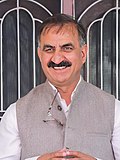 | INC | Mukesh Agnihotri |  | Sukhu I | 40 | - | 40 / 68 | ||
| Karnataka | 14 May 2023 | Siddaramaiah | 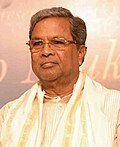 | INC | D. K. Shivakumar |  | Siddaramaiah II | 138 | SKP (1) | 140 / 224 | ||
| IND (1) | ||||||||||||
| Kerala | 18 May 2026 | V.D. Satheesan | INC | – | Satheesan I | 63 | UDF (39) | 102 / 140 | ||||
| Telangana | 7 December 2023 | Revanth Reddy | INC | Mallu Bhatti Vikramarka | Revanth Reddy I | 76 | CPI (1) | 77 / 119 | ||||
| Alliance Government | ||||||||||||
| Jammu and Kashmir | 16 October 2024 | Omar Abdullah |  | JKNC | Surinder Choudhary |  | Omar II | 42 | INC (6) | 52 / 95 | ||
| CPI(M) (1) | ||||||||||||
| IND (3) | ||||||||||||
| Jharkhand | 28 November 2024 | Hemant Soren |  | JMM | – | Soren IV | 34 | INC (16) | 56 / 81 | |||
| RJD (4) | ||||||||||||
| CPI(ML)L (2) | ||||||||||||
| Tamil Nadu | 9 May 2026 | C. Joseph Vijay |  | TVK | – | Vijay I | 108 | INC (5) | 121 / 234 | |||
| CPI(M) (2) | ||||||||||||
| CPI (2) | ||||||||||||
| VCK (2) | ||||||||||||
| IUML (2) | ||||||||||||
| State/UT | Overall Tally | Legislative Leader | Status |
|---|---|---|---|
| Andhra Pradesh Legislative Council | No Representation | Others | |
| Bihar Legislative Council | 3 / 75 | Madan Mohan Jha | Opposition |
| Karnataka Legislative Council | 37 / 75 | N. S. Boseraju | Government |
| Maharashtra Legislative Council | 7 / 51 | Bhai Jagtap | Opposition |
| Telangana Legislative Council | 12 / 40 | Bomma Mahesh Kumar Goud | Government |
| Uttar Pradesh Legislative Council | No Representation | Others | |
List of presidents
Further information: President of India
List of vice presidents
Further information: Vice President of India


| Portrait | Name (Lifespan) | Home state | Term of office Duration in years and days | Mandate | Prior positions held | President (Tenure) | |
|---|---|---|---|---|---|---|---|
| B. D. Jatti (1912–2002) | Karnataka | 31 August 1974 | 31 August 1979 | 1974 (78.7%) | Chief Minister of Mysore State (1958–1962) Lieutenant Governor of Pondicherry (1968–1972) Governor of Orissa (1972–1974) | Fakhruddin Ali Ahmed (24 Aug 1974 – 11 Feb 1977) | |
| 5 years, 0 days | Self (acting) (11 Feb 1977 – 25 Jul 1977) | ||||||
| Former chief minister of Mysore and former governor. Elected as the fifth vice president in 1974 defeating his nearest rival Niral Enem Horo. Became Acting President on 11 February 1977 following the demise of president Fakhruddin Ali Ahmed and served in the acting capacity till the election of Neelam Sanjiva Reddy in July 1977. Retired as vice president upon completion of tenure in 1979. | Neelam Sanjiva Reddy (25 Jul 1977 – 25 Jul 1982) | ||||||
| Ramaswamy Venkataraman (1910–2009) | Tamil Nadu | 31 August 1984 | 24 July 1987[RES] | 1984 (71.05%) | Member, Lok Sabha (1952–1957) Minister of Industries, Labour, Co-operation, etc., Madras State (1957–1967) Union Minister of Finance (1980–1982) Union Minister of Defence (1982–1984) | Giani Zail Singh (25 Jul 1982 – 25 Jul 1987) | |
| 2 years, 327 days | |||||||
| Former union minister. Elected as the seventh vice president in 1984 after defeating B. C. Kamble in the vice presidential election. As vice president, he played important role in being deputed for president on making diplomatic visits and acting as a mediator for then prime minister Rajiv Gandhi and president Zail Singh. Resigned from the vice presidency on the eve of assuming office as the President on 25 July 1987. | |||||||
| Shankar Dayal Sharma (1918–1999) | Madhya Pradesh | 3 September 1987 | 24 July 1992[RES] | 1987 (Unopposed) | Chief Minister of Bhopal State (1952–1956) National President, Indian National Congress (1972–1974) Union Minister of Communications (1974–1977) | Ramaswamy Venkataraman (25 Jul 1987 – 25 Jul 1992) | |
| 4 years, 325 days | |||||||
| Former union minister. Elected unopposed as the eighth vice president in 1987 to fill the vacancy caused by the election of then vice president Ramasamy Venkataraman as the President. He resigned as the vice president in 1992 after being elected as the President. | |||||||
| K. R. Narayanan (1920–2005) | Kerala | 21 August 1992 | 24 July 1997[RES] | 1992 (99.86%) | Secretary (East), Ministry of External Affairs (1975–1976) Ambassador to China (1976–1978) and the United States (1980–1984) Member, Lok Sabha (1984–1992) Union Minister of State, Planning (1985), External Affairs (1985–1986), Science and Technology (1986–1989) | Shankar Dayal Sharma (25 Jul 1992 – 25 Jul 1997) | |
| 4 years, 337 days | |||||||
| Former diplomat and former union minister. Elected as the ninth vice president in 1992 defeating his rival candidate Joginder Singh. First Dalit vice president of India. Resigned from the vice presidency in 1997 after being elected as the President. | |||||||
| Mohammad Hamid Ansari (born 1937) | West Bengal | 11 August 2007 | 11 August 2012 | 2007 (60.50%) | Ambassador to the United Arab Emirates (1976–1980) High Commissioner to Australia (1985–1989) Permanent Representative to the United Nations (1993–1995) Vice-Chancellor, Aligarh Muslim University (2000–2002) Chairman, National Commission for Minorities (2006–2007) | Pratibha Patil (25 Jul 2007 – 25 Jul 2012) | |
| Pranab Mukherjee (25 Jul 2012 – 25 Jul 2017) | |||||||
| 11 August 2012 | 11 August 2017 | 2012 (67.31%) | |||||
| Ram Nath Kovind (25 Jul 2017 – 25 Jul 2022) | |||||||
| 10 years, 0 days | |||||||
| Former diplomat. Elected as the twelfth vice president in 2007. Re-elected to office for a second term in 2012 by defeating his rival candidate Jaswant Singh. First and only vice president since Sarvepalli Radhakrishnan to be re-elected to office and the longest-serving vice president. Retired from office upon completion of tenure on 11 August 2017, becoming the first vice president to serve under three presidents. | |||||||
Legislative leaders
The Congress party has played a big role in India's politics. Many famous leaders from the party became the country's prime ministers, helping India grow. Some of these leaders include Jawaharlal Nehru, Indira Gandhi, and Manmohan Singh. Indira Gandhi was the first woman to serve as India's prime minister. Rajiv Gandhi became prime minister in 1984 after his mother, Indira Gandhi, passed away. PV Narasimha Rao was the first prime minister from southern India. Manmohan Singh served two full terms as prime minister.
List of prime ministers
Further information: List of prime ministers of India
List of deputy prime ministers
Further information: Deputy Prime Minister of India
| Prime ministers | Portrait | Term of office Duration in years and days | Government | Lok Sabha | Constituency | Head of State | ||
|---|---|---|---|---|---|---|---|---|
| Start | End | Tenure | ||||||
| Jawaharlal Nehru (1889–1964) | 15 August 1947 | 15 April 1952 | 16 years, 286 days | Nehru I | Constituent Assembly | |||
| 15 April 1952 | 4 April 1957 | Nehru II | 1st | Phulpur | Rajendra Prasad | |||
| 17 April 1957 | 2 April 1962 | Nehru III | 2nd | |||||
| 2 April 1962 | 27 May 1964 | Nehru IV | 3rd | Sarvepalli Radhakrishnan | ||||
| Gulzarilal Nanda (1898–1998) | 27 May 1964 | 9 June 1964 | 26 days | Nanda I | Sabarkantha | |||
| 11 January 1966 | 24 January 1966 | Nanda II | Sabarkantha | |||||
| Lal Bahadur Shastri (1904–1966) | 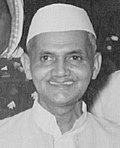 | 9 June 1964 | 11 January 1966 | 1 year, 216 days | Shastri | Allahabad | ||
| Indira Gandhi (1917–1984) | 24 January 1966 | 13 March 1967 | 15 years, 350 days | Indira I | Rajya Sabha MP from Uttar Pradesh | |||
| 13 March 1967 | 18 March 1971 | Indira II | 4th | Rae Bareli | Zakir Husain V. V. Giri Mohammad Hidayatullah Fakhruddin Ali Ahmed B. D. Jatti Neelam Sanjiva Reddy Zail Singh | |||
| 18 March 1971 | 24 March 1977 | Indira III | 5th | |||||
| 14 January 1980 | 31 October 1984 | Indira IV | 7th | Medak | ||||
| Rajiv Gandhi (1944–1991) | 31 October 1984 | 31 December 1984 | 5 years, 32 days | Rajiv I | Amethi | Ramaswamy Venkataraman | ||
| 31 December 1984 | 2 December 1989 | Rajiv II | 8th | |||||
| P. V. Narasimha Rao (1921–2004) |  | 21 June 1991 | 16 May 1996 | 4 years, 330 days | Rao | 10th | Nandyal | Shankar Dayal Sharma |
| Manmohan Singh (1932–2024) | 22 May 2004 | 26 May 2009 | 10 years, 4 days | Singh I | 14th | Rajya Sabha MP from Assam | A. P. J. Abdul Kalam Pratibha Patil Pranab Mukherjee | |
| 22 May 2009 | 26 May 2014 | Singh II | 15th | |||||
| Portrait | Name (Birth–Death) | Term in office | Lok Sabha (Election) | Constituency (House) | Prime Minister | Head of State | ||
|---|---|---|---|---|---|---|---|---|
| Assumed office | Left office | Time in office | ||||||
| Vallabhbhai Patel (1875–1950) | 15 August 1947 | 15 December 1950 (death) | 3 years, 122 days | Constituent Assembly | N/A | Jawaharlal Nehru | none | |
| Morarji Desai (1896–1995) | 13 March 1967 | 19 July 1969 | 2 years, 128 days | 4th (1967) | Surat (Lok Sabha) | Indira Gandhi | Zakir Husain | |
Images
Related articles


This article is a child-friendly adaptation of the Wikipedia article on Indian National Congress, available under CC BY-SA 4.0.
Images from Wikimedia Commons. Tap any image to view credits and license.